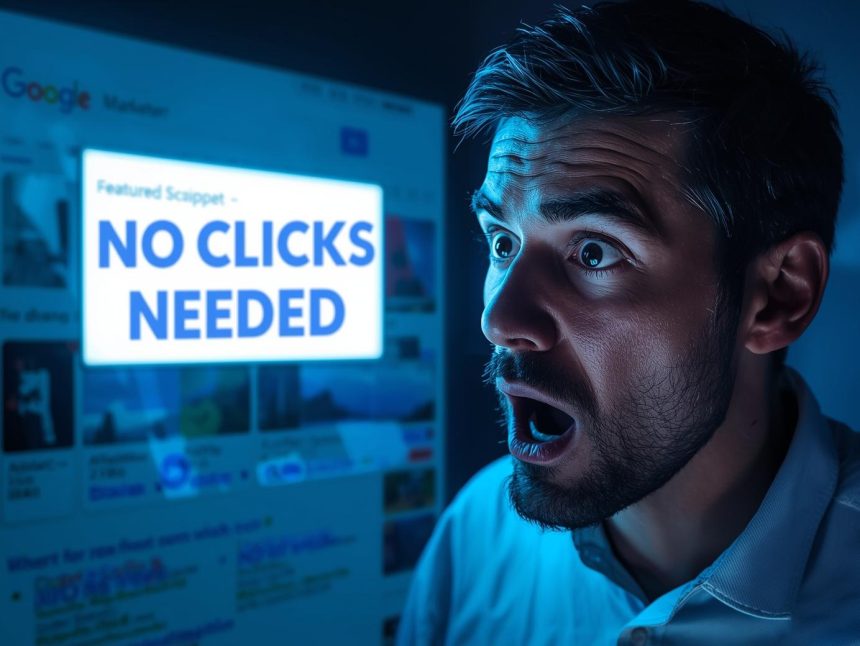
As SEO continues to evolve, one of the most impactful changes in recent years has been the rise of zero-click searches—searches where users get the answers they need directly on the results page without clicking through to a website. This shift is changing how digital marketers think about traffic, visibility, and content strategy.
- 1. What Are Zero-Click Searches?
- 2. Why Are Zero-Click Searches Important?
- 3. Common Types of Zero-Click Features
- 4. How to Optimise for Featured Snippets
- 5. How to Appear in People Also Ask (PAA)
- 6. How to Rank in Local Packs
- 7. SEO Tools to Track Zero-Click Features
- 8. What to Do If You Lose Clicks from Zero-Click Searches
- 9. Future of Zero-Click SEO
- 10. Best Practices Recap
- References
This article explains what zero-click searches are, why they matter, and how you can optimise your content to appear in featured snippets, People Also Ask (PAA), local packs, and other rich results.
1. What Are Zero-Click Searches?
A zero-click search is when a user types a query into Google and receives the answer directly on the Search Engine Results Page (SERP), without clicking any further link.
According to a recent report by Semrush, about 25.6% of desktop and 17.3% of mobile searches result in zero clicks, due to direct answers like featured snippets or knowledge panels (Semrush, 2023). Other research indicates up to 57% of mobile searches don’t lead to a website visit (Fishkin, 2022).
2. Why Are Zero-Click Searches Important?
While zero-click searches may reduce traditional organic traffic, they offer a major visibility advantage. Appearing in featured snippets or local packs can:
- Boost brand credibility and authority
- Increase voice search performance
- Improve top-of-funnel engagement
- Capture Position Zero, even over higher-ranking competitors
In fact, studies show that snippets receive over 8% of total clicks, and can increase total CTR when structured effectively (Moz, 2023).
3. Common Types of Zero-Click Features
Here are the most common zero-click SERP features to target:
A. Featured Snippets
Google pulls a short answer from a web page and displays it at the top of the results page. Formats include:
- Paragraphs (definitions)
- Lists (steps or rankings)
- Tables (data comparisons)
- Videos (YouTube results)
B. People Also Ask (PAA)
This expandable section includes related user questions, each with a short answer. These often pull from different pages and are powered by Google’s NLP system.
C. Local Packs
Google Maps displays local business listings for nearby services, including address, hours, and phone number.
D. Knowledge Panels
These boxes provide verified info about brands, individuals, or topics—often from sources like Wikipedia or Google Business Profile.
E. Instant Answer Boxes
Google provides direct calculations, conversions, or factual data (e.g., weather, age of a celebrity) using built-in tools.
4. How to Optimise for Featured Snippets
To appear in these high-visibility positions, follow these steps:
1. Target Question-Based Keywords
Users tend to ask Google full questions. Use tools like:
Look for “how,” “why,” “what,” or “when” phrases relevant to your content.
2. Structure Your Content Clearly
Use H2 or H3 headings for each question and keep your answers concise (40–60 words is ideal).
Example:
What is SEO?
SEO stands for Search Engine Optimization. It is the process of improving a website to increase its visibility in search engine results pages (SERPs), especially for organic (unpaid) traffic.
3. Use Structured Data (Schema Markup)
Apply structured data to help Google better understand your content. Examples:
- FAQ Schema for question-and-answer formats
- How-To Schema for step-by-step instructions
You can generate markup using the Merkle Schema Generator or test it with Google’s Rich Results Test.
4. Use Lists and Tables
For step-by-step instructions, use numbered lists. For comparison or structured information, use tables—both are frequently pulled into snippet positions.
5. Optimise Multiple Snippets on One Page
Break your content into sections that answer related questions. Each can win a separate snippet spot or appear in the People Also Ask box.
5. How to Appear in People Also Ask (PAA)
To optimise for PAA:
- Use questions as subheadings (H2/H3)
- Provide clear, short answers under each
- Expand with additional information below the main answer
- Use tools like Frase or Surfer SEO to find real PAA opportunities
PAA boxes are dynamic and can appear for over 80% of search queries, especially on mobile (Moz, 2023).
6. How to Rank in Local Packs
For location-based searches:
- Create and verify a Google Business Profile (link)
- Ensure NAP (Name, Address, Phone) consistency across web listings
- Get positive Google reviews regularly
- Add updated business hours and categories
- Post photos and offers to engage local users
Over 46% of all Google searches have local intent, making Local SEO a key part of any zero-click strategy (Google, 2022).
7. SEO Tools to Track Zero-Click Features
Here are tools to help you measure and improve zero-click SERP performance:
| Tool | Purpose |
| Semrush | Identify SERP features per keyword |
| Ahrefs | Track featured snippet wins |
| Frase | Optimise content for PAA |
| Surfer SEO | Content scoring for snippets |
| Google Search Console | Check impressions and CTR shifts |
8. What to Do If You Lose Clicks from Zero-Click Searches
While zero-click searches may reduce traffic, there are ways to recover value:
- Add more context: After giving a quick answer, offer “read more” content.
- Use visuals: Include charts or infographics not shown in snippets.
- Offer downloads: Promote deeper resources like guides or tools.
- Internal linking: Keep users exploring once they click.
Remember, even if you don’t get the click, your brand is seen—which builds recognition and trust.
9. Future of Zero-Click SEO
A. Voice Search Growth
Featured snippets are often used as answers for voice assistants like Google Assistant or Siri. Writing content that answers questions in natural language helps you win these results.
B. Search Generative Experience (SGE)
Google is testing AI-powered summaries in results (SGE), which may reduce clicks even more. Structured, authoritative content will be even more critical.
C. More Visual & Multimedia SERPs
Expect SERPs to include more video snippets, image carousels, and even audio clips in 2025.
10. Best Practices Recap
✔ Use simple, direct answers for snippet-targeted questions
✔ Optimise for PAA and voice search using real user queries
✔ Add schema markup to boost understanding and ranking chances
✔ Focus on user-first content that delivers value—even without a click
✔ Track and adjust using SERP monitoring tools
Note
Zero-click searches are not a threat—they’re a shift. By understanding how featured snippets, local packs, and PAA boxes work, marketers can design content that serves the user directly on the SERP while still building trust and authority. With smart formatting, structured data, and strategic keyword use, your content can thrive—even in a zero-click world.
In this new search landscape, visibility is as valuable as traffic—and being the trusted source of an instant answer might be your best SEO win yet.
More Read

References
Fishkin, R. (2022). Less than Half of Google Searches Now Result in a Click. SparkToro. https://sparktoro.com/blog/zero-click-searches-in-2022/
Google. (2022). Grow your business with Google Business Profile. https://www.google.com/business/
Moz. (2023). What Are Featured Snippets?. https://moz.com/learn/seo/featured-snippets
Semrush. (2023). The State of Search 2023. https://www.semrush.com/blog/zero-click-searches/
Surfer SEO. (n.d.). Content Editor and SERP Analyzer. https://surferseo.com
Frase. (n.d.). PAA and Snippet Optimisation. https://www.frase.io/