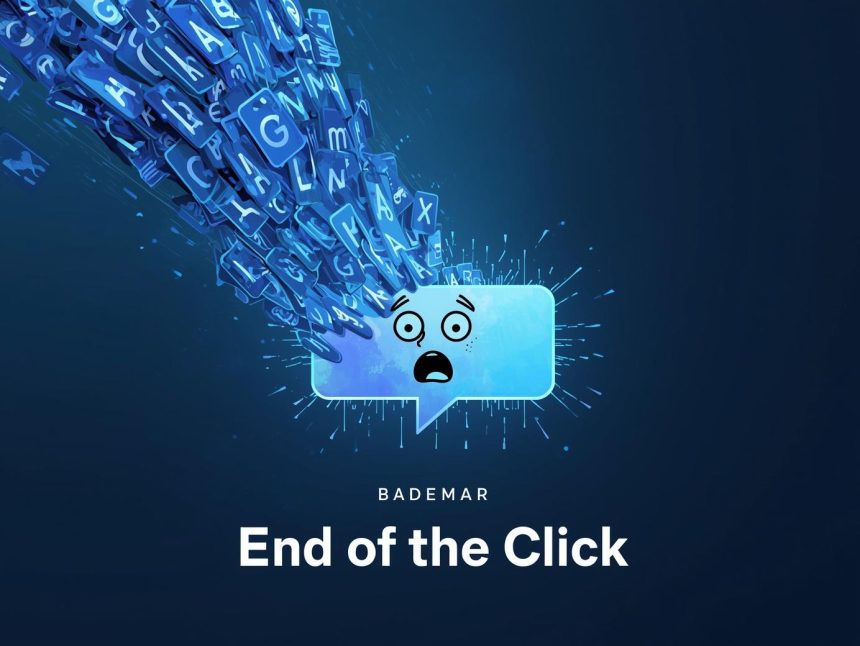
Search behavior in 2025 looks dramatically different than it did just a few years ago. With AI Overviews becoming a regular feature and over half of all searches ending without a click, optimizing purely for rankings is no longer enough. Now, the goal is visibility—even when users don’t click. This means brands must adapt by optimizing for zero-click searches and AI-generated answers to remain competitive.
The Rise of Zero-Click Searches
According to a 2024 study by SparkToro and Datos (a Semrush company), nearly 58.5% of Google searches in the U.S. and 59.7% in the EU end without any clicks to external websites (Rand Fishkin & SparkToro, 2024). That translates to just 360 clicks per 1,000 searches reaching the “open web” in the U.S., and 374 in the EU. (SparkToro) These numbers highlight a significant shift: more than half of users now obtain answers directly from the SERP or abandon the query altogether.
AI Overviews: New Search Frontier
Google’s AI Overviews, introduced in May 2024, are transforming how answers are delivered. Instead of listing organic links, search results now often present synthesized, AI-generated summaries at the top of the page (BrightEdge, 2024; Semrush, 2025). (brightedge.com)
Semrush data shows that AI Overviews appeared for 6.5% of queries in January 2025, rising to 13.1% by March 2025—a rapid expansion demonstrating the growing influence of AI in search results. (Semrush)
BrightEdge reports that AI Overviews now appear in over 11% of queries, with impressions rising nearly 49% year-over-year since launch, while click-through rates (CTR) to external content have dropped nearly 30%. (Ken Yeung)
Why This Matters for SEO & Marketers
- A majority of searches no longer result in clicks, so the traditional “rank and wait for traffic” model is fading.
- Appearing in an AI Overview means being the answer, even if users don’t click through.
- Even when CTR is lower, users who click tend to be more qualified—further along in the journey, as per BrightEdge findings. (Ken Yeung)
Optimizing for Zero-Click and AI Overviews: Best Practices
1. Optimize for Featured Snippets & Direct Answers
Answer common user queries in 40–60 words, use bullet lists, tables, and clear headings. Tools like Ahrefs and SEMrush help you identify snippet opportunities.
2. Structure for AI Readability
Include FAQ sections, clear subheadings, and concise explanations to increase the chances of being featured in AI Overviews.
3. Prioritize E-E-A-T
High-quality, trustworthy content—especially from authoritative domains—is more likely to be cited in AI Overviews. (iPullRank)
4. Monitor AI Overview Appearances
Track which keywords trigger AI Overviews using your tools. Semrush and BrightEdge provide insights into which queries generate AI Overviews.
5. Localize Content (GEO-OPTIMIZATION)
Adapt content for regional intent—include local terminology, examples, and language to enhance visibility in local AI Overviews and SERP features.
Case Insights & Industry Trends
- Semrush’s AI Overviews study (2025) revealed that when AI Overviews were introduced for specific keywords, the zero-click rate slightly decreased (from 38.1% to 36.2%)—indicating more nuanced behavior around intent and queries. (Semrush)
- BrightEdge found that complex, longer queries are more likely to trigger AI Overviews—demanding deeper, more structured answers. (brightedge.com)
- Industries like Healthcare, Education, B2B Tech, and Insurance dominate AI Overview placements, while E-commerce is growing but remains behind. (brightedge.com)
Quoting the Expert
As Mr. Phalla Plang, Digital Marketing Specialist, puts it:
“Zero-click doesn’t mean zero value. When your brand is the answer—whether or not users click—you’ve already won half the battle in building trust and authority.”
Redefined Metrics & KPIs
With reduced CTRs, marketers must rethink how they measure success:
- Impressions and visibility in AI Overviews become more critical.
- Focus on engagement from clicks that do happen: are they deeper, more valuable leads?
- Monitor SERP feature performance, not just ranking positions.
Note
In the era of AI-centric search, being the answer matters more than gaining the click. With over 58% of searches ending in zero clicks and AI Overviews appearing in over 11–13% of queries, brands must optimize for presence in AI-driven search results.
Deliver concise, authoritative, structured content; track AI Overview triggers; and prioritize E-E-A-T and geo-specific optimization. With these strategies, zero-click becomes not a threat—but an opportunity to lead.
More Read

References
BrightEdge. (2025, May 14). One year into Google AI Overviews: Data reveals growth and trends. Retrieved from https://www.brightedge.com/news/press-releases/one-year-google-ai-overviews-brightedge-data-reveals-google-search-usage (brightedge.com)
BrightEdge. (2024). Ultimate guide to AI Overviews. Retrieved from https://www.brightedge.com/ai-overviews (brightedge.com)
Rand Fishkin & SparkToro. (2024, July 1). 2024 Zero-Click Search Study: For every 1,000 Google searches in the U.S., only 360 go to the open web. Retrieved from https://sparktoro.com/blog/2024-zero-click-search-study-for-every-1000-us-google-searches-only-374-clicks-go-to-the-open-web-in-the-eu-its-360/ (SparkToro)
Search Engine Land. (2024). Semrush report: AI Overviews’ impact on search in 2025. Retrieved from https://www.semrush.com/blog/semrush-ai-overviews-study/ (Semrush)
Search Engine Land. (2025). AI Search & Zero-Click Statistics 2025 (verified). Retrieved from https://www.innersparkcreative.com/news/ai-search-zero-click-statistics-2025-verified (Inner Spark Creative)
iPullRank. (2025, June 30). Everything we know so far about AI Overviews. Retrieved from https://ipullrank.com/everything-we-know-about-ai-overviews (iPullRank)