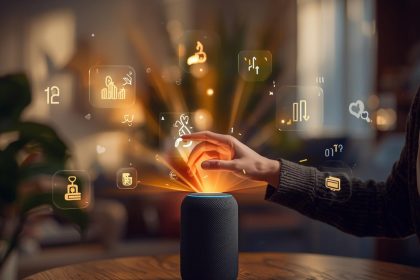
The way people search online is changing. More users are now talking to their devices rather than typing. These voice commands—known as spoken queries—are becoming more popular, thanks to smart assistants like Siri, Google Assistant, and Alexa.
- What Are Spoken Queries?
- Why Spoken Queries Matter in Digital Marketing
- How Spoken Queries Are Changing SEO and Content Strategy
- Top Tools to Optimise for Spoken Queries
- Real Brand Examples of Using Voice Search
- Tips for Marketers to Optimise for Spoken Queries
- Challenges and How to Solve Them
- The Future of Spoken Queries in Marketing
- References
This shift has a huge impact on digital marketing. Businesses now need to rethink how they appear in voice search results, how they create content, and how they connect with customers using conversational language.
In this article, we explore how spoken queries are shaping digital marketing, why they matter, and how to optimise your content and website to stay ahead.
What Are Spoken Queries?
Spoken queries are voice-based search commands or questions given to a device, such as:
- “Hey Siri, what’s the best place for coffee near me?”
- “Alexa, how do I bake chocolate chip cookies?”
- “OK Google, directions to the nearest pharmacy.”
They are often:
- Longer and conversational
- More question-based (what, how, where, etc.)
- Used for local needs
- Mobile-driven or powered by smart speakers
Why Spoken Queries Matter in Digital Marketing
📈 Voice Search Usage is Growing Fast
According to Statista (2023), there were over 4.2 billion digital voice assistants in use worldwide in 2023. This number is projected to double to 8.4 billion by 2024, surpassing the global population (Statista, 2023).
🔎 Voice Search Changes How People Look for Information
Text search:
“best marketing agency in Cambodia”
Voice search:
“Which is the best digital marketing agency in Phnom Penh right now?”
Voice queries tend to be longer, more natural, and intent-rich. That means SEO needs to shift from just keywords to full, conversational questions.
📍 Voice is Local
Over 58% of consumers use voice search to find local business information—like nearby restaurants, banks, and stores (BrightLocal, 2022). This is a game-changer for local marketing.
How Spoken Queries Are Changing SEO and Content Strategy
If you want your business to show up when people speak to their devices, you need to optimise for voice search.
1. Use Conversational, Long-Tail Keywords
Instead of just “running shoes,” your content should include natural questions like:
- “What are the best running shoes for beginners?”
- “Which running shoes help with knee pain?”
💡 Try tools like AnswerThePublic or AlsoAsked to find real voice-style questions your audience is asking.
2. Create FAQ Sections
People using voice search often ask direct questions. FAQs are perfect for capturing these. Example:
Q: How do I clean a leather sofa?
A: Use a microfiber cloth and mild soap, then dry with a clean towel.
This format is easy for voice assistants to read aloud and helps content get picked for featured snippets.
3. Win Featured Snippets (“Position Zero”)
Featured snippets often power voice search answers. To increase your chances:
- Include the question in your subheading
- Give a short, clear answer in under 40 words
- Use bullets or numbered lists when possible
4. Optimise for Local Search
People frequently use voice to find nearby services. Optimise for “near me” searches:
- “IT service near Phnom Penh”
- “Best coffee shop in Siem Reap”
Make sure your Google Business Profile is accurate and updated regularly.
5. Improve Website Speed & Mobile Experience
Since voice search is mainly used on phones, a slow website = missed opportunity. Use:
Top Tools to Optimise for Spoken Queries
| Tool | Use | Link |
| AnswerThePublic | Find real user voice-style questions | 🔗 |
| Semrush Voice Search | Voice-focused keyword research | 🔗 |
| Google Search Console | Check how your content ranks | 🔗 |
| Ahrefs | Discover voice-friendly keywords | 🔗 |
| Voice Search Test | Check how your site responds to voice queries | 🔗 |
Real Brand Examples of Using Voice Search
🍕 Domino’s Pizza
Users can say, “Alexa, order my usual from Domino’s” and get their favourite meal delivered with no clicks needed.
🚘 Mercedes-Benz
Mercedes cars have built-in voice assistants to help drivers navigate, call contacts, or control music—hands-free.
🏨 Marriott Hotels
Guests can talk to Alexa for Hospitality to order room service, request towels, or ask hotel-related questions.
These brands create frictionless voice experiences that improve customer satisfaction and boost loyalty.
Tips for Marketers to Optimise for Spoken Queries
- Understand your audience’s voice behavior
Think: what would they say instead of what they’d type? - Use natural-sounding sentences
Write how people talk, not how search engines think. - Add schema markup
Structured data helps Google understand your content better. Try Google’s Structured Data Guide. - Target “near me” keywords
Local voice search matters—especially for physical stores and services. - Provide clear and short answers
Voice assistants like short answers. Aim for 30-40 words when answering questions. - Repurpose content into audio
Consider turning blog posts into podcasts or voice notes to match the voice-first trend.
Challenges and How to Solve Them
| Challenge | Solution |
| Only one answer is read aloud by voice assistants | Focus on highly specific niche questions |
| Difficult to measure voice search traffic | Use tools like Semrush or Google Search Console to analyse spoken-style queries |
| Regional voice variations | Include local terms and consider creating multilingual voice content |
The Future of Spoken Queries in Marketing
The future of search is hands-free and AI-powered. As voice technology improves, businesses must:
- Create voice-first websites
- Use AI chatbots that talk like humans
- Launch voice shopping options
- Offer multilingual and regional voice experiences
As smart speakers, phones, and even appliances become voice-enabled, spoken queries will dominate digital interaction.
Note
Spoken queries are transforming how people search, shop, and interact with brands. With billions of voice-enabled devices in use, digital marketers must adapt.
The brands that win will be those that understand how people talk, not just how they type—and create content that feels like a conversation.
Voice is the future of digital marketing. The time to act is now.
More Read

References
- BrightLocal. (2022). Voice Search for Local Businesses: 2022 Study. Retrieved from https://www.brightlocal.com/research/voice-search-for-local-businesses/
- Comscore. (2020). 50% of all searches will be voice searches by 2020. Retrieved from https://www.comscore.com/Insights/Blog/50-of-All-Searches-Will-Be-Voice-Searches-by-2020
- Statista. (2023). Number of digital voice assistants in use worldwide from 2019 to 2024 (in billions). Retrieved from https://www.statista.com/statistics/973815/worldwide-digital-voice-assistant-in-use/
- Google. (n.d.). PageSpeed Insights. Retrieved from https://pagespeed.web.dev/
- Google. (n.d.). Mobile-Friendly Test. Retrieved from https://search.google.com/test/mobile-friendly
- Semrush. (n.d.). Voice Search Optimization. Retrieved from https://www.semrush.com/features/voice-search/
- AnswerThePublic. (n.d.). Retrieved from https://answerthepublic.com/
- Ahrefs. (n.d.). Retrieved from https://ahrefs.com/
- Voice Search Test. (n.d.). Retrieved from https://voicesear.ch/
- Google Developers. (n.d.). Introduction to Structured Data. Retrieved from https://developers.google.com/search/docs/appearance/structured-data/intro-structured-data