Most email campaigns fail not because of poor content—but because of bad timing. Sending the right email at the right stage of a customer’s journey is now essential, and with help from modern CRM tools, brands can make this process seamless and scalable.
- 1. What is Lifecycle Email Marketing?
- 2. Why Lifecycle Marketing Outperforms Traditional Email Campaigns
- 3. The Role of CRM in Lifecycle Automation
- 4. Popular Lifecycle Email Campaign Types
- 5. Tools That Make It Easy
- 6. Step-by-Step: How to Build Your Lifecycle Email Strategy
- 7. Real Success Stories
- 8. Common Mistakes to Avoid
- 9. What’s Next in Lifecycle Email Marketing?
- References
This is the core idea of lifecycle email marketing—a strategy that uses automation to send personalised emails depending on where someone is in their journey with your brand. Whether they’re a curious browser, first-time buyer, or long-time customer, CRM-powered lifecycle marketing keeps communication relevant and effective.
This article explores how lifecycle emails work, what role CRM plays, which tools help automate it, and how brands are using this strategy to drive real growth in 2025.
1. What is Lifecycle Email Marketing?
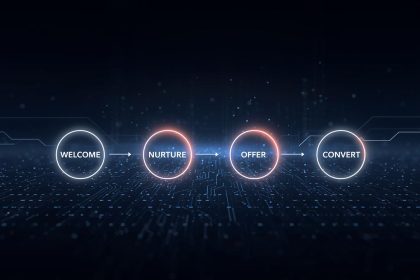
Lifecycle email marketing means sending tailored, automated emails to customers based on their stage in the buying cycle. The goal is to move users from:
- Awareness → Consideration
- Consideration → Purchase
- Purchase → Loyalty
- Loyalty → Advocacy or Retention
Each stage is supported by a unique email sequence that speaks to what the customer needs at that moment.
Example Lifecycle Stages:
| Stage | Typical Email | Purpose |
| Awareness | Welcome Series | Make a strong first impression |
| Consideration | Product Info or Webinars | Educate and build trust |
| Purchase | Order Confirmations | Reassure and upsell |
| Loyalty | Thank You, Rewards Offers | Increase retention |
| Re-engagement | “We Miss You” Emails | Bring inactive users back |
2. Why Lifecycle Marketing Outperforms Traditional Email Campaigns
Lifecycle emails are timely, relevant, and personalised—making them far more effective than one-size-fits-all promotions.
📊 Key Stats:
- Lifecycle emails generate 320% more revenue than non-targeted emails (ActiveCampaign, 2023).
- Welcome emails alone have open rates above 80% when automated at the right time (Campaign Monitor, 2024).
- Brands using CRM-powered lifecycle strategies reduce churn by up to 27% (HubSpot, 2024).
3. The Role of CRM in Lifecycle Automation
CRM (Customer Relationship Management) systems play a vital role in this process by:
- Tracking user behaviour like purchases, clicks, and site visits
- Tagging users by lifecycle stage (e.g., “new lead” or “loyal buyer”)
- Triggering automations to send emails at specific milestones
- Recording results so marketers can measure and improve
Platforms like HubSpot, Zoho CRM, and Salesforce allow businesses to build data-driven journeys from first click to long-term retention.
4. Popular Lifecycle Email Campaign Types
Here are some of the most effective lifecycle email series you can build:
1. Welcome Series
- Sent right after sign-up
- Introduces your brand
- May include discount to encourage first purchase
2. Lead Nurturing Sequence
- Based on interest (e.g., ebook download)
- Educates customer with guides, FAQs, or webinars
- Moves them closer to buying
3. Post-Purchase Flow
- Includes order confirmation, delivery tracking, and thank-you note
- Can upsell or request reviews
4. Loyalty & Rewards Campaign
- Offers exclusive deals to frequent buyers
- Encourages brand advocacy and referrals
5. Re-engagement Campaign
- Targets customers inactive for 60+ days
- Offers new value to bring them back
5. Tools That Make It Easy
| Tool | Best For | Link |
| HubSpot | End-to-end lifecycle and CRM integration | HubSpot |
| Mailchimp | Easy automations and templates | Mailchimp |
| ActiveCampaign | Behaviour-based targeting, scoring system | ActiveCampaign |
| Salesforce Pardot | Enterprise-level lead nurturing | Salesforce |
| Zoho CRM | Affordable lifecycle automation | Zoho CRM |
These platforms help marketers set conditions, build templates, and track performance—all inside one system.
6. Step-by-Step: How to Build Your Lifecycle Email Strategy
Step 1: Map Your Customer Journey
Start by listing out your typical user flow:
- Lead → Subscriber → First-time Buyer → Repeat Customer → Inactive
Step 2: Identify Triggers
Ask: “When should emails be sent?”
- After sign-up
- After browsing a product
- After no activity in 30 days
Step 3: Write Relevant Email Content
Create emails that:
- Educate
- Solve a problem
- Celebrate milestones
- Offer exclusive value
Step 4: Automate in CRM
Use your CRM’s workflow builder to set “If X, then Y” conditions.
Example:
If “User makes first purchase” → Send “Thank You” + “You May Also Like” email.
Step 5: Monitor & Optimise
Track:
- Open rates
- Click-through rates
- Conversion rates
- Customer retention
7. Real Success Stories
📌 E-commerce Store (Mailchimp)
Used a 3-part post-purchase flow to promote accessories related to previous orders.
Result: 49% increase in second-time purchases.
📌 SaaS Company (HubSpot)
Built lifecycle automations from sign-up to renewal reminder.
Result: 32% lower churn rate and 18% higher CLV.
8. Common Mistakes to Avoid
❌ Sending too many emails at once
✅ Use throttling to control flow
❌ Not using behavioural triggers
✅ Base automation on real-time data (e.g., last login)
❌ Generic content
✅ Personalise based on CRM tags and lifecycle position
❌ Poor segmentation
✅ Don’t treat new leads like loyal customers—they need different messages
9. What’s Next in Lifecycle Email Marketing?
Expect to see:
- AI-assisted journeys that build themselves based on customer actions
- Omnichannel lifecycle flows, where CRM triggers not only email but also SMS, WhatsApp, or push notifications
- Predictive lifecycle scoring, where CRM platforms estimate future actions before they happen
In 2025, lifecycle emails will be real-time, context-aware, and completely personalised—driven by data, not guesswork.
Note
Lifecycle email marketing turns ordinary communication into strategic, relationship-building engagement. With the right CRM and automation tools, brands can meet customers where they are—every step of the way.
In a world where timing is everything, lifecycle emails are your chance to show up just when your audience needs you most. Start with one journey—like a welcome or win-back flow—and grow from there. The sooner you build smart automation, the faster your results will compound.
More Read

References
ActiveCampaign. (2023). Lifecycle email marketing benchmarks. https://www.activecampaign.com/blog/email-marketing-statistics
Campaign Monitor. (2024). The state of email marketing 2024. https://www.campaignmonitor.com/resources/guides/
HubSpot. (2024). Lifecycle marketing strategy guide. https://www.hubspot.com
Mailchimp. (2024). Automations: Lifecycle email examples. https://mailchimp.com/features/automation/
Salesforce. (2024). Pardot: B2B marketing automation. https://www.salesforce.com/products/marketing-cloud/
Zoho CRM. (2024). Customer journey orchestration. https://www.zoho.com/crm/