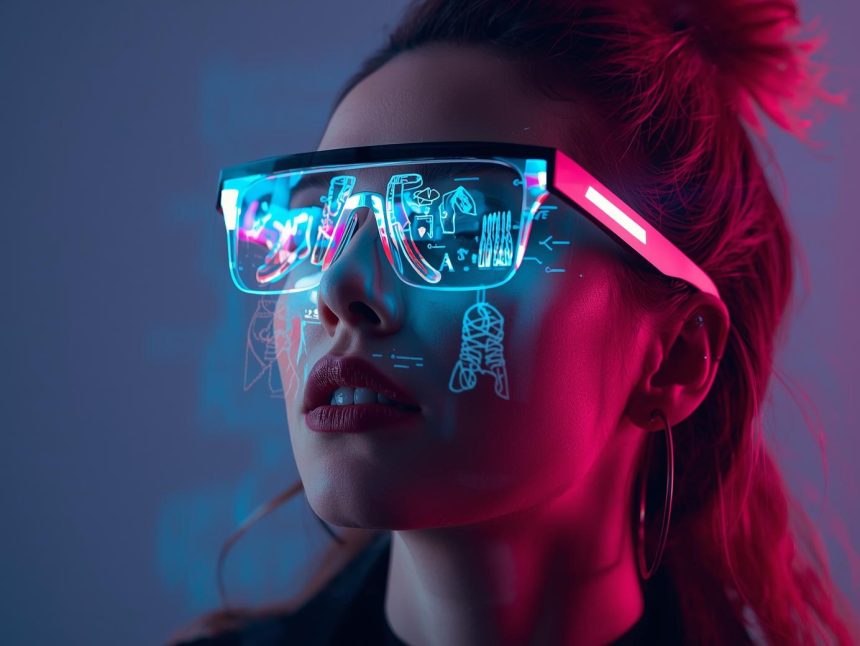
The traditional online shopping experience is transforming. No longer limited to flat product photos and written descriptions, consumers now expect interactive, immersive, and personalised journeys. That’s where augmented reality (AR) and virtual try-on technologies come in—bridging the gap between digital and physical retail.
- What Is AR in E-Commerce?
- Why It Matters: AR Drives Real Results
- How AR and Try-On Tech Work
- Popular AR Platforms for Marketers
- Industries Leading with AR
- Real Brand Case Studies
- Key Benefits of AR in E-Commerce
- Challenges to Consider
- Best Practices for AR Marketing
- What’s Next for AR in Digital Commerce?
- References
This article explores how AR is changing digital commerce, the tools powering it, and how marketers can leverage this technology to boost engagement, reduce returns, and drive conversions.
What Is AR in E-Commerce?
Augmented reality overlays digital content—such as 3D models or animations—onto the real world through a camera lens. In e-commerce, this allows users to:
- Place furniture in their living space
- Try on makeup, clothes, or glasses virtually
- Rotate and interact with 3D products in real time
Virtual try-ons use AR and AI to simulate how an item looks on a person, often using facial or body recognition.
Why It Matters: AR Drives Real Results
AR is more than a flashy feature—it has real business impact. Research shows:
- 71% of shoppers would shop more if AR were available (Snap Inc., 2022).
- 94% higher conversion rates for products with AR visualization (Shopify, 2023).
- 40% fewer returns when virtual try-ons are offered (Statista, 2023).
By reducing uncertainty and increasing confidence, AR enables better purchasing decisions.
How AR and Try-On Tech Work
These technologies rely on several core elements:
- 3D product modelling: Creating interactive visuals of real products.
- Camera integration: Using phone or desktop cameras to track movement and surfaces.
- AI algorithms: Enhancing precision of facial mapping or object placement.
- Real-time rendering: Ensuring low-latency interaction for a smooth user experience.
This fusion of AR and AI delivers lifelike simulations, enabling consumers to see before they buy.
Popular AR Platforms for Marketers
1. Shopify AR
Helps e-commerce businesses upload 3D models of products for in-home AR viewing using smartphones (Shopify, 2023).
2. Snap AR – Lens Studio
Used by brands to create custom product filters, virtual try-ons, and gamified AR ads on Snapchat (Snap Inc., 2022).
3. Meta Spark AR
Offers tools to develop AR effects for Instagram and Facebook, including virtual makeup and accessories (Meta, 2023).
4. YouCam Makeup
A beauty AR app used by brands like Estée Lauder and L’Oréal to offer virtual cosmetics try-ons (Perfect Corp., 2023).
5. Google Swirl 3D Ads
Google’s 3D ad format allows users to interact with products—rotate, zoom, and explore—directly within ad units (Google, 2023).
Industries Leading with AR
| Industry | Common AR Use Cases |
| Fashion & Apparel | Virtual fitting rooms, shoe try-ons |
| Beauty & Cosmetics | Virtual makeup applications, skincare match tools |
| Furniture & Home | Room visualisation for sofas, tables, and decor |
| Eyewear | Virtual try-ons using face mapping |
| Automotive | Interactive car previews and showroom experiences |
According to Deloitte (2023), retail brands using AR see 40% longer session times and 20% higher conversion rates compared to traditional formats.
Real Brand Case Studies
🛋️ IKEA Place App
One of the earliest movers in AR, IKEA lets customers view true-to-scale furniture in their homes using their phone’s camera. This reduces guesswork and drives offline traffic.
💄 L’Oréal (ModiFace)
L’Oréal acquired ModiFace, a leader in AR beauty, and now enables virtual makeup try-ons across its brands like Maybelline and Lancôme (Perfect Corp., 2023).
🕶️ Warby Parker
The eyewear brand’s app includes AR glasses try-ons, reducing return rates by allowing customers to view how frames suit their face before ordering.
👗 Zara AR Experience
Zara uses AR in-store displays and apps that show models wearing items when a smartphone is pointed at signage—blending physical and digital retail.
Key Benefits of AR in E-Commerce
| Benefit | Explanation |
| Boosted conversion rates | Customers feel more confident making a purchase |
| Fewer product returns | Seeing size, colour, and fit reduces surprises and refunds |
| Longer engagement | Interactive AR content keeps users on site/app longer |
| Increased trust | High-tech experiences position brands as innovative and customer-first |
| Social shareability | AR filters and try-ons can be shared on social platforms, increasing reach |
Challenges to Consider
❗ Development Costs
Custom 3D models and AR campaigns can be expensive. However, low-cost solutions like Shopify AR and Meta Spark offer entry points.
❗ Device Limitations
Not all consumers have AR-capable smartphones or browsers. This can limit usability.
❗ Privacy Concerns
Virtual try-ons often require access to camera and facial data. Brands must comply with privacy regulations like GDPR and CCPA.
❗ User Education
First-time users may need help understanding how to launch or navigate AR features. A short tutorial can help improve adoption.
Best Practices for AR Marketing
- Start with one high-impact product
Choose a popular item to test AR’s influence on sales and engagement. - Embed AR in product pages
Make the experience seamless—no app download required. - Add user prompts and guidance
Help customers activate and interact with the AR feature. - Track analytics
Monitor metrics like time spent, conversion rates, and return rates for AR products. - Leverage social AR
Use Snap AR or Meta Spark to create viral try-ons that promote your products organically.
What’s Next for AR in Digital Commerce?
🔮 AI-Enhanced Try-Ons
Combining AR with AI will allow smarter fit recommendations, style advice, and even emotion-based suggestions.
🔮 WebAR Growth
No-download browser-based AR will make it easier for users to access try-ons directly from mobile websites.
🔮 3D Shopping in the Metaverse
Brands are building virtual stores in spaces like Decentraland or Meta Horizon, offering immersive shopping journeys.
🔮 Smart Mirrors and In-Store AR
Retailers are installing mirrors that show customers wearing outfits without physically trying them on.
Note
Augmented reality and virtual try-ons are more than just trends—they are reshaping the future of retail. By giving customers the ability to interact with products digitally and make informed decisions, AR increases satisfaction, reduces returns, and enhances brand loyalty.
As AR technology becomes easier to implement and more widely adopted, brands that embrace it now will lead the charge into a new era of immersive, personalised digital commerce.
More Read

References
Deloitte. (2023). The business value of immersive technology. https://www2.deloitte.com
Google. (2023). 3D Swirl Display Ads. https://support.google.com/displayvideo/answer/9991311
Meta. (2023). Spark AR Studio. https://sparkar.facebook.com/
Perfect Corp. (2023). YouCam Makeup & ModiFace. https://www.perfectcorp.com/consumer/apps/ymk
Shopify. (2023). Augmented reality shopping trends. https://www.shopify.com/ar
Snap Inc. (2022). Consumer insights: AR and shopping. https://ar.snap.com/lens-studio
Statista. (2023). Impact of AR on product returns in e-commerce. https://www.statista.com/statistics/
Zara. (2023). AR in-store campaign. https://www.inditex.com/en/article?articleId=585842