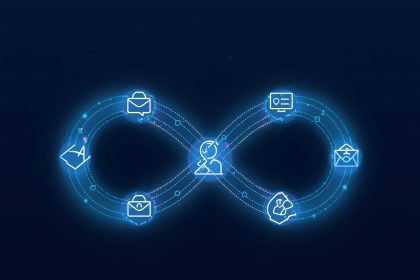
In 2025, loyalty marketing is no longer limited to a single channel or touchpoint. Today’s consumers expect their loyalty rewards to work seamlessly across every channel—from mobile apps and websites to in-store experiences and social platforms. According to Salesforce (2024), 76% of customers expect consistent experiences across all channels, and over 70% say reward programs influence their purchase decisions.
This Field Manual offers a practical framework for marketing teams to plan, integrate, and manage multi-channel loyalty ecosystems. It covers role assignments, system setup, automation workflows, analytics, and continuous improvement strategies for long-term retention.
“When loyalty becomes invisible but consistent, customers stay connected without effort. Integration isn’t just technology—it’s emotional convenience.”
— Mr. Phalla Plang, Digital Marketing Specialist
Roles & RACI
| Role | Responsibility | Accountable | Consulted | Informed |
| Marketing Director | Defines loyalty vision, KPIs, and strategy. | ✅ | CRM Manager | Leadership |
| CRM Manager | Manages customer database and automation workflows. | ✅ | Marketing Ops | Sales & Support |
| IT/Integration Lead | Implements APIs and ensures real-time data sync. | ✅ | Vendors, QA Lead | Marketing |
| Data Analyst | Monitors loyalty KPIs and insights. | CRM Manager | Director | |
| Customer Service | Supports customers with loyalty inquiries. | CRM Manager | Marketing | |
| Finance Team | Monitors reward cost and ROI. | Marketing Director | Management |
Key Point: Integration requires shared accountability. Marketing leads the vision, IT ensures functionality, and CRM maintains accuracy.
Prerequisites
Before launching an omnichannel loyalty program, ensure:
- Unified Customer Data: Centralize all user data in a Customer Data Platform (CDP) or CRM to track purchase behavior and engagement across channels (Gartner, 2024).
- Technology Alignment: Confirm interoperability between POS, e-commerce, app, and marketing systems using API connectors or middleware.
- Clear Reward Structure: Create transparent rules for earning and redeeming points across all touchpoints.
- Legal Compliance: Align with GDPR, CCPA, and PDPA data protection laws to safeguard customer information (International Association of Privacy Professionals [IAPP], 2025).
- Team Training: Ensure all staff understand customer journeys and the role of automation in loyalty integration.
Step-by-Step SOP
Step 1: Map the Customer Journey
- Identify all engagement points: website, mobile, app, store, and social platforms.
- Determine actions that trigger loyalty points (purchases, referrals, social shares).
- Align rewards to behavior milestones to encourage repeated engagement.
Step 2: Connect Systems via API or Middleware
- Integrate POS, CRM, and e-commerce platforms using connectors like Zapier, Segment, or MuleSoft (Salesforce, 2024).
- Sync real-time updates for new sign-ups, purchases, and redemptions.
- Conduct test transactions to confirm smooth data transfer between systems.
Step 3: Define Reward Tiers and Triggers
- Develop tiered programs (e.g., Bronze, Silver, Gold).
- Use AI-based triggers, such as purchase frequency or lifetime value, to auto-upgrade customers.
- Notify customers instantly via email, SMS, or push when they hit milestones.
Step 4: Personalize Engagement
- Employ CRM segmentation to deliver personalized offers.
- Example: Send bonus points to users who abandon carts or share reviews.
- Implement AI recommendation engines to suggest products or upgrades (Accenture, 2024).
Step 5: Merge Offline and Online Touchpoints
- Integrate POS systems with digital IDs or loyalty QR codes.
- Train store associates to assist customers in redeeming online rewards in-store.
- Keep both data flows synchronized via the CRM for unified visibility.
Step 6: Automate Data Flow and Quality Checks
- Set daily synchronization between databases to update balances and activities.
- Apply data deduplication and validation protocols to ensure consistency.
- Conduct monthly audits to eliminate duplicate or inactive accounts.
Step 7: Pilot the Program and Gather Insights
- Launch in one market or channel for 30–60 days.
- Track member sign-ups, redemption rates, and satisfaction scores.
- Adjust reward thresholds or communication frequency based on data insights.
Quality Assurance
Checklist for QA:
- Validate registration, login, and point accrual flows.
- Ensure data sync accuracy across all systems.
- Test reward redemption in both physical and digital environments.
- Verify notifications and emails for consistency and timing.
- Conduct data security and compliance audits quarterly.
Testing Tools:
- Postman: API integration testing.
- BrowserStack: Cross-platform user experience validation.
- Looker Studio: Data consistency and report visualization.
Analytics & Reporting
Measure performance with metrics that connect loyalty engagement to business outcomes.
Core KPIs:
- Active Member Rate: Percentage of customers who engage with rewards monthly.
- Redemption Rate: Ratio of redeemed points to total earned points.
- Customer Lifetime Value (CLV): Measure profitability over time.
- Churn Rate: Track percentage of inactive loyalty members.
- Incremental Sales Lift: Compare spend from loyalty vs. non-loyalty members.
Example Reporting Dashboard:
| Metric | Source | Frequency | Owner |
| Enrollment Growth | CRM | Weekly | CRM Manager |
| Redemption Rate | POS/App | Weekly | IT Lead |
| ROI Analysis | BI Tool | Monthly | Data Analyst |
| Customer Feedback | NPS Survey | Quarterly | Marketing Director |
Use data visualization tools like Power BI, Tableau, or Google Looker Studio to automate dashboards.
Troubleshooting
| Problem | Likely Cause | Solution |
| Points not updating | API latency | Re-sync systems and verify API response time |
| Duplicate member profiles | Inconsistent data entry | Use a unified customer ID for all platforms |
| Low redemption rate | Unattractive rewards | Refresh incentives and promote time-limited offers |
| Confused users | Complex rules | Simplify reward tiers and update FAQs |
| System slowdown | Server overload | Implement caching or load balancing solutions |
Pro Tip: Create an “integration log” to record every API update, customer complaint, and fix for faster root-cause analysis.
Continuous Improvement
- Gather Feedback Regularly: Use quarterly surveys and NPS metrics to capture member sentiment (Qualtrics, 2025).
- Test and Iterate: Conduct A/B testing for new incentives, reward emails, and referral bonuses.
- Adopt Predictive AI Models: Leverage AI to predict churn and proactively offer retention incentives (McKinsey, 2025).
- Promote Transparency: Provide real-time balance and tier visibility in customer portals and apps.
- Benchmark Annually: Compare your loyalty KPIs to industry standards through reports from NielsenIQ or Deloitte Insights.
Future Outlook (2025–2026):
Loyalty ecosystems are shifting toward AI-driven personalization and emotional engagement. Brands like Starbucks and Nike now integrate loyalty with wearable devices and voice assistants to create frictionless, adaptive experiences (Deloitte, 2025).
Key Takeaways
- Integrating loyalty programs across every channel builds consistent, data-driven engagement.
- Collaboration across Marketing, IT, and CRM ensures scalability and accuracy.
- Real-time data sync is essential for a unified customer experience.
- QA, analytics, and AI automation elevate reward relevance and ROI.
- Continuous optimization keeps the loyalty ecosystem fresh and future-ready.
References
- Accenture. (2024). The future of customer loyalty: AI-driven personalization and the experience economy. Accenture Research.
- Deloitte. (2025). Global marketing trends: Loyalty beyond transactions. Deloitte Insights.
- Gartner. (2024). Market guide for customer data platforms (CDPs) and loyalty management systems. Gartner Research.
- International Association of Privacy Professionals. (2025). Global privacy law comparison: GDPR, CCPA, and PDPA overview. IAPP.
- McKinsey & Company. (2025). How AI transforms loyalty programs: The personalization advantage. McKinsey Digital.
- Qualtrics. (2025). Global customer experience trends report. Qualtrics XM Institute.
- Salesforce. (2024). State of the connected customer: Digital experience and loyalty expectations. Salesforce Research.