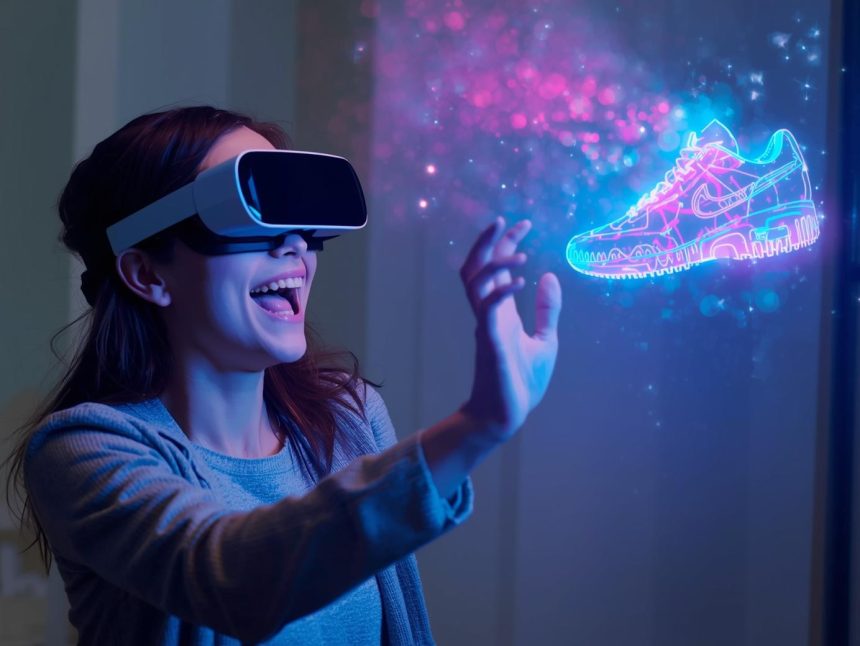
In e-commerce, the gap between in-store and online experiences is narrowing thanks to immersive commerce—the use of augmented reality (AR) and virtual reality (VR) to give customers realistic, interactive product experiences. From trying on glasses virtually to placing 3D furniture in your living room, immersive commerce is helping shoppers make better decisions and brands build deeper trust.
- 1. What Is Immersive Commerce?
- 2. Why Immersive Commerce Is Growing
- 3. Market Trends & Adoption
- 4. Real-World Examples
- 5. How It Works in E-Commerce
- 6. Benefits for Businesses
- 7. Tools & Platforms to Get Started
- 8. How to Implement Immersive Commerce
- 9. Challenges to Consider
- 10. Expert Insight
- 11. The Future of Immersive Commerce
- References
1. What Is Immersive Commerce?
Immersive commerce uses AR and VR technologies to allow customers to experience products before purchase (Statista, 2024).
- Augmented Reality (AR): Adds digital elements into the real world, usually through smartphones or AR glasses.
- Virtual Reality (VR): Creates fully digital shopping environments, typically accessed via VR headsets.
Both technologies aim to reduce uncertainty and make online shopping feel more like the physical experience.
2. Why Immersive Commerce Is Growing
More Confident Purchases
By letting shoppers visualize products in their space or on themselves, AR helps reduce doubt and hesitation (Shopify, 2025).
Lower Return Rates
Retailers using AR have seen return rates drop by as much as 25%, since customers have a better idea of what they’re buying (Shopify, 2025).
Stronger Brand Experiences
Immersive commerce stands out from static product pages, creating memorable interactions that boost brand loyalty.
3. Market Trends & Adoption
- The AR in retail market is projected to reach $17.6 billion by 2030, growing at 24.8% CAGR (Grand View Research, 2024).
- 71% of consumers say they would shop more often if AR tools were available (Snap Inc., 2024).
- VR shopping adoption is expected to surpass 120 million users globally by 2026 (Statista, 2024).
4. Real-World Examples
- IKEA Place – Lets users see how furniture fits into their homes via AR.
- Warby Parker – Offers AR try-on for eyeglasses.
- Nike Fit – Uses AR to scan feet and suggest the best shoe size.
- Sephora Virtual Artist – Allows customers to test makeup shades digitally.
5. How It Works in E-Commerce
- 3D Product Modeling – Creating lifelike models with accurate textures and colors.
- AR Product Previews – Customers place virtual products in real-world environments.
- VR Store Experiences – Fully immersive shopping in a virtual store.
- Virtual Assistance – AI chatbots or live agents guiding customers through AR/VR platforms.
6. Benefits for Businesses
- Higher Conversions – Increased buyer confidence leads to more purchases.
- Fewer Returns – More accurate product previews mean fewer mismatches.
- Competitive Edge – Unique shopping experiences set brands apart.
- Customer Insights – Data on how shoppers interact with AR/VR assets.
7. Tools & Platforms to Get Started
- Shopify AR – Add AR product previews to your store.
- Snap AR – Social AR try-on and interactive ads.
- Google ARCore – Tools for AR app development.
- Unity – Engine for creating VR and AR experiences.
8. How to Implement Immersive Commerce
Step 1: Select Suitable Products – AR works best for items where size, fit, or placement matters.
Step 2: Choose a Technology Partner – Pick AR/VR tools that integrate with your e-commerce site.
Step 3: Create High-Quality 3D Assets – Ensure realism for better engagement.
Step 4: Integrate Seamlessly – Make AR/VR easy to access from product pages.
Step 5: Promote the Feature – Educate customers with short tutorials.
Step 6: Track & Improve – Monitor usage and adjust the experience.
9. Challenges to Consider
- High Development Costs – Quality AR/VR requires upfront investment.
- Device Requirements – Not all shoppers have compatible hardware.
- Performance Concerns – Large 3D files can slow load times on mobile.
- Customer Education – Some may need guidance to use immersive features.
10. Expert Insight
“Immersive commerce turns imagination into reality—it lets customers experience products before they buy, building trust and excitement at the same time.” — Mr. Phalla Plang, Digital Marketing Specialist
11. The Future of Immersive Commerce
Emerging trends include:
- Metaverse Shopping Spaces – Persistent, interactive online malls.
- AI-Enhanced AR – Personalized recommendations during AR previews.
- Haptic Feedback in VR – Letting customers “feel” products virtually.
As AR-capable devices become more common, immersive commerce will shift from novelty to necessity.
Note
Immersive commerce bridges the gap between digital and physical retail. By investing in AR and VR experiences now, businesses can deliver the confidence, engagement, and excitement that modern shoppers demand—while reducing returns and building brand loyalty.
More Read

References
Grand View Research. (2024). Augmented reality in retail market size & trends. https://www.grandviewresearch.com
Shopify. (2025). How AR can reduce returns and improve conversions. https://www.shopify.com
Snap Inc. (2024). The impact of AR on shopping behavior. https://ar.snap.com
Statista. (2024). Virtual reality shopping adoption worldwide. https://www.statista.com