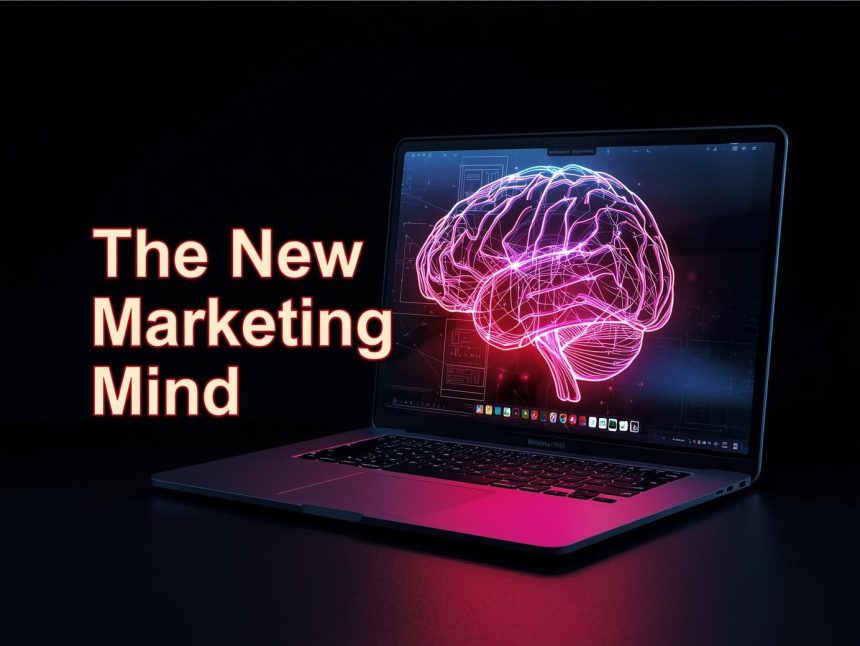
In the fast-moving world of digital marketing, one shift is clearly dominating attention: generative AI. From content creation to optimization, audience targeting to campaign automation, it is changing both strategy and execution. This article explores how marketers are adopting generative AI, what the latest data shows about its effectiveness, and how businesses can use it effectively at scale.
“The future of marketing belongs to those who will harness AI first.” — Mr. Phalla Plang, Digital Marketing Specialist
Why Generative AI Is the Hottest Digital Marketing Topic
A Market Growing at Breakneck Speed
The global generative AI market is projected to reach USD 356 billion by 2030, growing at a compound annual growth rate of about 41% (Grand View Research, 2024). Within marketing, the AI-driven market is estimated at USD 47 billion in 2025, up significantly from USD 12 billion in 2020 (Statista, 2025).
Private investment is equally strong. In 2024, global private investment in generative AI hit USD 33.9 billion, an increase of nearly 19% from 2023 (Stanford HAI, 2025). These figures prove that generative AI is no passing trend—it is becoming central to digital marketing strategies worldwide.
Integration Into SEO and Automation
Marketers are already using AI widely. Surveys show 86% of SEO professionals integrate AI into their strategies, with 65% reporting better results and 75% using AI to reduce manual tasks like keyword research and metadata writing (Seoprofy, 2025).
Generative AI also fuels engagement. AI-powered personalized emails see 29% higher open rates and 41% higher click-through rates than non-personalized ones (Digital Marketing Institute, 2025).
Industry experts predict that by 2025, SEO and AI will merge into a single ecosystem—where AI not only generates content but also guides how it is indexed, optimized, and surfaced in both traditional search engines and AI-driven platforms (Reuters, 2025).
Real Business Results
One striking case comes from Zalando, the European fashion retailer. Using AI for image production, the company reduced turnaround time from 6–8 weeks to just 3–4 days, while cutting costs by ~90%. By Q2 2025, AI-generated assets made up 70% of Zalando’s editorial content (Reuters, 2025).
That’s not hype. That’s a competitive advantage.
Five Key Ways Generative AI Is Reshaping Digital Marketing
1. Content Creation and Ideation
Generative AI supports everything from blog drafts and ad copy to visuals and video scripts. Tools such as ChatGPT, Midjourney, and Runway help teams create and test content quickly. IBM reports that marketers increasingly use AI for SEO-friendly headlines and topic ideation (IBM, 2024).
Best practice: Keep humans in the loop. AI drafts save time, but human editors ensure cultural nuance, accuracy, and tone.
2. SEO Optimization and Gap Analysis
AI helps identify content gaps, analyze SERPs, and generate optimized metadata. Because AI-driven platforms like Google SGE and ChatGPT are changing how people find information, marketers must blend traditional SEO with AI insights for maximum visibility (Omnius, 2025).
3. Personalization and Hyper-Targeting
AI tailors content to individuals by analyzing first-party data and predicting preferences. A recent study showed a 17% improvement in offer acceptance rates when generative AI fine-tuned personalized offers with contrastive learning techniques (Challapalli et al., 2025).
That means ads, landing pages, and emails become smarter and more relevant, increasing conversions.
4. Campaign Workflow Automation
Generative AI reduces repetitive tasks by assisting with ad copy, A/B test variations, bidding strategies, and even campaign setup. Platforms like Taboola’s Abby let marketers build campaigns through natural-language chat prompts (Business Insider, 2024).
This democratizes marketing, allowing even small businesses to scale campaigns without heavy technical expertise.
5. Metadata and User-Generated Content Enhancement
AI-generated metadata boosts discoverability. A field experiment on video platforms showed AI-generated titles increased views by 7.1% when humans co-edited the AI’s output (Zhang et al., 2024).
This is particularly powerful for user-generated content platforms, where metadata quality often determines visibility.
Challenges and Risks of Generative AI
- Disinformation Risks: AI can produce factual errors or misleading content. Researchers warn of AI-generated disinformation affecting marketing trust (Mukherjee, 2024).
- Ethics and Privacy: Personalization must respect data privacy laws (e.g., GDPR, CCPA).
- Loss of Originality: If brands rely too heavily on AI, content risks becoming generic. Adding brand voice and originality is critical.
- Integration Hurdles: Many AI tools don’t seamlessly connect with CMS, CRM, or analytics platforms.
- Adoption Curve: AI adoption surged in 2023–24, but reports show some organizations paused to reassess strategies in 2025 (eMarketer, 2025).
How to Adopt Generative AI: A Practical Roadmap
- Audit your workflow: Identify bottlenecks (e.g., ideation, metadata, visuals).
- Pilot a use case: Start with small tests like AI-assisted blog outlines or ad copy.
- Select tools wisely: For SEO, try Surfer SEO or Clearscope. For visuals, Midjourney or Runway.
- Keep human oversight: Blend AI speed with human editing.
- Track performance: Compare AI-assisted vs traditional campaigns.
- Scale gradually: Roll out AI across multiple workflows once trust is built.
- Refresh and localize: Continuously update content to stay competitive in global search rankings.
SEO Optimization Tips for Generative AI Content
- Use long-tail keywords like “generative AI in digital marketing” or “AI-powered SEO strategies 2025.”
- Structure articles with FAQ and schema markup for AI search assistants.
- Refresh content frequently with updated stats and case studies.
- Highlight case studies from different industries to show credibility and relevance.
The Future of Generative AI in Marketing
- Multimodal AI will combine text, image, and voice generation.
- Virtual influencers (GenKOL) will reshape social campaigns (Zhang et al., 2025).
- End-to-end AI stacks will integrate with CRM and analytics tools.
- Transparency frameworks will emerge for ethical AI marketing.
- Real-time personalization will adapt instantly to customer behavior.
Note
Generative AI is no longer an experiment—it’s a strategic advantage. From Zalando’s campaigns in Europe to enterprises in the U.S., businesses using AI are seeing faster workflows, lower costs, and higher engagement.
The winning formula is AI + human creativity + brand authenticity. Or as Mr. Phalla Plang puts it: “The future of marketing belongs to those who will harness AI first.”
More Read

References
Business Insider. (2024, October). Taboola launches generative AI ad assistant to compete with Google and Meta. https://www.businessinsider.com/taboola-generative-ai-ad-assistant-abby-google-facebook-competition-2024-10
Challapalli, V., et al. (2025). SLM4Offer: Personalized marketing offer generation using contrastive learning fine-tuning. arXiv. https://arxiv.org/abs/2508.15471
Digital Marketing Institute. (2025). 10 eye-opening AI marketing stats in 2025. https://digitalmarketinginstitute.com/blog/10-eye-opening-ai-marketing-stats-in-2025
Grand View Research. (2024). Generative AI market size, share & trends analysis report, 2024–2030. https://www.grandviewresearch.com/industry-analysis/generative-ai-market
IBM. (2024). Generative AI in marketing: Transforming creativity and strategy. https://www.ibm.com/think/topics/generative-ai-marketing
Mukherjee, A. (2024). Safeguarding marketing research: AI-fabricated disinformation. arXiv. https://arxiv.org/abs/2403.14706
Omnius. (2025). AI Search Industry Report 2025. https://www.omnius.so/blog/ai-search-industry-report
Reuters. (2025, May 7). Zalando uses AI to speed up marketing campaigns, cut costs. https://www.reuters.com/business/media-telecom/zalando-uses-ai-speed-up-marketing-campaigns-cut-costs-2025-05-07
Reuters. (2025, July 29). Marketing trends 2025: SEO and AI go hand in hand. https://www.reuters.com/press-releases/marketing-trends-2025-seo-ai-go-hand-in-hand-2025-07-29
Seoprofy. (2025). 60 AI SEO statistics for 2025. https://seoprofy.com/blog/ai-seo-statistics
Stanford HAI. (2025). AI Index Report 2025. https://hai.stanford.edu/ai-index/2025-ai-index-report
Statista. (2025). AI in marketing market revenue worldwide, 2020–2025. https://www.statista.com
Zhang, X., Sun, C., Zhang, R., & Goh, K.-Y. (2024). The value of AI-generated metadata for UGC platforms: A field experiment. arXiv. https://arxiv.org/abs/2412.18337
Zhang, Z., et al. (2025). GenKOL: Generative AI for virtual influencers. arXiv. https://arxiv.org/abs/2509.14927