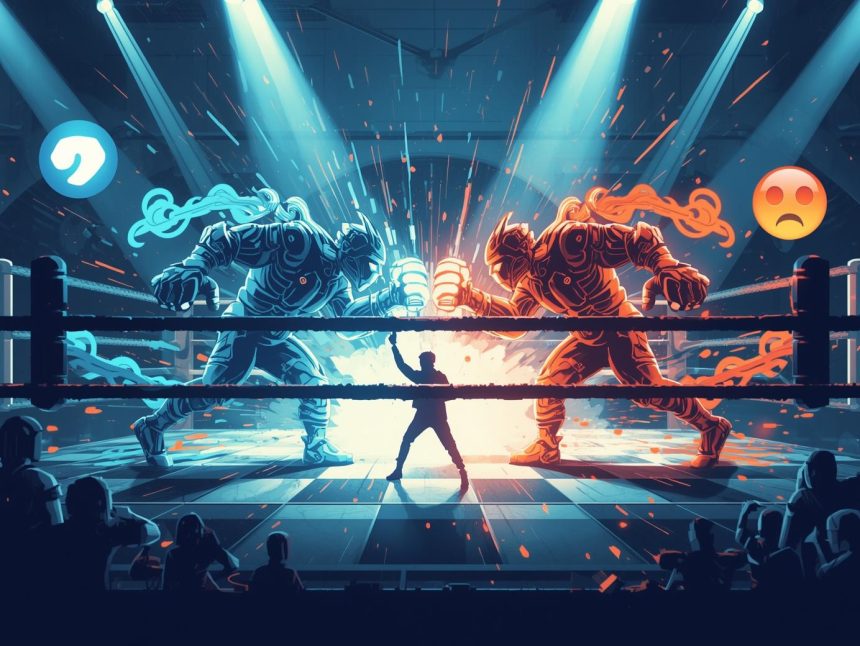
In today’s digital marketing world, two strategies stand out for nurturing leads and boosting conversions: drip campaigns and marketing automation. Though these terms are often used interchangeably, they are not the same. Understanding their differences is key to designing smarter, more efficient marketing workflows.
- What Is a Drip Campaign?
- What Is Marketing Automation?
- Key Differences Between Drip Campaigns and Marketing Automation
- When to Use a Drip Campaign
- When to Use Marketing Automation
- Real-World Examples
- Drip and Automation Can Work Together
- Top Tools That Offer Both Features
- Performance Metrics to Watch
- Quick Recap: Which Should You Use?
- References
This article explains what each strategy is, compares their features, and guides you on when to use drip campaigns, when to use marketing automation, and how to use both effectively.
What Is a Drip Campaign?
A drip campaign is a set of pre-scheduled emails sent to a user over time based on a single trigger—such as signing up for a newsletter or downloading a lead magnet. These emails follow a fixed timeline, delivering content step-by-step without reacting to the user’s behavior after the trigger event (Chaffey, 2024).
For example:
- Day 1: Welcome email
- Day 3: Educational content
- Day 5: Product benefit email
- Day 7: CTA to book a demo
Drip campaigns are time-based and treat all recipients in the sequence the same way.
What Is Marketing Automation?
Marketing automation is a broader approach that uses behavioral triggers, data, and workflows to send personalized messages across different channels like email, SMS, social ads, and CRM. Unlike drip campaigns, marketing automation reacts in real time to user behavior.
For example, if a user:
- Opens an email → receives a follow-up offer
- Visits the pricing page → gets a reminder email after 2 hours
- Doesn’t engage → receives a different re-engagement email
According to HubSpot (2024), marketing automation creates dynamic journeys based on each contact’s interests and behaviors, resulting in higher engagement and conversion rates.
Key Differences Between Drip Campaigns and Marketing Automation
| Feature | Drip Campaign | Marketing Automation |
| Trigger | One-time action (e.g., sign-up) | Multiple behaviors (e.g., page visit, click, inactivity) |
| Timing | Fixed schedule (e.g., every 3 days) | Dynamic, behavior-based timing |
| Path | Same for every recipient | Personalized journey for each user |
| Channels | Email only (usually) | Email, SMS, ads, CRM, chatbot |
| Complexity | Simple and linear | Advanced and conditional |
| Use Case | Welcome, nurturing, education | Full-funnel engagement, lead scoring |
When to Use a Drip Campaign
Drip campaigns are perfect for simple, scheduled communication that doesn’t need to adjust to user behavior. These campaigns are easy to set up and work well for:
- Welcoming new subscribers
- Delivering lead magnets or resources
- Onboarding new users
- Running email courses or checklists
- Following up after events or demos
For instance, when someone downloads your free ebook, you can deliver value across 5–7 emails using a fixed drip sequence. Everyone receives the same emails, regardless of whether they open or click.
Why they work: Drip campaigns save time and ensure consistent communication. They are especially useful for top-of-funnel nurturing (Campaign Monitor, 2024).
When to Use Marketing Automation
Use marketing automation when you want your messages to adapt to user behavior. This allows you to create more relevant, personalized experiences that guide each lead through the buying journey.
Common scenarios:
- Lead scoring and sales alerts
- Behavior-based re-engagement
- Multi-step onboarding journeys
- Personalized product recommendations
- Cross-channel lead nurturing
According to Salesforce (2023), marketing automation boosts lead generation efficiency by up to 451%, and companies using behavior-triggered emails report 119% higher click rates than non-personalized campaigns (Smart Insights, 2024).
Why it works: Automation reacts in real time, ensuring that users receive the right message at the right moment—resulting in higher engagement and ROI.
Real-World Examples
Example 1: Free Guide Download
- Drip Campaign: Deliver 5 automated emails over 10 days explaining how to use the guide.
- Marketing Automation: Monitor which pages of the guide they visit; trigger different follow-ups based on interaction.
Example 2: Webinar Sign-up
- Drip Campaign: Send reminder emails before and after the webinar to all registrants.
- Marketing Automation: Send tailored follow-ups based on whether the person attended, left early, or clicked a poll.
Example 3: Free Trial Onboarding
- Drip Campaign: Welcome sequence with feature explanations sent over 7 days.
- Marketing Automation: Adjust content based on which features the user has explored in the product dashboard.
Drip and Automation Can Work Together
You don’t have to choose between one or the other. In many cases, drip campaigns can be a component within a larger marketing automation flow.
Example: A user downloads an ebook → enters a drip campaign → if they click a link in Email 3, a new automation branch triggers a product demo invitation.
This hybrid approach gives you the consistency of drip emails with the flexibility of automation logic.
Top Tools That Offer Both Features
Many email platforms now support both drip campaigns and full automation:
- Mailchimp: Great for basic drip sequences; automation limited to mid-level features.
- ActiveCampaign: Offers robust automation, CRM, and lead scoring.
- ConvertKit: Creator-focused platform with simple automation logic.
- HubSpot: Enterprise-level automation and sales integration.
- Drip: Built for ecommerce drip and behavioral automation.
Tip: Start with a tool that fits your business size and complexity. Most offer visual workflow builders to simplify the process.
Performance Metrics to Watch
No matter which method you use, track key metrics to ensure your emails are working:
| Metric | Drip Campaign Benchmark | Automation Benchmark |
| Open Rate | 20–25% | 25–35% |
| Click-Through Rate (CTR) | 2.5–4.0% | 4.0–6.5% |
| Unsubscribe Rate | 0.1–0.3% | 0.05–0.25% |
(Source: Campaign Monitor, 2024)
If performance lags:
- Improve your subject lines
- Simplify your CTAs
- Personalize content based on user behavior
Quick Recap: Which Should You Use?
Use Drip Campaigns when:
- You need a simple, timed sequence
- Everyone should receive the same emails
- You’re onboarding new subscribers or delivering a resource
Use Marketing Automation when:
- You want to react to user behavior
- You manage a complex sales cycle or funnel
- You need multi-channel communication (email, SMS, ads)
Note
Both drip campaigns and marketing automation play crucial roles in a modern marketing strategy. While drip campaigns offer simplicity and reliability, marketing automation delivers powerful personalization and adaptability. The best strategy is often to combine both, using drip emails as the foundation and automation to enhance engagement based on behavior.
Whether you’re just getting started or looking to scale, understanding the differences helps you choose the right tool, avoid wasted effort, and build a smarter, more effective marketing system.
More Read

References
Campaign Monitor. (2024). Email marketing benchmarks by industry. Retrieved from https://www.campaignmonitor.com/resources/guides/email-marketing-benchmarks/
Chaffey, D. (2024). Email marketing trends 2024. Smart Insights. Retrieved from https://www.smartinsights.com/email-marketing/email-communications-strategy/email-marketing-trends/
HubSpot. (2024). State of Marketing 2024. Retrieved from https://www.hubspot.com/state-of-marketing
Salesforce. (2023). State of Marketing Report. Retrieved from https://www.salesforce.com/resources/research-reports/state-of-marketing/
Smart Insights. (2024). Email personalization statistics. Retrieved from https://www.smartinsights.com/email-marketing/email-personalization/email-personalization-statistics/