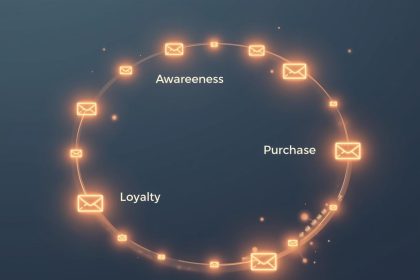
Drip campaigns are among the most powerful tools in email marketing today. They help businesses automatically send a series of emails over time to educate, engage, and convert leads without needing constant manual follow-up. Whether you are a startup or an enterprise, drip campaigns can significantly improve your lead nurturing process and boost your conversion rates.
In this article, we’ll explore real-life drip campaign examples that you can model. You’ll learn how to design your own, what tools to use, and how to optimize each campaign for higher ROI. All examples are backed by reliable data and best practices that work in 2025.
What Is a Drip Campaign?
A drip campaign is a type of email marketing automation that sends pre-written messages to leads based on a schedule or user actions. These campaigns are designed to “drip” helpful information over time, hence the name. The goal is to deliver the right message to the right person at the right time (Chaffey, 2024).
Drip campaigns differ from one-time email blasts. Instead of sending a single message, you create a sequence of emails that gradually moves leads down the sales funnel—from awareness to decision.
Why Are Drip Campaigns Effective for Lead Nurturing?
Lead nurturing is the process of developing relationships with buyers at every stage of the sales funnel. Drip campaigns are ideal for this because they:
- Build trust through consistent communication.
- Deliver targeted content based on lead interests or behaviors.
- Reduce manual work with automation.
- Increase engagement and conversions over time.
According to Salesforce (2023), companies that use marketing automation like drip campaigns see a 451% increase in qualified leads. Furthermore, nurtured leads make 47% larger purchases than non-nurtured ones (Demand Gen Report, 2023).
1. Welcome Drip Campaign (for New Subscribers)
Goal: Build trust and guide new leads to their next step.
Example Workflow:
- Email 1: Welcome message with clear next steps.
- Email 2: Introduction to your brand’s mission or values.
- Email 3: Share your most helpful blog posts or free tools.
- Email 4: Highlight customer testimonials or social proof.
- Email 5: Encourage product exploration or demo booking.
Why it works: Welcome emails have the highest open rates of any email type—about 68.6% (GetResponse, 2024). They help make a strong first impression and increase the chance of ongoing engagement.
2. Educational Drip Campaign (for Cold Leads)
Goal: Deliver helpful content that builds credibility and solves real problems.
Example Workflow:
- Email 1: Address a common pain point with insights or data.
- Email 2: Share a relevant case study or success story.
- Email 3: Provide a checklist, template, or other free tool.
- Email 4: Invite the lead to attend a live or recorded webinar.
- Email 5: Remind them of your solution with a soft CTA.
Why it works: Educational content helps you stay top of mind while positioning your brand as an expert. HubSpot (2024) reports that companies who educate their leads generate 50% more sales-ready opportunities.
3. Lead Magnet Follow-Up Campaign
Goal: Engage and convert leads who downloaded a resource or signed up for something free.
Example Workflow:
- Email 1 (Immediate): Deliver the promised resource.
- Email 2: Reinforce the content with action tips or highlights.
- Email 3: Share user testimonials or related content.
- Email 4: Offer a product trial or invite to a consultation.
- Email 5: Create urgency with a time-sensitive offer.
Why it works: A lead magnet shows interest. Following up with targeted emails increases the chance of moving them to the next step. According to MarketingSherpa (2023), drip campaigns can increase sales by up to 80% when used as follow-up after resource downloads.
4. Demo Follow-Up Drip Campaign
Goal: Convert leads who attended a demo but didn’t purchase.
Example Workflow:
- Email 1 (Post-demo): Recap key features and thank them.
- Email 2: Emphasize the unique value your product provides.
- Email 3: Share FAQs to overcome common objections.
- Email 4: Include a customer success story relevant to their use case.
- Email 5: Close with a limited-time offer or ask for a follow-up call.
Why it works: Demos create buying intent, but not everyone is ready to commit. Drip emails keep the conversation going until the lead is ready to buy.
5. Re-engagement Drip Campaign (for Silent Leads)
Goal: Bring back leads who have stopped opening your emails or engaging with your content.
Example Workflow:
- Email 1: “We haven’t heard from you” message with empathy.
- Email 2: Share a new feature, product update, or exciting news.
- Email 3: Include a discount, incentive, or bonus.
- Email 4: Reminder or countdown to deadline.
- Email 5: “We’ll unsubscribe you soon” (optional).
Why it works: Studies show that reactivating dormant leads can reduce acquisition costs by up to 33% (Invesp, 2023). Even a small reactivation rate can yield high returns.
How to Build Your Own Drip Campaign (Simple Steps)
- Set a clear goal – Know what action you want the lead to take (book a call, download a guide, make a purchase).
- Segment your audience – Use behavior (clicked a link, signed up, downloaded resource) to group leads by interest.
- Write your email sequence – Use clear, friendly language. Be brief and helpful.
- Use a drip tool – Tools like ActiveCampaign, Mailchimp, or ConvertKit let you automate delivery based on triggers.
- Measure results – Track open rate, click-through rate, and conversion rate. Adjust content if needed.
Top Tools for Creating Drip Campaigns
- Mailchimp: Ideal for beginners, drag-and-drop automation builder.
- ActiveCampaign: Advanced automation, CRM integration.
- ConvertKit: Great for content creators and bloggers.
- HubSpot: Best for B2B and SaaS with CRM and lead scoring.
- Drip: Built for ecommerce, easy Shopify integration.
Best Practices for Drip Campaigns That Convert
- Personalize the content: Use names, company info, or behavior triggers.
- Keep emails short: Aim for 100–300 words max with a single CTA.
- Send on a schedule: Avoid blasting too many emails too fast.
- Use clear subject lines: Your open rates depend heavily on them.
- Include value in every email: Don’t just sell. Teach or help too.
- Test subject lines and CTAs: Split test for better performance.
Key Metrics to Track
- Open Rate: Are people reading your emails?
- Click Rate: Are they taking action?
- Conversion Rate: Are they doing what you want them to do?
- Unsubscribe Rate: Too many drop-offs? You may need to change your frequency or tone.
Campaign Monitor (2024) notes that average open rates for drip emails are 20–25%, while click rates average 2.6–4.1% depending on industry. Monitoring these helps you optimize future campaigns.
Note
If you want to nurture leads and grow your sales pipeline, drip campaigns are your best friend. They automate the work of follow-up while keeping your brand relevant and trustworthy. You don’t need to be a tech expert — just use a good tool, start with a small sequence, and improve over time.
Remember: the goal isn’t just to send emails — it’s to build relationships.
Start with the examples in this article, apply them to your business, and watch your lead nurturing performance grow.
More Read

References
Chaffey, D. (2024). Email marketing trends 2024. Smart Insights. Retrieved from https://www.smartinsights.com/email-marketing/email-communications-strategy/email-marketing-trends/
Demand Gen Report. (2023). 2023 Lead Nurturing Benchmark Study. Retrieved from https://www.demandgenreport.com/
GetResponse. (2024). Email marketing benchmarks 2024. Retrieved from https://www.getresponse.com/resources/reports/email-marketing-benchmarks
HubSpot. (2024). State of marketing 2024. Retrieved from https://www.hubspot.com/state-of-marketing
Invesp. (2023). Customer retention vs. acquisition stats. Retrieved from https://www.invespcro.com/blog/customer-acquisition-retention/
MarketingSherpa. (2023). Email marketing benchmark report. Retrieved from https://www.marketingsherpa.com/article/chart/email-drip-campaigns
Salesforce. (2023). State of Marketing Report. Retrieved from https://www.salesforce.com/resources/research-reports/state-of-marketing/
Campaign Monitor. (2024). Email marketing benchmarks by industry. Retrieved from https://www.campaignmonitor.com/resources/guides/email-marketing-benchmarks/