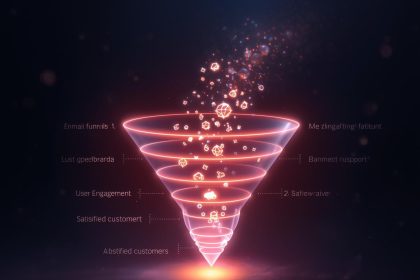
Gone are the days when inserting a first name in an email was enough. In 2025, consumers expect brands to know them—not just by name, but by preferences, behaviours, and intent. This level of personalisation is possible through Customer Relationship Management (CRM) systems that power hyper-personalised email campaigns.
- 1. What is Hyper-Personalisation in Email Marketing?
- 2. Why It Matters Now More Than Ever
- 3. What CRM Data Powers Hyper-Personalisation?
- 4. Use Cases: Personalisation That Works
- 5. Best Tools to Implement CRM-Powered Personalisation
- 6. Step-by-Step Guide to Start Hyper-Personalisation
- 7. Challenges to Be Aware Of
- 8. Case Studies: Real-World Impact
- 9. The Future of Hyper-Personalisation
- References
By combining real-time behavioural data, automated decision-making, and segmented communication, CRM tools allow businesses to craft emails that are not only opened but also acted upon. This article explains how CRM data empowers email personalisation, why it’s a must-have, and how brands can apply it today.
1. What is Hyper-Personalisation in Email Marketing?
Hyper-personalisation is the use of CRM data, AI, and predictive analytics to deliver emails that are dynamically adapted to each user in content, timing, and layout. Unlike basic personalisation (e.g., “Hi John”), this method includes:
- Behaviour-based product recommendations
- Lifecycle-specific messaging
- Location-based offers
- Sent-time optimisation
It’s all about using the right data to send the right message at the right moment.
2. Why It Matters Now More Than Ever
As consumers become more selective, irrelevant emails get ignored—or worse, flagged as spam. According to McKinsey & Company (2023):
“Companies that excel at personalisation generate 40% more revenue than their slower-growing counterparts.”
Other findings:
- 76% of consumers get frustrated when emails feel impersonal (McKinsey & Company, 2023).
- Personalised emails have transaction rates 6x higher than non-personalised ones (Experian, 2023).
- Email ROI reaches up to 122% with CRM-enabled strategies (Litmus, 2024).
3. What CRM Data Powers Hyper-Personalisation?
A modern CRM system like HubSpot, Salesforce, or Klaviyo serves as a hub for customer intelligence. Useful data types include:
| CRM Data Type | Used For |
| Demographics | Language, region, age-specific content |
| Purchase History | Tailored product upselling or reorder reminders |
| Email Engagement History | Send-time personalisation, retargeting |
| Web Browsing Behaviour | Abandoned cart triggers, content interest |
| Lifecycle Stage | Onboarding vs. loyalty vs. churn prevention |
4. Use Cases: Personalisation That Works
A. Cart Abandonment Recovery
- CRM identifies abandoned carts.
- Email auto-sends after 30 mins.
- Includes dynamic item images and stock levels.
📈 Result: Klaviyo reports 20–30% recovery rates for such emails.
B. Dynamic Product Recommendations
- Email shows “You May Also Like” based on browsing/purchase data.
- Powered by predictive algorithms in CRM.
📈 Result: Amazon uses this to generate 35% of its sales (Drift, 2024).
C. Re-engagement Campaigns
- CRM tracks unresponsive users.
- Triggers win-back emails with exclusive offers.
📈 Result: Can recover 12–15% of churned users (Campaign Monitor, 2024).
5. Best Tools to Implement CRM-Powered Personalisation
| Tool | Best For | Link |
| HubSpot CRM | Automation workflows, segmentation | Visit HubSpot |
| Klaviyo | E-commerce, product-based targeting | Visit Klaviyo |
| Salesforce MC | Large-scale campaigns, AI-driven content | Visit Salesforce |
| ActiveCampaign | Small to medium businesses | Visit ActiveCampaign |
These platforms help integrate customer data into your email strategy with drag-and-drop personalisation features, A/B testing, and predictive content.
6. Step-by-Step Guide to Start Hyper-Personalisation
Step 1: Clean Your CRM
Ensure your contact database is:
- Up-to-date
- De-duplicated
- GDPR-compliant
Step 2: Segment Your Lists
Group contacts by:
- Customer lifecycle
- Interests
- Purchase value
Step 3: Build Dynamic Content
Use conditional blocks to change email content based on user segments:
- Product images
- Offers
- CTAs (Call to Action)
Step 4: Automate Email Journeys
Set automated triggers for:
- Welcome emails
- Abandoned carts
- Post-purchase follow-ups
Step 5: Track Metrics Beyond Opens
Key metrics include:
- Revenue per email
- Conversion rate
- Average order value
7. Challenges to Be Aware Of
| Challenge | Solution |
| Data Privacy Regulations | Use double opt-in and offer easy unsubscribes (GDPR, CCPA) |
| Over-Personalisation | Don’t mention sensitive or overly specific user actions |
| Integration Issues | Use middleware tools like Zapier or native connectors |
| Content Scalability | Use AI tools to generate variations quickly |
8. Case Studies: Real-World Impact
Fashion E-commerce Brand
- Used Klaviyo + Shopify to send browse abandonment emails.
- Achieved 98% increase in email revenue within 3 months (Litmus, 2024).
Drift (B2B Software)
- Sent demo invites based on web visits.
- CRM-triggered follow-ups increased bookings by 56% (Drift, 2024).
9. The Future of Hyper-Personalisation
Looking ahead, we’ll see:
- AI-generated, real-time email content based on customer’s latest behaviour.
- Voice-activated email previews using smart assistants.
- Biometric CRM inputs for next-gen personalisation (e.g., wearables data).
Brands not investing in this level of automation will fall behind.
Note
In 2025, email marketing must go far beyond basic name tags. CRM data is the secret engine behind email strategies that feel personalised, timely, and impactful. By using real-time data, segmenting your audience, and automating workflows, you can send emails that connect—and convert.
Start now by upgrading your CRM, auditing your data, and building out your first dynamic content blocks. Email marketing isn’t dead—it’s just becoming smarter.
More Read

References
Campaign Monitor. (2024). The state of email marketing 2024. https://www.campaignmonitor.com/resources/guides/
Drift. (2024). B2B personalization strategies that work. https://www.drift.com
Experian. (2023). Email marketing benchmark report. https://www.experian.com
HubSpot. (2024). CRM and marketing automation. https://www.hubspot.com
Klaviyo. (2024). Segmentation and personalization at scale. https://www.klaviyo.com
Litmus. (2024). Personalization and ROI in email marketing. https://www.litmus.com
McKinsey & Company. (2023). The next in personalization 2023. https://www.mckinsey.com/business-functions/growth-marketing-and-sales/our-insights/the-next-in-personalization-2023