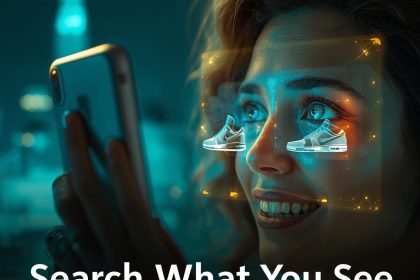
In 2025, augmented reality (AR) try-on experiences are redefining how consumers shop online. Once viewed as futuristic, AR has evolved into a mainstream technology that blends convenience, personalization, and trust. From beauty retailers like Sephora to luxury brands such as Gucci, AR allows customers to visualize products on themselves before buying. This innovation is reshaping e-commerce conversion rates and reducing product returns (Statista, 2025).
- Myth #1: AR Try-Ons Are Only for Big Brands
- Myth #2: AR Try-Ons Don’t Affect Sales
- Myth #3: AR Try-Ons Require Complex Development
- Myth #4: AR Try-Ons Are Just a Gimmick
- Integrating the Facts: Building a Holistic AR Strategy
- Measurement & Proof: Quantifying the Impact
- Future Signals: The Next Evolution of AR Commerce
- Key Takeaways
- References
Yet, misconceptions persist. Many marketers still believe AR is costly, complex, or exclusive to tech giants. These myths often discourage smaller brands from adopting immersive shopping solutions. This article debunks those myths with research-based evidence and actionable strategies for 2025 marketers aiming to convert browsers into loyal buyers through interactive AR try-on technology.
Myth #1: AR Try-Ons Are Only for Big Brands
Fact: Affordable AR tools now make immersive experiences accessible to small and medium-sized businesses.
In 2024, Shopify introduced Shopify AR and partnered with Snapchat to offer merchants plug-and-play AR tools, cutting development costs dramatically (Shopify, 2024). Meanwhile, Meta Spark Studio and Apple’s Quick Look frameworks empower brands to design AR previews without coding expertise. These tools enable smaller brands to deliver experiences that once required enterprise-level budgets.
What To Do:
Begin with lightweight AR integrations available on social platforms such as Instagram, TikTok, and Pinterest. Start with a few high-impact products like eyewear, makeup, or shoes where visualization influences purchase confidence. Focus on improving customer experience rather than achieving perfection in 3D realism.
Myth #2: AR Try-Ons Don’t Affect Sales
Fact: AR try-ons significantly enhance purchase intent and customer engagement.
A 2025 Deloitte report found that customers using AR tools are 94% more likely to complete a purchase compared to those who do not (Deloitte, 2025). Similarly, Shopify merchants with AR-enabled products reported up to 40% higher conversion rates and a 25% drop in product returns, as consumers make more informed choices (Shopify, 2024).
What To Do:
Integrate clear call-to-action prompts such as “Try It On Now” or “Visualize in Your Space.” Combine AR with AI-driven recommendation systems that tailor products based on users’ browsing history and preferences. Use analytics tools like Google Analytics 4 and Meta Pixel to measure engagement-to-purchase rates from AR sessions.
Myth #3: AR Try-Ons Require Complex Development
Fact: No-code and low-code AR platforms now make deployment seamless.
By 2025, cloud-based AR providers such as Zakeke, Threekit, and VNTANA have simplified 3D product modeling and integration (Adobe, 2025). These tools automate rendering, scaling, and device optimization, enabling even small teams to launch AR features without advanced technical skills. Moreover, WebAR allows customers to access AR experiences directly through browsers—no app downloads required.
What To Do:
Use WebAR software development kits (SDKs) or hire freelance 3D creators to digitize your best-selling products. Compress file sizes to ensure fast loading times, and optimize AR experiences for mobile responsiveness. Test the user journey carefully to ensure smooth transitions between “try-on” and “add-to-cart.”
Myth #4: AR Try-Ons Are Just a Gimmick
Fact: AR try-ons build measurable trust and deliver real financial impact.
According to McKinsey & Company (2025), retailers leveraging AR experiences saw up to 40% higher average order values and longer session durations compared to non-AR product pages. The key reason? AR bridges the psychological gap between online browsing and in-person shopping by providing confidence and control.
As Mr. Phalla Plang, Digital Marketing Specialist, notes:
“AR try-on experiences transform passive browsing into emotional engagement. When customers see themselves wearing or using the product, their purchase intent becomes tangible—and conversions follow.”
What To Do:
Embed AR experiences into your brand storytelling. Pair try-ons with user-generated content (UGC) by encouraging customers to share AR selfies or videos using branded hashtags. This strategy not only enhances authenticity but also amplifies reach across social media platforms.
Integrating the Facts: Building a Holistic AR Strategy
An effective AR strategy requires integration across the customer journey. Marketers should focus on four pillars:
- Personalization: Use first-party data to recommend AR experiences that align with user preferences.
- Omnichannel Activation: Extend AR access through email, websites, and social media platforms.
- User Experience (UX): Simplify the AR process—minimize steps between try-on and checkout.
- Trust and Transparency: Provide real-time reviews and sizing information to support AR insights.
Together, these elements transform AR from a novelty into a conversion engine rooted in convenience and confidence.
Measurement & Proof: Quantifying the Impact
Accurate measurement is essential to validate AR effectiveness. Key performance indicators include:
- Engagement Rate: Percentage of users who interact with AR tools.
- Conversion Lift: Difference in purchase rates between AR and non-AR users.
- Average Session Time: Indicator of engagement quality and product interest.
- Return Rate Reduction: Demonstrates improved understanding of product fit.
Run A/B tests to compare standard product pages against AR-enhanced versions. Tools like Shopify AR Analytics and Google’s ARCore Insight Suite provide detailed reports on AR-driven engagement metrics.
Future Signals: The Next Evolution of AR Commerce
The future of AR shopping lies at the intersection of AI, computer vision, and personalization. In 2026, retailers are expected to adopt generative AI for real-time body mapping, facial expression analysis, and environmental lighting adjustments, offering hyper-realistic previews.
Moreover, wearable AR devices such as Apple Vision Pro and Meta Quest 3 are set to merge physical and digital retail experiences. Hybrid AR mirrors will soon let customers “try before they touch” in physical stores.
As these technologies evolve, data protection and ethical use of customer visuals will become crucial. Brands must ensure compliance with global privacy frameworks such as the General Data Protection Regulation (GDPR), California Consumer Privacy Act (CCPA), and Personal Data Protection Act (PDPA).
Key Takeaways
- AR democratizes personalization: Affordable, easy-to-use tools now make immersive experiences possible for any business size.
- AR drives measurable results: Research confirms improved conversion rates, engagement, and reduced returns.
- Development barriers are gone: No-code platforms and WebAR simplify deployment.
- AR is about trust, not trends: It builds emotional confidence, not just visual novelty.
- The future is hybrid: Expect AR to merge with AI and wearables for deeper personalization.
More Read

References
Adobe. (2025). Augmented Reality and 3D Commerce Insights Report 2025. Adobe Experience Cloud. https://www.adobe.com
Deloitte. (2025). The State of Augmented Reality in Retail 2025. Deloitte Insights. https://www.deloitte.com
McKinsey & Company. (2025). E-commerce Personalization at Scale: 2025 Update. McKinsey & Company. https://www.mckinsey.com
Shopify. (2024). AR Commerce Report: The Next Frontier of Online Shopping. Shopify Inc. https://www.shopify.com
Statista. (2025). Global Augmented Reality Market Value 2020–2025. Statista Research Department. https://www.statista.com