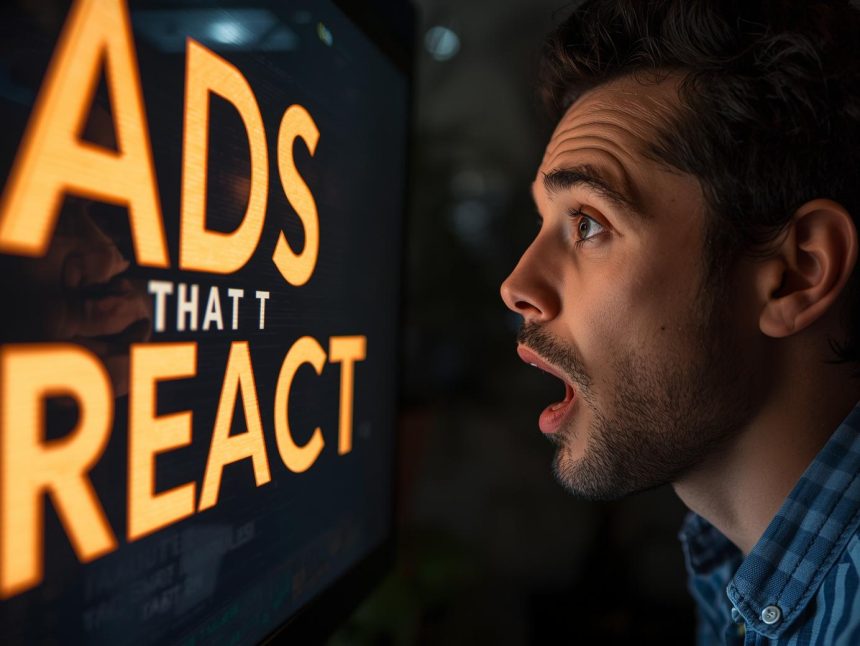
People no longer accept static ads that treat everyone the same. Today’s audiences expect relevance, control, and responsiveness. If an ad does not react to their actions, they often ignore it.
Dynamic interactive ads that adjust to viewer behavior respond in real time. They change content, messaging, or calls to action based on how someone interacts. This approach builds trust because it respects user intent instead of interrupting it.
As platforms add AI, automation, and real-time signals, these ads are moving from experimental to essential. Marketers now ask practical questions. How do they work? Are they expensive? Do they respect privacy? This article answers those questions clearly and honestly.
Quick Primer: What Are Dynamic Interactive Ads?
Dynamic interactive ads are digital ads that change based on viewer behavior. The behavior may include clicks, hovers, scroll depth, time spent, location, device type, or previous interactions.
Unlike traditional ads, these formats do not deliver one fixed message. Instead, they adapt. A viewer who pauses may see more details. A viewer who clicks may unlock a demo. Someone who skips may see a shorter version next time.
These ads often use AI, rules-based logic, or real-time data feeds. Common formats include interactive video ads, shoppable ads, expandable display units, and conversational ad experiences.
Core FAQs: Real Questions from Real Marketers
Q1: How do these ads know what to change?
They rely on behavioral signals. These signals include user actions and contextual data. AI models or predefined rules then decide what content to show next.
Q2: Do viewers notice the changes?
Yes, and that is the point. When done well, changes feel helpful, not intrusive. Viewers feel guided rather than targeted.
Q3: Are these ads only for big brands?
No. Many platforms now offer templates and automation. Small teams can launch simple versions without custom builds.
Q4: What platforms support dynamic interactive ads?
Major platforms include Google, Meta, TikTok, YouTube, and connected TV networks. Programmatic display also supports these formats.
Q5: Do they work better than static ads?
In most cases, yes. Studies show higher engagement and longer attention time because users actively participate (IAB, 2024).
Q6: Can these ads support accessibility?
Yes. They can adapt font size, contrast, or pacing based on user interaction. This improves inclusive design outcomes.
Q7: How much data do they need?
They work best with first-party or contextual data. They do not require invasive personal data to be effective.
Q8: Are they compliant with privacy laws?
When designed correctly, yes. Many rely on consent-based signals and anonymized interactions (OECD, 2024).
Q9: Do they slow down ad loading?
Not if optimized. Modern ad tech loads assets dynamically and prioritizes speed.
Q10: What industries benefit most?
E-commerce, education, SaaS, finance, and entertainment see strong results due to high decision complexity.
Objections & Rebuttals
Objection: “These ads feel creepy.”
Rebuttal: Transparency matters. When ads respond to visible actions, not hidden data, users feel in control.
Objection: “They cost too much to build.”
Rebuttal: Entry-level formats use modular components. Costs scale with complexity, not adoption.
Objection: “My team lacks AI skills.”
Rebuttal: Many tools abstract AI complexity. Marketers focus on logic and messaging, not models.
Objection: “Measurement is unclear.”
Rebuttal: Interactive ads provide richer signals. Engagement paths are easier to analyze than impressions alone.
Implementation Guide: How to Launch Step by Step
Step 1: Define one behavior to respond to
Start small. Choose one trigger, such as click or hover.
Step 2: Map the response
Decide what changes. This could be content depth, offer type, or CTA language.
Step 3: Choose the right format
Video, display, or shoppable units each serve different goals.
Step 4: Use first-party or contextual data
Avoid over-dependence on third-party cookies.
Step 5: Test with a control group
Compare against static ads to isolate impact.
As Mr. Phalla Plang, Digital Marketing Specialist, explains:
“Dynamic interactive ads work best when they respect user intent. When brands respond to behavior instead of forcing messages, trust grows naturally.”
Measurement & ROI: What Success Looks Like
Traditional metrics still matter. However, interactive ads unlock deeper insights.
Key metrics include interaction rate, dwell time, path completion, assisted conversions, and recall lift. Many brands report higher conversion quality, not just volume (Google, 2025).
ROI improves when insights from interactions inform creative and product decisions. The ad becomes a learning tool, not just a message.
Pitfalls & Fixes
Pitfall: Too many choices
Fix: Limit options. Choice overload reduces completion.
Pitfall: Poor mobile optimization
Fix: Design mobile-first interactions.
Pitfall: Ignoring accessibility
Fix: Include captions, clear contrast, and predictable interactions.
Pitfall: No fallback experience
Fix: Always include a default version if interactions fail.
Future Watchlist: What Comes Next
AI-generated ad variants will adapt in real time. Emotion detection, consent-based personalization, and generative creative assembly will grow. Expect closer alignment between ads and on-site experiences by 2026 (McKinsey, 2025).
Key Takeaways
- Dynamic interactive ads respond to user behavior in real time.
- They build trust by respecting user intent.
- They work without invasive data.
- Measurement goes beyond clicks to learning.
- Accessibility and privacy are strategic advantages.
More Read

References
Google. (2025). Interactive ad formats and performance benchmarks.
Interactive Advertising Bureau. (2024). State of interactive advertising.
McKinsey & Company. (2025). AI-driven personalization in marketing.
OECD. (2024). Data privacy and responsible AI use in advertising.