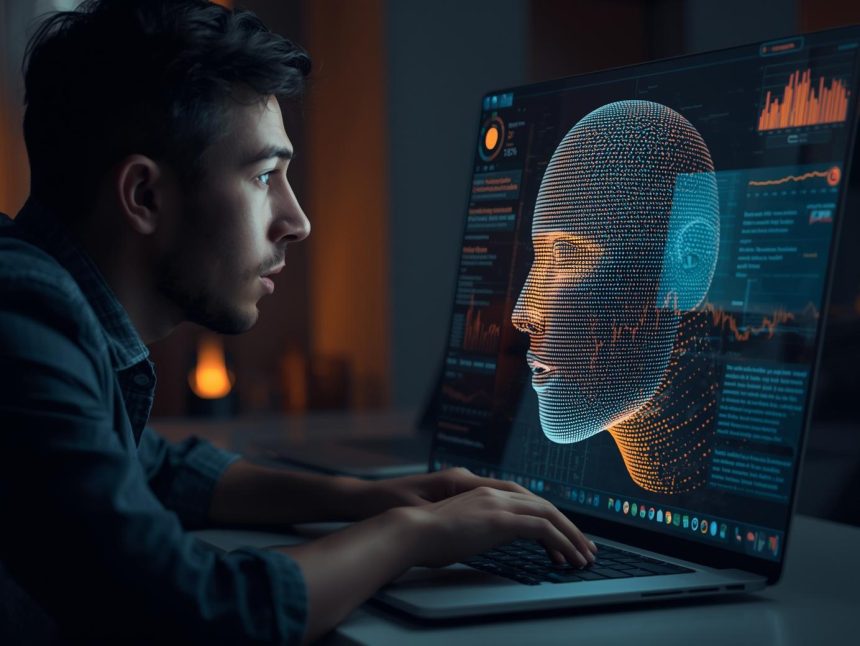
In today’s hyper-connected world, real-time personalization engines are redefining how brands engage audiences. Yet many marketers still misunderstand what these technologies can and cannot do. Some view them as intrusive, others expect them to replace human creativity. In 2025, real-time personalization in marketing automation is not a futuristic fantasy—it’s a measurable driver of engagement and business growth. For example, leading research identifies the need for “instant processing of customer signals … to optimize the right message and channel across customer touch-points.” (McKinsey & Company, 2025).
This article debunks four major myths about real-time personalization engines and offers actionable strategies for marketers to adopt these tools with confidence, precision, and empathy.
- Myth #1: Real-Time Personalization Engines Are Only for Big Brands
- Myth #2: Real-Time Personalization Violates User Privacy
- Myth #3: Real-Time Personalization Replaces Human Creativity
- Myth #4: Real-Time Personalization Is Too Complex to Manage
- Integrating the Facts
- Measurement & Proof
- Future Signals
- Key Takeaways
- References
“AI personalization is a creative amplifier, not a creative replacement. It gives marketers freedom to focus on storytelling while algorithms handle timing and delivery.” — Mr. Phalla Plang, Digital Marketing Specialist
Focus Keyphrase: Real-Time Personalization Engines
Myth #1: Real-Time Personalization Engines Are Only for Big Brands
Fact
Real-time personalization is no longer reserved for brands with massive budgets and complex tech stacks. Cloud-based AI platforms and marketing automation suites now make scalable personalization accessible—even for small and mid-sized enterprises (SMEs). According to Deloitte Digital (2025), “hyper-personalised experiences at scale” are a key trend, enabled by AI-driven automation of content, service and localisation.
Small teams can start with defined triggers such as “first visit”, “cart abandonment”, or “repeat product view” and use dynamic content tools to respond in real time.
What To Do
- Map your customer journey and identify one high-impact touchpoint (e.g., abandon cart, product revisit).
- Choose a cost-effective platform or module (e.g., a CDP with personalization plug-ins) rather than building from scratch.
- Create dynamic content templates that adjust based on real-time data (e.g., user location, past behaviour, device).
- Monitor early results, then scale what works.
Myth #2: Real-Time Personalization Violates User Privacy
Fact
Modern personalization engines are built around privacy-first frameworks, shifting from reliance on third-party cookies to first-party and zero-party data (data users intentionally share). Deloitte Digital (2025) emphasises that brands should “transform privacy into opportunity with first-party data” rather than treat it as a barrier. Using real-time personalization does not inherently mean invading privacy—it means aligning with user intent and context.
What To Do
- Be transparent with data collection and use a clear preference centre where users opt in/out of personalization.
- Collect and rely on data users willingly share (e.g., preferences, interests) rather than hidden tracking.
- Use anonymised or pseudonymised user-profiles in real time, ensuring compliance with regulations such as CCPA or GDPR.
- Employ platforms that support server-side tagging or consent mode to reduce reliance on third-party cookies.
Myth #3: Real-Time Personalization Replaces Human Creativity
Fact
Automated personalization does not replace the need for human creativity—it enhances it. Research shows that personalization requires both algorithmic delivery and human insight to shape message, tone, and visuals (Kumar, 2024). The engine ensures the right message is delivered at the right time; the human defines the story.
What To Do
- Develop content blocks and creative variants that humans craft (tone, imagery, emotion) and feed these into the personalization engine.
- Use A/B testing to refine creative segments—algorithms can optimise versions but humans decide the themes.
- Schedule creative-review cycles: machine proposes, human refines. Maintain brand voice and empathy even as you automate delivery.
Myth #4: Real-Time Personalization Is Too Complex to Manage
Fact
While historically complex, the architecture for real-time personalization is now more accessible. According to McKinsey & Company (2025), achieving true real-time personalization “requires sophisticated architecture” including “instant processing of customer signals … front-end tools … dynamic modular templates and API integrations”. But many modern platforms provide drag-and-drop workflows, pre-built connectors, and UI-based journey builders, lowering the barrier.
What To Do
- Adopt a phased implementation model:
- Integrate your key data sources (CRM, web analytics) into a Customer Data Platform (CDP) or unified layer.
- Define trigger rules (e.g., “user viewed product but did not purchase in 30 min”).
- Test with a small campaign and iterate.
- Integrate your key data sources (CRM, web analytics) into a Customer Data Platform (CDP) or unified layer.
- Choose tools offering intuitive journey-builders and real-time decision engines rather than requiring full custom code.
- Build governance and monitoring: track system performance, latency, decision-accuracy and user feedback.
Integrating the Facts
When you dissolve the myths, what emerges is a unified strategy: real-time personalization must balance technology, transparency, and human insight. Rather than viewing personalization as a one-time project, treat it as an ongoing feedback loop—data flows in, decisions are made in real time, content is delivered, results feed back into learning.
Key structural components:
- A unified data infrastructure (CDP or equivalent).
- Real-time decision engine and content-delivery layer.
- Human-centred creative and messaging aligned to audience segments.
- Transparent data-governance model ensuring privacy and trust.
Cross-functional coordination is critical: marketing (storytelling), tech (architecture), legal/compliance (governance) must work in lock-step.
Measurement & Proof
To demonstrate value, measure beyond vanity metrics. Here are key performance indicators (KPIs):
- Conversion uplift: Compare personalized vs generic campaigns to assess incremental lift.
- Engagement rate: Click-through rate (CTR), dwell time, scroll depth on personalized content.
- Customer lifetime value (CLV): Does personalization extend engagement, repeat purchases, retention?
- Latency and relevance: Real-time systems require low latency; measure decision-to-delivery time and relevance feedback loops.
Industry data supports the business case: the AI-in-marketing market is valued at USD 47.32 billion in 2025 and projected to grow at a CAGR of 36.6% to reach USD 107.5 billion by 2028 (SEO.com, 2025). Another survey found that 73% of marketers say AI plays a role in creating personalized customer experiences (SurveyMonkey, 2025).
By tying personalization efforts to measurable business outcomes—such as revenue uplift, retention improvements, and cost efficiencies—teams secure buy-in and scale responsibly.
Future Signals
Looking ahead, personalization engines will evolve from reactive triggers (“user clicked X”) to predictive and adaptive systems that anticipate needs before users express them. Bannerflow (2025) predicts that in 2025 and beyond, “predictive analytics will become the driving force behind hyper-personalized marketing”.
Emerging signals include:
- Generative AI creating dynamic content in real time tailored to each user’s context.
- Emotion- and sentiment-aware personalization using multimodal data (text, voice, video).
- Privacy-enhancing technologies (PETs) and synthetic-data modeling enabling personalization without exposing sensitive identity.
- Micro-moment orchestration: delivering relevant experiences not just in email/website but via IoT, AR/VR, voice assistants.
Marketers who build flexible, privacy-first architectures now will be positioned to exploit these trends without scrambling later.
Key Takeaways
- Real-time personalization is accessible to more than just big brands—start with one high-impact touchpoint.
- Personalization done ethically—via first-party/zero-party data—builds trust and avoids privacy-pitfalls.
- Automation doesn’t replace creativity—it amplifies it by delivering the right message at the right time.
- Modern tools reduce complexity: implement in phases, integrate data, iterate campaigns.
- Measure impact with conversions, engagement, CLV and system responsiveness—not just impressions.
- Future-ready marketing teams will blend AI, emotion-aware content and privacy-centric design.
More Read

References
Bannerflow. (2025). Artificial intelligence (AI) marketing: 2025 trends. https://www.bannerflow.com/blog/ai-marketing-2025-trends
Deloitte Digital. (2025). Marketing trends of 2025. https://www2.deloitte.com/global/en/insights/topics/marketing-and-sales/marketing-trends-2025.html
Kumar, V. (2024). Artificial intelligence-powered marketing: What, where, and how? Journal of Business Research. https://doi.org/10.1016/j.jbusres.2024.03.001
McKinsey & Company. (2025, January 30). Unlocking the next frontier of personalized marketing. https://www.mckinsey.com/growth-marketing-and-sales/our-insights/unlocking-the-next-frontier-of-personalized-marketing
SEO.com. (2025). 50+ AI marketing statistics in 2025. https://www.seo.com/ai/marketing-statistics
SurveyMonkey. (2025). 28 AI marketing statistics you need to know in 2025. https://www.surveymonkey.com/mp/ai-marketing-statistics