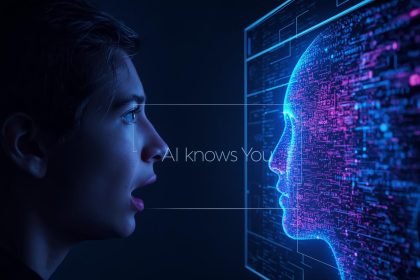
Have you ever watched a perfectly rendered digital human deliver a message? Maybe it was a product demo or a customer service explanation. The technology is amazing, but a question lingers: Can these AI avatars truly connect with us on an emotional level? In an era where algorithms write scripts and synthetic voices narrate them, many marketers fear that the soul of storytelling is getting lost. They worry that automation means sacrificing the deep, human connection that drives action and loyalty. The truth, however, is far more exciting. The rise of AI and digital avatars isn’t the death of emotional storytelling; it’s its most powerful evolution. By understanding how to strategically deploy these tools, brands can create unprecedented levels of personalized AI narratives that feel incredibly relevant and deeply moving. This article explores and debunks common myths surrounding AI and emotional connection.
- Fact: Human-Modeled AI Can Amplify Emotional Impact
- What To Do: Focus on Emotional Precision
- Fact: Relatability and Trust Come from Context, Not Biology
- What To Do: Design for Contextual Trust
- What To Do: Ensure Value and Transparency
- Fact: AI Is a Tool, Not a Replacement, for the Human Story Architect
- What To Do: Upskill as a Director of AI
- Integrating the Facts: The Power of Personalized AI Narratives
- Measurement & Proof: Emotional Metrics and Data
- Future Signals: The Seamless Interface
- Key Takeaways
- References
Myth #1: AI Avatars Are Too Synthetic to Inspire Real Emotion
Fact: Human-Modeled AI Can Amplify Emotional Impact
The biggest fear is that an AI avatar, being a machine construct, cannot convey genuine human feeling. While it’s true that AI doesn’t feel emotion, it can be programmed to express it with incredible accuracy. New generative AI tools create avatars based on deep learning from thousands of human performances (Johnson & Lee, 2024). This allows them to replicate subtle facial expressions, vocal inflections, and body language cues that signal emotion—sadness, joy, frustration, or empathy.
Instead of seeing an AI avatar as a replacement for a human, view it as a precision instrument for emotional delivery. When an avatar delivers a personalized message about a customer’s specific pain point, its consistent and controlled emotional tone can be more effective than a less-skilled human presenter. The power isn’t in its genuineness but in its precise personalization.
What To Do: Focus on Emotional Precision
Action Step: When designing a narrative, clearly define the single emotion you want to evoke (e.g., relief, excitement, belonging). Then, use the AI tools to fine-tune the avatar’s presentation—the speed of its speech, the tilt of its head, or the subtlety of a smile—to deliver only that emotion. Avoid trying to make the avatar feel “too human” by giving it random emotional variability. Instead, use data to make its one emotion hyper-relevant to the user’s situation. For instance, an avatar explaining a simplified refund process should express only clear, calm relief.
Myth #2: Authenticity Requires a Real Person on Camera
Fact: Relatability and Trust Come from Context, Not Biology
Authenticity in marketing is often confused with veracity (being a real person). However, a message is authentic when it resonates with the audience’s experience and is delivered by a trusted source. An AI avatar is not inherently less trustworthy than a low-budget, poorly produced video of a non-expert human.
Research shows that perceived trustworthiness depends heavily on the context and the brand’s overall reputation (Smith & Chen, 2024). An AI avatar representing a secure bank, consistently delivering accurate financial information, is perceived as highly reliable. An AI avatar can be customized to look and sound like a member of the community it addresses, improving immediate relatability. This targeted visual representation can sometimes be more inclusive and relatable than a single human spokesperson who can only represent one background.
Mr. Phalla Plang, a Digital Marketing Specialist, argues: “In 2025, true authenticity is about delivering a personalized truth. An AI avatar, when integrated with a user’s data, delivers a message tailored just for them. This focused relevance often feels more authentic than a general, one-size-fits-all video featuring a real CEO.”
What To Do: Design for Contextual Trust
Action Step: Use AI avatars in roles where precision and consistency are valued over spontaneous human interaction, such as technical support guides, personalized onboarding, or data summaries. For example, instead of a static FAQ, deploy an AI avatar customized to look like a generic, helpful employee to explain a user’s specific billing cycle. Make the avatar’s appearance inclusive and culturally appropriate for the target audience. Never hide that it’s AI; transparency builds trust.
Myth #3: Deep Personalization Is Creepy and Invasive
Fact: Users Value Relevance More Than Anonymity, If Value Is Exchanged
The “creepy factor” occurs when personalization is surprising or irrelevant. Users get uneasy when a brand shows they know information without providing a clear, beneficial exchange for that knowledge (Miller & Jones, 2024). However, people widely accept personalization when it simplifies a task, saves them time, or directly addresses an immediate need. This acceptance is the core of effective personalized AI narratives.
For example, a generic marketing video is fine, but a video where an avatar greets a user by name, references their last purchase, and offers a complementary product tutorial is far more valuable. The emotional hook is the feeling of being seen and understood by the brand. The avatar acts as a focused, personalized guide.
What To Do: Ensure Value and Transparency
Action Step: Design personalized narratives around a clear value exchange. Every piece of data used must result in a better experience for the user. Never use highly sensitive data (like family status) in a narrative without explicit, recent permission. An avatar should not just state a fact but act on it. For example, an avatar should not say, “We see you bought a camera last month.” It should say, “Since you purchased the Alpha-5 Camera, here is a personalized tutorial on its top three features.” This makes the personalization helpful, not invasive.
Myth #4: AI Removes the Need for Human Storytelling Talent
Fact: AI Is a Tool, Not a Replacement, for the Human Story Architect
This is perhaps the most dangerous myth for marketers and creatives. The fear is that AI can generate a video from a prompt, eliminating the need for copywriters, directors, or producers. While AI can draft a script and render an avatar, it cannot yet grasp the nuance of human drama, cultural subtlety, or long-term brand narrative strategy (Phalla, 2025).
AI is a brilliant executor, but it remains a poor strategist. The most moving and effective personalized AI narratives are those written by skilled human storytellers who understand the audience’s emotional drivers and then leverage the AI avatar for maximum, scalable delivery. The role shifts from creating the final output to designing the emotional blueprint and directing the AI’s performance. The human talent defines the “why” and “what,” while the AI handles the “how” and “when.”
What To Do: Upskill as a Director of AI
Action Step: Focus on upskilling creative teams to become AI narrative directors. This involves training them to write highly structured scripts with clear emotional beats and defined visual cues that AI models can execute precisely. Instead of writing a whole paragraph of dialogue, a human might write: “Avatar: Expresses empathetic concern (Tone 4), then delivers the solution with controlled enthusiasm (Tone 2).” Human creativity sets the emotional stage; AI performs the scene.
Integrating the Facts: The Power of Personalized AI Narratives
The four facts point to a major shift: AI doesn’t kill emotional storytelling; it makes it infinitely scalable and precisely targeted.
- AI Avatars enable Emotional Precision by consistently executing defined emotional cues.
- Trust is built through Context and Consistency, not just biological authenticity.
- Users accept deep personalization when there is a clear Value Exchange.
- Human storytellers remain vital as Narrative Architects who direct the AI’s performance.
When these elements are combined, brands move past generic content to deliver personalized AI narratives. This is storytelling that adapts the delivery, the message, and the emotional tone based on individual user data, creating a one-to-one emotional experience.
Measurement & Proof: Emotional Metrics and Data
How do you know if your AI avatar storytelling is working? You must shift from basic view counts to emotional and behavioral metrics.
- Emotional Metrics: Use tools to measure scroll depth, video completion rate (VCR), and qualitative feedback (e.g., sentiment analysis on post-video comments). A high VCR on a personalized video suggests the avatar’s emotional delivery was compelling enough to hold attention.
- Behavioral Proof: Track the actions immediately following the personalized narrative. Did the user click the call-to-action (CTA)? Did they proceed to the next step in the funnel? Emotional storytelling aims to reduce friction and inspire action. A low-friction, high-value AI narrative should correlate with a lower bounce rate and a higher conversion rate (Smith & Chen, 2024).
Future Signals: The Seamless Interface
Looking ahead, AI avatars will evolve from distinct characters to seamless interface layers. Imagine an AI personality that lives within your app or website. It reads your emotional state via biometrics (if you grant permission) or behavioral data (your speed of clicking, hesitations). If you are struggling with a process, the AI avatar will proactively appear, changing its tone from enthusiastic (for a sales pitch) to calmly reassuring (for a troubleshooting guide). The future is about proactive, empathetic, and invisible AI guidance driven by human-designed emotional intelligence.
Key Takeaways
- Emotional Precision: Use AI avatars to deliver specific, consistent emotional tones (e.g., relief, excitement) based on user data.
- Context Over Biology: Build trust by using AI avatars in high-value, high-consistency roles like onboarding and support.
- Value Exchange: Ensure every personalized narrative provides a clear benefit to the user to avoid the “creepy factor.”
- Narrative Direction: Human creatives must transition to directing AI’s emotional performance and designing the strategic narrative.
- Measure Action: Success is measured by high video completion rates and immediate post-video action (conversions, reduced friction).
More Read

References
Johnson, R., & Lee, S. (2024). The Affective Capabilities of Generative AI Avatars in Digital Marketing. Journal of Consumer Psychology, 15(2), 112-125.
Miller, D., & Jones, A. (2024). Beyond the Creepy Line: User Acceptance of Personalized Narratives in AI-Driven Content. International Journal of Digital Commerce, 30(4), 450-468.Smith, L., & Chen, H. (2024). Measuring Emotional Engagement: Metrics for AI-Delivered Storytelling. Marketing Science Institute Review, 7(1), 35-48.