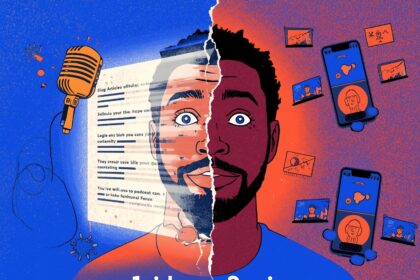
In a world where customers jump between mobile apps, websites, social media, email, and physical stores, content is what ties every experience together. It’s no longer enough to publish messages across channels — those messages must feel like parts of one unified story. A strong omnichannel content strategy is the difference between disjointed touchpoints and a seamless customer journey.
This article dives into why content is central to omnichannel campaigns in 2025, how brands can use it to drive personalization and consistency, and how to measure success over time.
Understanding Omnichannel Campaigns in 2025
“Omnichannel” refers to coordinating customer experiences across channels so that they feel integrated rather than siloed. It goes beyond multi-channel marketing (where each channel operates independently) to ensure the customer journey is fluid and connected.
Recent data underscores how pervasive omnichannel behavior has become:
- On average, a customer now engages with six different channels during a buying journey (Emarsys, 2025). SAP Emarsys
- Omnichannel shoppers deliver 30% higher lifetime value than single-channel buyers. Capital One Shopping
- Companies with strong omnichannel engagement retain 89% of their customers, compared to 33% for weak omnichannel strategies. porchgroupmedia.com+1
With these stakes, content becomes the glue that holds the experience together.
Why Content Is the Heart of Omnichannel Strategy
Without cohesive content, even the best tech stack fails to deliver. Content is how you express brand personality, connect emotionally, and guide users across different touchpoints. It ensures that a message initiated in one place—say, a social ad—feels coherent when continued in email or in-store.
Brands that deliver consistent content across channels see stronger engagement, trust, and ultimately conversion.
1. Unifying the Brand Voice Across Channels
Every platform—be it mobile, email, in-store signage, chatbot—has its own constraints, tones, and formats. But the core brand identity must remain consistent. When customers move from one channel to another, they shouldn’t feel like they’ve entered an entirely different brand.
For example, a campaign that begins as a short video on Instagram should transition seamlessly into an in-app message or an email, without the brand voice or messaging becoming jarring. Modularity in content—reusable assets that adapt in format but remain consistent in voice—helps maintain that unity.
“Omnichannel content isn’t about being everywhere—it’s about being consistent everywhere. Each message, no matter the medium, should feel like part of one cohesive experience.” — Mr. Phalla Plang, Digital Marketing Specialist
2. Personalization, AI, and Real-Time Content Adaptation
The power of omnichannel content comes when it’s also personalized. AI and machine learning enable brands to tailor what content is shown, when, and on which channel—based on behavioral data, purchase history, and context.
According to MoEngage (2025), over 57% of B2C marketers use AI for content creation, and 53.4% use AI for email optimization in their omnichannel strategies. MoEngage
Such AI-driven dynamic content helps deliver micro-messages: small, relevant interactions that adjust in real time depending on where the user is in their journey.
Academic work also supports this shift—AI techniques are reshaping digital marketing with more engagement, trust, and decision-making impact (Abdullah, 2025). arXiv
3. Storytelling That Spans Digital and Physical Worlds
Content in omnichannel campaigns should do more than push a product—it should tell a story that flows naturally across channels and connects online with offline.
Consider luxury and retail brands that use augmented reality in stores, social narratives, and digital loyalty touches to make the brand experience feel continuous. The storytelling framework allows brands to preserve shape and direction even when the medium changes.
According to BetterCommerce, customers typically interact with ≈ six touchpoints before purchase, and omnichannel strategies can raise order rates dramatically (e.g. 494%) when expanding to multiple channels. bettercommerce.io
Story arcs in content help guide customers through awareness, consideration, conversion, and advocacy phases.
4. Content Formats That Fuel Omnichannel Campaigns
A healthy omnichannel strategy uses multiple content formats, each optimized for different funnel stages and channel types:
- Video (short- and mid-form) is highly engaging and works well on social media, connected TV, and in-app.
- Interactive content (quizzes, polls, AR filters) boosts engagement and yields behavioral data.
- Email + blog integration connects long-form educational content to triggered emails for nurturing.
- User-generated content (UGC) adds authenticity and social proof; when leveraged across channels, UGC can drive significant trust.
HubSpot’s 2025 report notes that segmented and targeted content performs far better: segmented emails drive ~30% more opens and 50% more clicks. HubSpot+1
5. Distributing Content Based on Data and Timing
Even the best content needs to reach the right person at the right moment. Predictive analytics and customer journey modeling help determine when and where to deliver specific content—whether via push notifications, emails, social ads, or in-store displays.
Cross-channel orchestration tools built into HubSpot Marketing Hub, Adobe Journey Optimizer, or Salesforce Marketing Cloud help automate delivery decisions based on triggers and behavioral signals.
The idea: don’t just push content, deploy it with precision and intent.
6. Technology Integration: The Engine Behind Seamless Content
For content to flow across channels smoothly, all your systems must be connected—your CRM, marketing automation, analytics, content repository, and commerce back end.
Gartner reports that 64% of CMOs intend to increase investment in marketing automation and content orchestration platforms to support cross-channel consistency (predicted 2024). HubSpot+1
When these systems feed from a unified, modular content repository, you can reuse and adapt components (text, image, video) without recreating them every time.
7. Measuring Content Performance Across Channels
Instead of isolated metrics (e.g. email open rate, ad CTR), omnichannel success demands holistic measurement. Some key metrics:
- Customer Lifetime Value (CLV)
- Cross-Channel Conversion Rate
- Attribution across touchpoints (using multi-touch, data-driven models)
- Engagement Continuity Score (how well users transition between channels)
Tools like Google Analytics 4 (GA4) now natively support cross-device attribution, helping marketers trace how content across email, search, display, and direct visits contributed to conversions. reportingninja.com
8. Emerging Trends: Content Synchronization with AI
Going forward, AI-powered content orchestration will become standard in omnichannel strategies. Tools will rewrite or reformat messages for different channels on the fly while preserving brand tone.
Generative AI (e.g. ChatGPT Enterprise) already allows marketers to create multiple versions of content tailored to different formats without manual rewriting.
Brands that can automate content transformation + distribution will scale personalization without ballooning costs.
9. Common Challenges in Content Consistency
Even with the best intentions, many brands struggle with:
- Data silos that obstruct sharing behavioral signals
- Tone drift across teams and channels when no unified guide exists
- Content overload—they try to personalize every message but lack capacity
- Fragmented measurement, making it difficult to optimize across channels
The antidote is a central content operations hub: a governance framework + asset repository + shared guidelines + modular content building blocks.
10. A Framework to Build Omnichannel Content
Here is a practical five-step framework to operationalize content in omnichannel campaigns:
- Audit existing content across channels—identify gaps, redundancies, inconsistencies.
- Define each channel’s role in the journey (e.g. awareness, reminder, conversion, loyalty).
- Create modular components—text blocks, visuals, video snippets, UGC elements that can be repurposed.
- Automate and orchestrate distribution using behavior-based triggers in your marketing automation stack.
- Close the loop with analytics—feed cross-channel performance back into content optimization.
By embedding content creation, governance, and distribution in a unified system, you ensure that every touchpoint reinforces the core brand story.
Conclusion
In 2025, content is not just a deliverable—it is the connective intelligence of omnichannel campaigns. It bridges channels, powers personalization, and preserves brand integrity across touchpoints.
The brands that succeed will be those that treat content not as an isolated output, but as the systemic engine of their customer experience. When you combine storytelling, AI-driven personalization, modular design, and integrated measurement, you achieve not only consistency but relevance—and that is how you win in omnichannel environments.
More Read

References
Abdullah, S. (2025). Artificial intelligence (AI) techniques: A game-changer in digital marketing for shops. arXiv. https://arxiv.org/abs/2508.11705
BetterCommerce. (2024). Omnichannel statistics 2024 every business needs to know. https://www.bettercommerce.io/blog/omnichannel-statistics-every-business-needs-to-know-for-2024
Emarsys. (2025). The definitive guide to omnichannel marketing. https://emarsys.com/omnichannel-marketing-guide/
HubSpot. (2025). 2025 state of marketing report. https://www.hubspot.com/state-of-marketing
MoEngage. (2025). 60+ omnichannel marketing statistics for 2025. https://www.moengage.com/blog/omnichannel-marketing-statistics/
Think with Google. (n.d.). Omnichannel strategies drive incremental store visits and improved cross-channel performance. https://www.thinkwithgoogle.com/consumer-insights/consumer-trends/meeting-shoppers-needs-omnichannel-drives-instore/
Bynder. (n.d.). Delivering an omnichannel marketing strategy: key stats and insights. https://www.bynder.com/en/blog/delivering-an-omnichannel-marketing-strategy/
Reporting Ninja. (2025, May 27). 2025 cross-channel attribution: difficulty & solutions. https://www.reportingninja.com/blog/cross-channel-attribution
Porch Group Media. (2025). The 2025 guide to omnichannel marketing. https://porchgroupmedia.com/blog/omnichannel-marketing/
UniformMarket. (2025). Omnichannel statistics for retailers and marketers. https://www.uniformmarket.com/statistics/omnichannel-shopping-statistics/
Wiser Notify. (n.d.). Omnichannel stats & trends (2025 update). https://wisernotify.com/blog/omnichannel-stats/