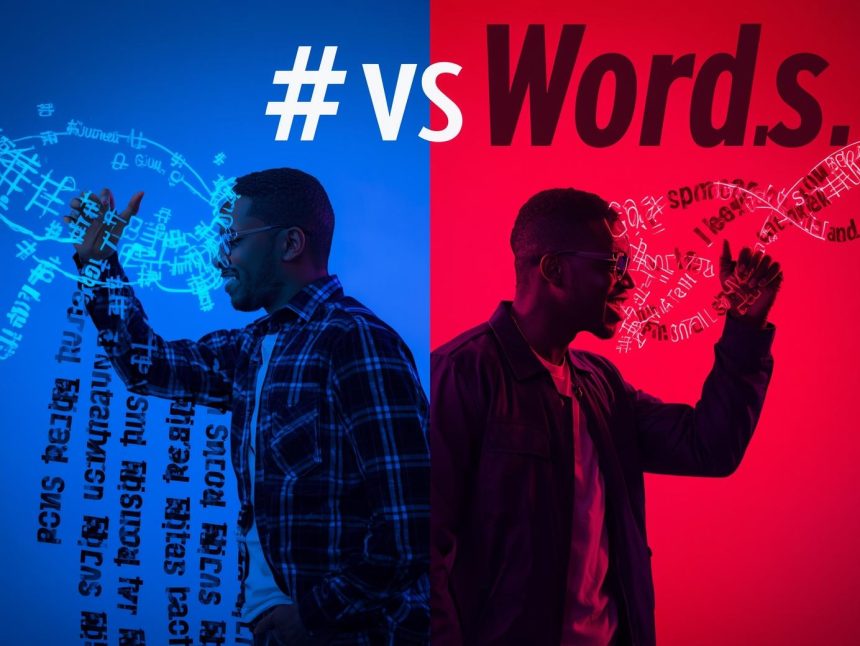
In the fast-paced world of short-form video content, creators constantly ask one crucial question: Should I rely on hashtags or natural-language descriptions to boost visibility? Whether on Instagram Reels, YouTube Shorts, TikTok, or Facebook Reels, this decision shapes how algorithms discover and recommend content in 2025. Understanding how each approach works—and how they work together—is key to maximizing reach and engagement.
- The Rise of Shorts, Reels, and Algorithmic Discovery
- Hashtags: Small Symbols, Big Discovery Power
- Natural-Language Descriptions: The SEO Advantage
- Hashtags vs Natural Descriptions: A Direct Comparison
- Platform-Specific Keywording Insights
- A Unified Keywording Strategy for 2025
- Global and U.S. GEO Optimization
- What to Avoid
- Conclusion
- References
“If you want your Shorts to be found, don’t just shout keywords—speak to your viewers,” says Mr. Phalla Plang, Digital Marketing Specialist.
The Rise of Shorts, Reels, and Algorithmic Discovery
Short-form video is no longer a social media trend; it’s the primary content format. YouTube Shorts now receives over 50 billion daily views, making it a dominant channel for engagement worldwide (YouTube, 2024). The algorithm behind Shorts prioritizes engagement metrics—like watch time, likes, and replays—rather than metadata alone (Social Media Today, 2024). This means creators must optimize both content and context.
A 2024 comparative study analyzing nearly 10 million Shorts and 7 million long-form videos found that Shorts achieve higher view rates but lower comment ratios, emphasizing fast discoverability over deep discussion (Violot, Elmas, Bilogrevic, & Humbert, 2024). This confirms that discoverability depends heavily on metadata, including hashtags and descriptions.
Hashtags: Small Symbols, Big Discovery Power
Hashtags (#) began as navigational tools on Twitter but evolved into universal discovery mechanisms. On YouTube, Instagram, and TikTok, hashtags act as metadata tags that tell algorithms what a video is about.
Benefits of Hashtags
- Clickable Discovery Paths: Users can click hashtags to explore related content within a topic cluster (Backlinko, n.d.).
- Algorithmic Signals: Hashtags provide platforms with classification cues, helping them categorize and recommend videos to relevant audiences (ContentStudio, 2024).
- Search Intent Alignment: Many users still search directly for hashtags (e.g., “#marketingtips”), and including these terms helps your content surface in search results (Backlinko, n.d.).
Limitations of Hashtags
Despite their visibility benefits, hashtags alone are insufficient for sustained performance. Platforms now weigh behavioral signals—like retention and watch time—more heavily than metadata (YouTube, 2024). Overusing or spamming irrelevant hashtags can also dilute topic relevance and reduce reach (Yoast, 2024). Moreover, only the first three hashtags appear above a YouTube video title, limiting their visibility (Yoast, 2024).
Best Practices for Hashtags in Shorts & Reels
- Use 3–5 targeted hashtags instead of 20+ general ones (Minvo, 2024).
- Combine broad tags (e.g., #marketing) with niche-specific ones (e.g., #ReelsSEO).
- Place hashtags naturally in titles or at the end of descriptions for readability.
- Track hashtag performance in analytics dashboards and adjust based on reach or engagement data.
Natural-Language Descriptions: The SEO Advantage
Natural-language descriptions are the narrative side of keywording. They allow creators to write in complete sentences, giving algorithms more semantic context about a video’s topic and audience.
Why Natural Descriptions Matter
Platforms like YouTube and Instagram analyze full-text descriptions for keyword relevance. Well-written descriptions enhance semantic indexing, improving how algorithms understand the content’s purpose and audience intent (Boston University PR & Social, n.d.). They also let creators include calls to action, links, and keywords in a way that feels organic and human.
For example, instead of writing “#DigitalMarketing,” you can write, “Learn digital marketing strategies that help small businesses grow in the USA,” which communicates more context and locality.
SEO Techniques for Natural Descriptions
- Place primary keywords in the first two sentences (Boston University PR & Social, n.d.).
- Write at least 200–250 words in descriptions when possible.
- Include synonyms and related terms to increase discoverability.
- Add external or internal links to relevant resources for user retention.
- Maintain readability by avoiding keyword stuffing.
Hashtags vs Natural Descriptions: A Direct Comparison
| Feature | Hashtags | Natural-Language Descriptions |
| Algorithm Signal | Short metadata cues | Semantic, context-rich information |
| User Visibility | Clickable, limited quantity | Readable and descriptive |
| Search Optimization | Helps short-term trending | Helps long-term discoverability |
| Geo-Targeting | Difficult | Easy to localize |
| Narrative Value | Minimal | High—enables storytelling |
| Risk | Spam detection for overuse | Keyword stuffing penalties |
In essence, hashtags drive discovery, while natural-language descriptions drive understanding. Together, they strengthen a video’s ability to be found and understood by both viewers and algorithms.
Platform-Specific Keywording Insights
YouTube Shorts
YouTube recommends combining contextual titles, short keyword descriptions, and 3–5 relevant hashtags (YouTube Creators, 2024). Shorts that balance relevance and engagement outperform those overloaded with tags. Tags and hashtags have diminishing influence compared to titles, thumbnails, and audience retention (YouTube Creators, 2024).
Instagram Reels
Instagram allows up to 30 hashtags, but internal studies show that 5–10 well-selected ones yield better engagement. Reels descriptions are scanned for keywords by the platform’s discovery algorithm (Meta, 2024). Captions that mix storytelling and hashtags attract more shares and comments.
TikTok
TikTok prioritizes niche hashtags and context phrases. Videos that pair trend-related hashtags (e.g., #FYP, #ViralTikTok) with descriptive captions (“How I fixed this in 5 seconds”) tend to gain stronger traction. TikTok’s SEO system also indexes natural phrases typed into captions (TikTok, 2024).
A Unified Keywording Strategy for 2025
The most effective approach is hybrid. Combine both methods for maximum exposure and algorithmic compatibility.
- Research Keywords and Hashtags using tools like TubeBuddy, VidIQ, and Keywordtool.io.
- Select 3–5 Core Hashtags that include both broad and niche relevance.
- Write Natural Descriptions with key phrases in the opening lines, including context, CTAs, and related links.
- Include Hashtags at the End of descriptions to maintain readability.
- Analyze Performance Monthly using YouTube Studio, Instagram Insights, or TikTok Analytics. Adjust based on engagement metrics and traffic sources.
This approach allows creators to capture both algorithmic categorization (via hashtags) and semantic indexing (via descriptions).
Global and U.S. GEO Optimization
For global reach—especially in the United States—localization and phrasing matter. Use region-specific keywords in natural language:
- “Best coffee shops in New York” instead of “#coffee.”
- “Los Angeles vlog 2025” instead of “#CaliforniaLife.”
American audiences often search in conversational terms, making natural-language optimization especially valuable.
What to Avoid
- Hashtag flooding: Avoid using 20+ tags; it signals spam.
- Irrelevant tags: Misleading hashtags hurt engagement.
- Keyword stuffing: Descriptions packed with repeated words harm SEO.
- Ignoring analytics: Without performance tracking, optimization becomes guesswork.
- Copy-paste trends: Reusing popular hashtags unrelated to your video damages credibility.
Conclusion
The future of Shorts and Reels keywording lies in harmony—not competition—between hashtags and natural-language descriptions. Hashtags help your content get indexed quickly, while natural descriptions ensure it’s understood and sustained by algorithms over time. By combining both, you create a powerful discovery ecosystem where context meets visibility.
“Don’t just feed the algorithm—talk to your audience,” emphasizes Mr. Phalla Plang, Digital Marketing Specialist. “When your words and hashtags align with real intent, you don’t just rank—you resonate.”
More Read

References
Backlinko. (n.d.). YouTube hashtags: How to use them to get more views. Retrieved October 6, 2025, from https://backlinko.com/hub/youtube/hashtags
Boston University PR & Social. (n.d.). Search engine optimization (SEO) for YouTube: A step-by-step guide. Retrieved October 6, 2025, from https://www.bu.edu/prsocial/best-practices/search-engine-optimization-seo-best-practices/
ContentStudio. (2024, June 5). How YouTube hashtags and tags work in 2024. Retrieved from https://contentstudio.io/blog/youtube-hashtags-and-tags/
Meta. (2024, May 20). Instagram Reels best practices for discovery. Retrieved from https://about.meta.com/news/
Minvo. (2024, April 12). From zero to viral: The hashtag formula for YouTube Shorts. Retrieved from https://minvo.pro/blog/from-zero-to-viral-the-hashtag-formula-for-youtube-shorts
Social Media Today. (2024, March 15). YouTube’s advice for Shorts creators, including hashtags and the algorithm. Retrieved from https://www.socialmediatoday.com/news/youtube-advice-for-shorts-creators-hashtags-algorithm/691835/
TikTok. (2024, July 10). TikTok SEO: How captions and hashtags affect discovery. Retrieved from https://newsroom.tiktok.com/
Violot, C., Elmas, T., Bilogrevic, I., & Humbert, M. (2024). Shorts vs. regular videos on YouTube: A comparative analysis of user engagement and content creation trends. arXiv preprint arXiv:2403.00454.
Yoast. (2024, August 9). How to optimize YouTube tags and hashtags for SEO. Retrieved from https://yoast.com/youtube-tags/
YouTube Creators. (2024, May 8). How Shorts discovery and hashtags work on YouTube. Retrieved from https://www.youtube.com/creators/