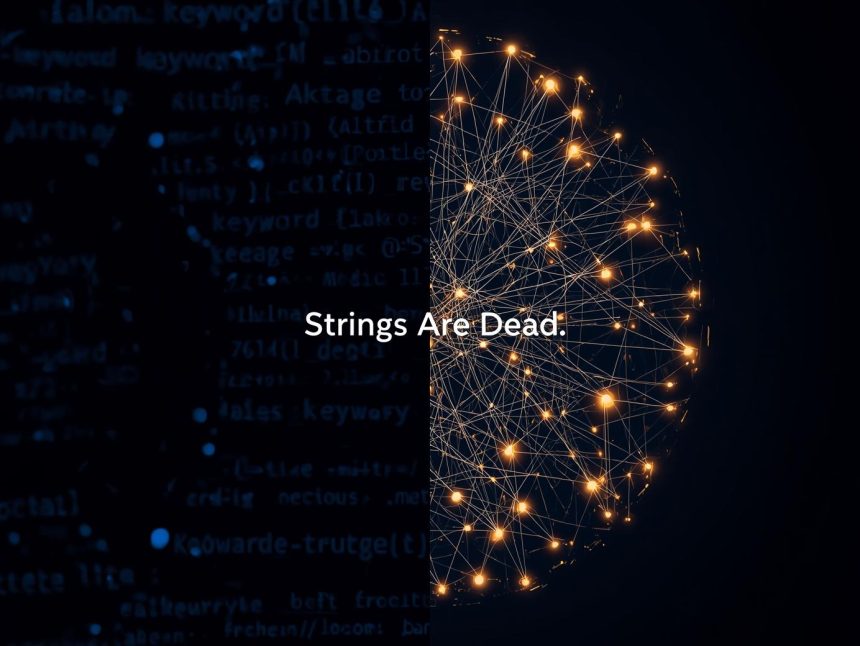
In 2025, search engines no longer rely solely on matching keywords (strings). They increasingly think in terms of entities—real-world things, concepts, and relationships. For global brands and multilingual sites, this means your SEO must pivot from string-first tactics (keyword translations) to entity-first strategies if you want sustainable visibility and authority across markets. As Mr. Phalla Plang, Digital Marketing Specialist once said: “You don’t rank keywords. You rank meaning.” In this article, you’ll learn: what “entity-first” SEO means in a multilingual world, why it matters more than ever in 2025, a practical roadmap to implement it, common pitfalls and best practices, and how to scale across languages and geographies.
What Is “Entity-First” SEO?
Entities vs. Keywords
An entity is a discrete, identifiable concept: a person, place, organization, product, topic, or idea. Search engines create knowledge graphs or similar semantic models, linking entities to attributes and relationships (e.g. iPhone → Apple, smartphone, model, release date). Entity-based SEO focuses on optimizing for these meanings and relationships, not just matching keyword phrases (Seo.ai, 2025) (seo.ai). In contrast, string-first SEO treats keywords as independent tokens to match exactly to queries.
Why Entities Matter in 2025
- Semantic understanding & context: Modern engines use embeddings, knowledge graphs, and entity linking to understand meaning, not just literal strings (niumatrix.com). This enables them to connect content across languages by mapping to the same entity. 2. AI / generative search & answer engines: In the age of search generative experiences (SGEs) and LLM-augmented answers, search platforms favor content they understand as well-structured meaning carriers—not just high keyword density (arxiv.org). 3. Cross-language reinforcement: When multiple language pages tie back to the same conceptual entity, they reinforce one another’s authority. 4. Scalability & consistency: Building SEO around an entity graph allows translation and localization to adapt rather than reinvent strategy across languages.
Why String-First SEO Fails in Multilingual Contexts
Literal translations miss nuance. A keyword in English might translate awkwardly or not at all into idiomatic expressions in another language. Users search differently across regions (motionpoint.com). Duplication risk: If you translate content directly, search engines may view it as thin or duplicate content, weakening indexing and ranking. Fragmented entity signals: Without entity alignment, each language version may appear as isolated silos instead of reinforcing a unified meaning. Structured data mismatch: If schema markup isn’t localized, search engines may misinterpret entities in foreign pages (SearchXPro, 2025) (searchxpro.com).
Roadmap: Building a Multilingual, Entity-First SEO Strategy
Step 1: Identify Core Entities & Semantic Graph
List the core entities your brand or site should own (e.g. your brand, main products, services, topics). Map how these entities relate (subtopics, features, comparisons). Use that as your multilingual entity graph, guiding content creation.
Step 2: Localize Entity Attributes in Each Language
Do not merely translate. For each language version, use locally natural terms for attributes (e.g. “specifications” → “especificaciones” in Spanish). Reference local examples, brands, currency, units. Insert mentions or sources popular in that locale. This preserves the same entity but adapts nuance and search behavior.
Step 3: Structured Data & Schema Markup per Language
Use JSON-LD / schema.org markup for entities like Product, Service, Article. Include inLanguage fields and localized attributes (currency, dates, addresses). Validate each version with Google’s Rich Results Test (searchxpro.com).
Step 4: Proper Hreflang & Canonical Setup
Use hreflang annotations to signal language/region versions to search engines. This prevents duplication penalties (motionpoint.com). Use self-referential canonical tags—each version should canonicalize itself, not to another language’s page.
Step 5: Language-Aware Internal Linking & Topic Clusters
Within each language version, link to internal supporting content relevant to the entity cluster. Across languages, provide a language switch or cross-reference, but don’t over-interlink across languages in core content.
Step 6: Local Backlinks & Entity Mentions
Secure backlinks in each target language/market that mention your core entity (in local phrasing). Ensure third parties refer to your entity with proper names in that language—reinforcing your entity’s authority.
Step 7: Monitor, Test & Iterate
Use tools like Google Search Console, SEMrush, and Ahrefs to monitor by country/language. Track impressions, clicks, entity association (if available), content gaps. Adjust entity graphs, link networks, and content interrelations as needed.
Example Use Case: Multilingual SaaS Brand
A SaaS offering “customer onboarding software.” Its core entity is customer onboarding software. The English site publishes a pillar page and subpages (features, comparisons, case studies). When expanding to Spanish, use “software de incorporación de clientes” or “software de onboarding”, whichever local SEO research favors. Localize features, cite Spanish sources, and use schema markup with “inLanguage”: “es”. Add hreflang between English ↔ Spanish and acquire backlinks referencing software de incorporación de clientes. All versions reinforce the same entity in different languages, boosting authority.
Pitfalls & Best Practices
Common pitfalls: over-translating keywords, neglecting localized schema or hreflang, canonical errors, isolating languages, copying content without cultural context. Best practices: prioritize local intent, validate structured data, use subdirectories (/es/), audit hreflang regularly, and write snippet-ready content for LLMs (searchengineland.com).
Trends & Research Supporting This Shift
Search engines now emphasize entity-based optimization over keyword density (niumatrix.com). Entities are fundamental ranking signals (Seo.ai, 2025) (seo.ai). Graph-Embedding Empowered Entity Retrieval (Gerritse et al., 2025) shows graph embeddings enhance retrieval accuracy (arxiv.org). Generative search research highlights entity-centric ranking (Role-Augmented GSEO, 2025) (arxiv.org). Guides from MotionPoint (2025) confirm localization and context now outweigh direct translation.
Conclusion & Recommendations
In 2025, entity-first SEO is the foundation of multilingual success. For global visibility, move from string-first tactics to meaning-centered entity strategies for coherence, authority, and resilience in AI-augmented search. Key takeaways: optimize for entities, localize attributes, use structured data and hreflang, build internal link clusters, acquire local backlinks, and monitor per market. As Mr. Phalla Plang reminds us: “You don’t rank keywords. You rank meaning.”
References
Acolad. (2025). Build a multilingual SEO strategy that ranks in every market. Acolad. Retrieved from https://www.acolad.com/en/services/global-marketing/multilingual-seo-best-practices
Content Whale. (2025). Entity SEO explained: How search engines think in 2025. Retrieved from https://content-whale.com/us/blog/understanding-entity-seo-entity-mapping-2025/
Gerritse, E. J., Hasibi, F., & de Vries, A. P. (2025). Graph-embedding empowered entity retrieval. arXiv. https://arxiv.org/abs/2506.03895
Hobo Web. (2025). Entity SEO – how to get your business recognized as an entity by Google. Retrieved from https://www.hobo-web.co.uk/entity-seo/
MotionPoint. (2025). 2025 multilingual SEO guide: Key tactics to boost your website’s global reach. Retrieved from https://www.motionpoint.com/blog/2025-multilingual-seo-guide-key-tactics-to-boost-your-websites-global-reach/
Niumatrix. (2025). Semantic SEO guide 2025: Entity-based optimization strategies. Retrieved from https://niumatrix.com/semantic-seo-guide/
Role-Augmented Intent-Driven Generative Search Engine Optimization. (2025). arXiv. https://arxiv.org/abs/2508.11158
Search Engine Land. (2025). Writing for SEO: How to write snippet-friendly content. Retrieved from https://searchengineland.com/guide/how-to-write-for-seo
SearchXPro. (2025). Structured data for multilingual SEO: Top 7 tips. Retrieved from https://searchxpro.com/structured-data-for-multilingual-seo-top-7-tips/
Seo.ai. (2025). Entity SEO in 2025: Key tips and techniques. Retrieved from https://seo.ai/blog/entity-seo
The ADFirm. (2025). Entity SEO: Why concepts, not keywords, win rankings in 2025. Retrieved from https://www.theadfirm.net/entity-seo-why-concepts-not-keywords-win-rankings-in-2025/