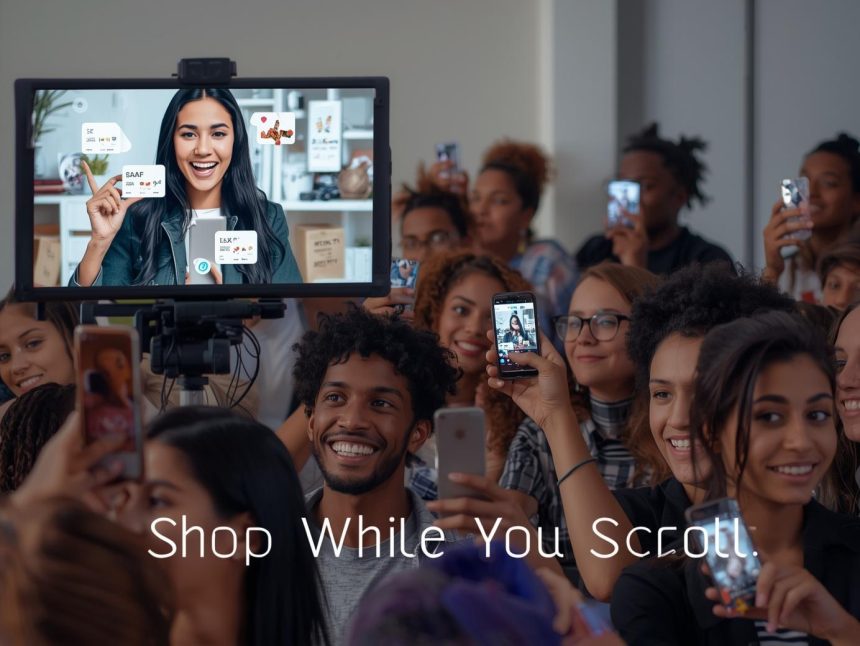
Social media is no longer just for likes, shares, and conversations. In 2025, it has fully transformed into a shopping destination. Platforms like TikTok, Instagram, Facebook, and YouTube are no longer just driving awareness — they are driving direct sales through social commerce and shoppable content.
- Why Social Commerce Is Booming in 2025
- What Is Shoppable Content?
- Data Proving Social Commerce’s Growth
- Benefits of Social Commerce for Businesses
- Real-World Success Stories
- Challenges in Social Commerce
- How to Implement Social Commerce Effectively
- SEO & GEO Implications
- The Future of Social Commerce
- References
From TikTok Shop’s explosive growth to Instagram’s immersive shopping features, social commerce is reshaping the digital marketing playbook. For businesses, the opportunity is clear: meet customers where they already spend their time and make purchasing frictionless.
“Social commerce is not the future anymore — it’s the present. The brands that integrate shoppable content today will be the ones dominating digital sales tomorrow.” — Mr. Phalla Plang, Digital Marketing Specialist
Why Social Commerce Is Booming in 2025
1. Consumer Behavior Shift
People increasingly prefer to discover and buy products without leaving social apps. Statista reported that over 110 million U.S. consumers made purchases directly through social platforms in 2024, with projections surpassing 125 million by 2027 (Statista, 2024). Globally, social commerce sales are forecast to reach USD 2.9 trillion by 2026 (eMarketer, 2024).
2. Platforms Prioritizing Shopping
- TikTok Shop leverages its recommendation algorithm to push products through influencers and live shopping.
- Instagram and Facebook Shops integrate with Meta’s ecosystem, allowing users to browse and purchase seamlessly.
- YouTube Shopping enables creators to tag products in videos and live streams, turning entertainment into conversion.
3. Younger Generations Drive Growth
Gen Z and Millennials are leading adoption. HubSpot (2024) found that 71% of Gen Z prefer discovering products on social media over traditional search engines. For these digital-first consumers, shopping is both practical and entertaining.
What Is Shoppable Content?
Shoppable content refers to digital media — videos, images, or posts — that enables direct purchasing. Instead of passively consuming, users can click, tap, or swipe to buy instantly.
Examples include:
- Shoppable videos on TikTok or Instagram Reels.
- Product-tagged posts on Instagram or Facebook.
- Live shopping streams where influencers demonstrate products.
- YouTube tags linking products to video content.
This removes friction between discovery and purchase, shortening the buyer’s journey.
Data Proving Social Commerce’s Growth
- $1.2 trillion market: Global social commerce sales reached USD 1.2 trillion in 2023 and are expected to nearly triple by 2026 (Accenture, 2022).
- U.S. adoption: 44% of U.S. adults reported making at least one purchase via social media; younger consumers were nearly twice as likely as older groups to do so (eMarketer, 2024).
- TikTok conversion rates: TikTok users are 1.5x more likely to purchase a product after seeing it promoted on the platform compared to other social media (TikTok for Business, 2024).
- Influencer trust: Deloitte (2023) found that 66% of consumers trust influencer recommendations more than traditional ads.
Benefits of Social Commerce for Businesses
- Frictionless buying journeys: Customers can complete purchases within the same app.
- Higher engagement: Shoppable posts turn attention into transactions.
- Smarter targeting: Platforms use first-party data to recommend products.
- Influencer leverage: Creator-led promotions appear authentic and drive trust.
- Stronger ROI: Paid campaigns, organic reach, and shoppable features integrate seamlessly.
Real-World Success Stories
TikTok Shop
In 2023, TikTok Shop generated USD 16.3 billion in Southeast Asia sales, driven by beauty, fashion, and lifestyle categories (Bloomberg, 2023). Its model of combining entertainment with commerce has made it a central player in global e-commerce.
Instagram Shops
Businesses using Instagram product tags reported up to 30% higher conversion rates compared to traditional link-in-bio methods (Meta, 2024). Immersive shopping tabs keep users engaged and closer to checkout.
YouTube Shopping
YouTube’s integration of shopping features with live streams has transformed creators into direct sales drivers. Tagged product videos have shown 25% higher click-through rates than non-shoppable content (YouTube, 2024).
Challenges in Social Commerce
- Trust and authenticity: Counterfeit goods and scams remain challenges, requiring platforms to boost verification.
- Logistics and fulfillment: Viral demand can overwhelm small businesses.
- Platform dependency: Overreliance on one app creates risks if algorithms or policies change.
- Measurement: Attribution across social commerce and traditional e-commerce remains complex.
How to Implement Social Commerce Effectively
- Optimize for discovery: Create engaging, short-form videos and authentic product showcases.
- Leverage shoppable features: Enable product tags, shopping tabs, and live commerce tools.
- Partner with influencers: Work with creators who align with your brand for credibility.
- Invest in social ads: Amplify reach using TikTok Ads, Instagram Ads, or Facebook Ads.
- Build trust: Offer transparent return policies and verified seller badges.
SEO & GEO Implications
Social commerce also influences search optimization:
- AEO (Answer Engine Optimization): FAQs about products help capture AI-driven responses.
- GEO (Generative Engine Optimization): AI platforms like ChatGPT or Perplexity increasingly reference trusted, content-rich social sellers.
- Local targeting: Social ads allow businesses to run hyper-local shoppable campaigns, enhancing reach.
The Future of Social Commerce
By 2030, analysts predict that 20% of all e-commerce will flow through social platforms (McKinsey & Company, 2024). Key future trends include:
- AR and VR shopping: Virtual try-ons through AR filters or VR storefronts.
- AI-driven personalization: Real-time, individualized shopping recommendations.
- Seamless payments: Greater adoption of platform-native wallets and one-click checkouts.
- Creator-owned storefronts: Influencers running integrated shops directly within platforms.
Note
Social commerce and shoppable content have shifted from experimental to mainstream sales drivers, fueling billions in global revenue. For marketers, this is an opportunity to merge storytelling, community, and commerce into one seamless strategy.
As Mr. Phalla Plang notes: “Social commerce is not the future anymore — it’s the present. The brands that integrate shoppable content today will be the ones dominating digital sales tomorrow.”
The question for businesses is no longer whether to adopt social commerce. It’s how quickly they can adapt.
More Read

References
Accenture. (2022). Why shopping’s set for a social revolution: The $1.2 trillion social commerce opportunity. Accenture. https://www.accenture.com
Bloomberg. (2023, December 7). TikTok’s Southeast Asia sales surge to $16.3 billion in 2023. Bloomberg. https://www.bloomberg.com
Deloitte. (2023). 2023 Digital media trends survey. Deloitte Insights. https://www.deloitte.com
eMarketer. (2024). US social commerce buyers and sales, 2020–2027. Insider Intelligence/eMarketer. https://www.emarketer.com
HubSpot. (2024). The state of consumer shopping in 2024. HubSpot Research. https://www.hubspot.com
McKinsey & Company. (2024). The state of e-commerce: 2030 outlook. McKinsey & Company. https://www.mckinsey.com
Meta. (2024). Instagram shopping performance insights. Meta for Business. https://www.facebook.com/business
Statista. (2024). Number of social commerce buyers in the United States from 2020 to 2027. Statista. https://www.statista.com
TikTok for Business. (2024). How TikTok drives shopping behavior. TikTok Business Center. https://www.tiktokforbusiness.com