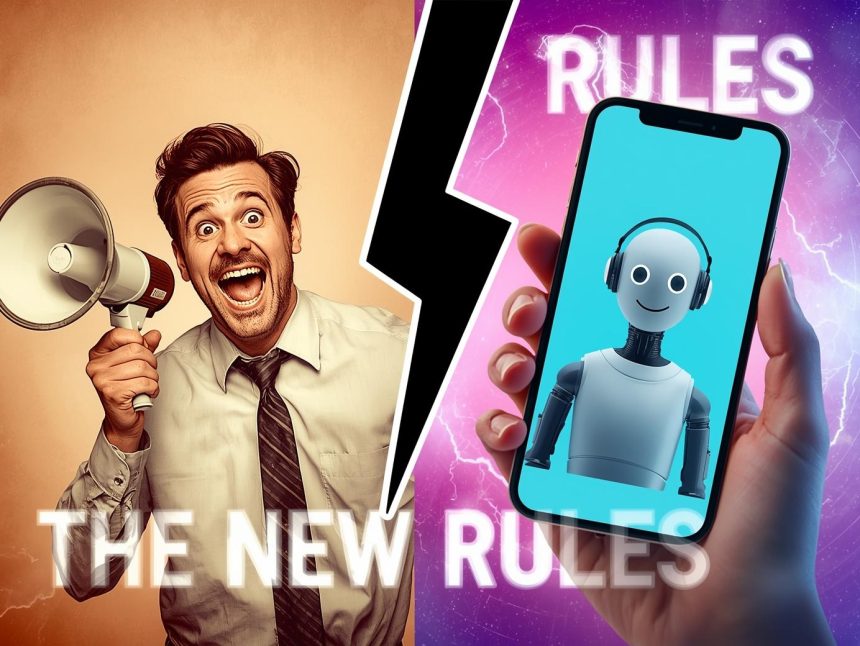
In today’s always-on digital world, consumers expect quick responses, personalized content, and seamless experiences across platforms. Chatbots and automated content—powered by machine learning and natural language processing (NLP)—are helping brands meet those expectations at scale.
- What Are Chatbots and Automated Content?
- Why Chatbots and Automated Content Matter in Marketing
- Real-World Examples
- How Chatbots and Automated Content Work
- Benefits for Marketers
- Tools for Chatbots and Automated Content
- Challenges and Ethical Considerations
- The Future of Chatbots and Automated Content
- Quick Summary: Chatbots & Automated Content at a Glance
- References
From 24/7 customer support to AI-written product descriptions, these tools are no longer futuristic experiments—they’re essential components of modern marketing strategies.
What Are Chatbots and Automated Content?
- Chatbots: AI-driven virtual assistants that simulate human conversation through messaging apps, websites, or voice interfaces.
- Automated Content: Text, images, or video created or personalized by AI using NLP and machine learning.
Both rely on NLP, which enables machines to understand, interpret, and generate human language.
According to Juniper Research, AI chatbots are expected to handle 75% of customer queries by 2025, saving businesses over $11 billion annually (Juniper, 2025).
Why Chatbots and Automated Content Matter in Marketing
- Speed: Customers get instant answers instead of waiting for human agents.
- Scalability: Brands can serve millions of customers simultaneously.
- Personalization: AI tailors responses and content to each user.
- Cost Efficiency: Lower customer support costs and faster campaign execution.
A Salesforce survey found that 69% of consumers prefer using chatbots for quick communication with brands (Salesforce, 2025). This shows that chatbots are not just efficient—they’re what customers increasingly expect.
Real-World Examples
Sephora’s Chatbot
Sephora uses a chatbot on Facebook Messenger that recommends products and tutorials, driving both engagement and sales.
Spotify’s AI DJ
Spotify combines machine learning and NLP to curate personalized playlists with a human-like “DJ” voice, increasing listening time.
The Washington Post
The Washington Post uses automated journalism tools powered by NLP to create real-time news briefs, allowing human journalists to focus on in-depth reporting.
Domino’s Pizza Bot
Domino’s “Dom” chatbot lets customers order pizzas through messaging apps, making ordering seamless and fun.
How Chatbots and Automated Content Work
- Data Collection
Chatbots collect data from user interactions, while automated content tools analyze historical campaign data, social media trends, and product catalogs. - Natural Language Understanding (NLU)
Machine learning models interpret user intent from text or voice. Tools like Dialogflow and Rasa enable this. - Content Generation
NLP models generate text, such as personalized recommendations, ad copy, or blog outlines. Tools like ChatGPT and Jasper AI lead here. - Response Delivery
Chatbots deliver answers, and automated platforms publish personalized messages across email, web, or social. - Continuous Learning
Feedback loops refine models, improving accuracy and naturalness over time.
Benefits for Marketers
- Enhanced Customer Experience: Quick, human-like interactions build trust.
- Content at Scale: Automated tools can generate thousands of personalized emails or product descriptions instantly.
- Improved Conversion Rates: Personalized interactions increase customer satisfaction and purchase likelihood.
- Global Reach: NLP-powered chatbots support multiple languages, expanding brand accessibility.
“Chatbots and automated content aren’t replacing human creativity—they’re amplifying it. They free marketers to focus on strategy while AI handles scale and speed.” — Mr. Phalla Plang, Digital Marketing Specialist
Tools for Chatbots and Automated Content
- Dialogflow – Google’s NLP platform for building conversational agents.
- Rasa – Open-source chatbot framework with machine learning-based dialogue management.
- Drift – Conversational marketing platform for sales and lead generation.
- Jasper AI – AI-powered content generation tool.
- ManyChat – Chatbot builder for Messenger, WhatsApp, and Instagram.
- ChatGPT – Advanced NLP model for conversation and content creation.
Challenges and Ethical Considerations
- Over-Automation: Too much reliance on bots can feel impersonal.
- Bias in NLP Models: Poor training data may lead to biased or inappropriate responses.
- Transparency: Customers should know when they’re talking to a bot.
- Privacy: Collecting chat data requires compliance with GDPR, CCPA, and other privacy laws.
According to PwC, 82% of consumers want brands to clearly disclose when AI is used in communication (PwC, 2025).
The Future of Chatbots and Automated Content
- Hyper-Personalized Assistants: Bots that remember past conversations and predict future needs.
- Voice-Driven Chatbots: Integration with Alexa, Siri, and Google Assistant.
- Multimodal Content Creation: AI generating video, audio, and text simultaneously.
- Integration with Generative AI: Bots creating highly tailored ads, emails, or even influencer-style content in real time.
As Gartner predicts, by 2030, 80% of customer interactions will be handled by AI tools (Gartner, 2025).
Quick Summary: Chatbots & Automated Content at a Glance
| Feature | Benefit |
| 24/7 Availability | Instant, global customer support |
| Personalization | Tailored responses and recommendations |
| Cost Savings | Lower support costs, faster campaigns |
| Content Automation | Scale content without extra staff |
| Multilingual Support | Breaks barriers for global audiences |
Note
Chatbots and automated content are reshaping the future of marketing. By combining machine learning with NLP, businesses can deliver personalized, scalable, and cost-effective experiences that meet rising consumer expectations.
The real magic isn’t in replacing humans, but in empowering marketers with AI tools that amplify creativity, scale personalization, and improve customer engagement. Brands that adopt these technologies today will lead tomorrow’s digital marketplace.
More Read
References
Gartner. (2025). AI in Customer Experience Report. Gartner.
Juniper Research. (2025). Chatbot Market Outlook: Savings and Adoption Trends. Juniper.
PwC. (2025). Consumer Trust and AI Transparency Survey. PwC Global.
Salesforce. (2025). State of the Connected Customer. Salesforce.
Statista. (2025). NLP in Marketing: Global Adoption Rates. Statista.