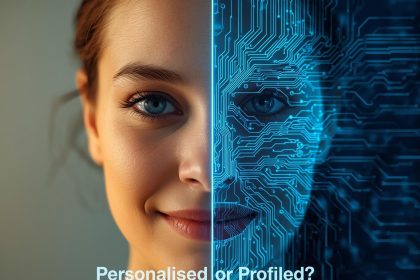
E-commerce has changed dramatically in the past decade, and one of the biggest drivers of growth in 2025 is artificial intelligence (AI). Unlike traditional personalization, which often relies on broad customer segments, AI uses machine learning and real-time data to deliver individualized shopping experiences.
According to McKinsey (2022), companies that integrate advanced personalization into their strategies generate up to 40% more revenue than those that don’t. For e-commerce businesses, this means AI-driven personalization is no longer optional—it is a core strategy for increasing conversions and long-term customer loyalty.
This article explores what AI personalization means, why it matters, best practices, case studies, and where the future of e-commerce personalization is heading.
What Is AI-Driven Personalization?
AI-driven personalization uses algorithms and predictive models to tailor shopping experiences for each customer. Unlike static personalization methods (like showing “most popular” products), AI uses data points such as:
- Browsing history
- Purchase behavior
- Location and device type
- Real-time on-site activity
- Customer demographics
AI systems analyze these signals to deliver dynamic recommendations, customized search results, and targeted promotions.
For example:
- A customer browsing hiking gear might see complementary recommendations like boots or backpacks.
- A shopper in a rainy region could see raincoat promotions on the homepage.
- An AI model could detect cart abandonment and send a tailored discount offer.
Why AI Personalization Matters for Conversions
- Higher Conversion Rates
Personalization increases relevance. Epsilon (2023) found that 80% of consumers are more likely to buy from brands that provide personalized experiences. - Increased Average Order Value (AOV)
Cross-sell and upsell recommendations encourage customers to spend more. Nosto (2024) reports that personalized product recommendations can increase AOV by double digits. - Stronger Customer Loyalty
McKinsey (2022) found that personalization efforts can boost customer retention rates by as much as 20%. - Reduced Cart Abandonment
AI triggers, such as offering free shipping at checkout or sending a reminder email, can help recover lost sales.
As I often explain to clients: “AI personalization turns browsing into buying by delivering exactly what customers want—even before they ask for it.” – Mr. Phalla Plang, Digital Marketing Specialist.
Best Practices for AI-Driven Personalization
1. Personalize Product Recommendations
Dynamic recommendations are one of the most effective applications of AI.
- Use “Customers also bought” suggestions.
- Highlight complementary items to boost AOV.
- Tools like Nosto and Dynamic Yield automate AI recommendations.
2. Customize Search Results
AI-powered search improves discovery.
- Rank products based on individual user preferences.
- Use natural language processing (NLP) to understand intent.
- Platforms like Algolia and Constructor enable contextual search personalization.
3. Adapt Content in Real-Time
AI can adjust banners, product descriptions, or promotions.
- Show winter clothing to customers in colder climates.
- Change homepage images based on time of day or season.
- Optimizely supports AI-driven dynamic content delivery.
4. Use Predictive Discounts
Instead of giving discounts to everyone, AI models predict which customers are most likely to abandon a purchase and offer them targeted incentives. This protects margins while improving conversions.
5. Personalize Mobile Experiences
Since 43% of all e-commerce sales will come from mobile by 2025 (Statista, 2025), mobile-first personalization is critical.
- Send personalized push notifications.
- Create dynamic product feeds in mobile apps.
- Simplify checkout with saved payment details.
6. Trigger Real-Time Interventions
AI can detect intent signals such as hesitation during checkout and respond instantly.
- Pop-ups offering free shipping.
- Chatbots answering common questions.
- Urgency messaging like “Only 2 left in stock for your size.”
Case Studies and Real-World Examples
- Amazon reports that its recommendation engine—powered by AI—drives up to 35% of its total revenue (McKinsey, 2022).
- Sephora uses AI to personalize both online and mobile shopping experiences, offering tailored product suggestions and increasing repeat purchases (Epsilon, 2023).
- Zalando, a European fashion giant, applies AI to create entire personalized lookbooks for customers, improving engagement and conversion (Nosto, 2024).
Tools for AI Personalization
- Nosto – Personalization and product recommendations.
- Dynamic Yield – AI-driven real-time personalization.
- Algolia – AI-enhanced search and discovery.
- Constructor – Personalized product discovery platform.
- Optimizely – A/B testing and personalization engine.
Challenges and Mistakes to Avoid
- Over-personalization: Avoid intrusive tactics that feel “creepy.”
- Data silos: Without unified data, personalization loses accuracy.
- Compliance issues: Personalization must respect GDPR and CCPA regulations.
- One-size-fits-all personalization: AI must adapt in real time to context, not just past data.
The Future of AI in E-Commerce Personalization
AI personalization is evolving beyond recommendations. Future trends include:
- Voice personalization: Smart assistants tailoring shopping lists.
- Visual search: Uploading an image to find similar products instantly.
- Virtual fitting rooms: Using AR and AI to recommend products by body type or style preference.
- AI chatbots: Offering real-time, personalized shopping assistance.
McKinsey (2022) predicts that companies leveraging advanced AI personalization can see conversion rate improvements of 10–20% within a year.
Note
In 2025, AI-driven personalization is the cornerstone of e-commerce conversion optimization. By tailoring experiences across product discovery, search, checkout, and mobile, businesses can dramatically improve conversions, customer satisfaction, and loyalty.
For ambitious e-commerce brands, AI personalization is not just technology—it’s a growth engine.
More Read

References
Epsilon. (2023). The impact of personalization on consumer behavior. Epsilon. https://us.epsilon.com/
McKinsey & Company. (2022). The data-driven enterprise of 2025. McKinsey. https://www.mckinsey.com/
Nosto. (2024). AI-powered personalization in e-commerce. Nosto. https://www.nosto.com/
Spiegel Research Center. (2022). How personalization and reviews drive sales. Northwestern University. https://spiegel.medill.northwestern.edu/
Statista. (2025). Mobile commerce share worldwide. Statista. https://www.statista.com/