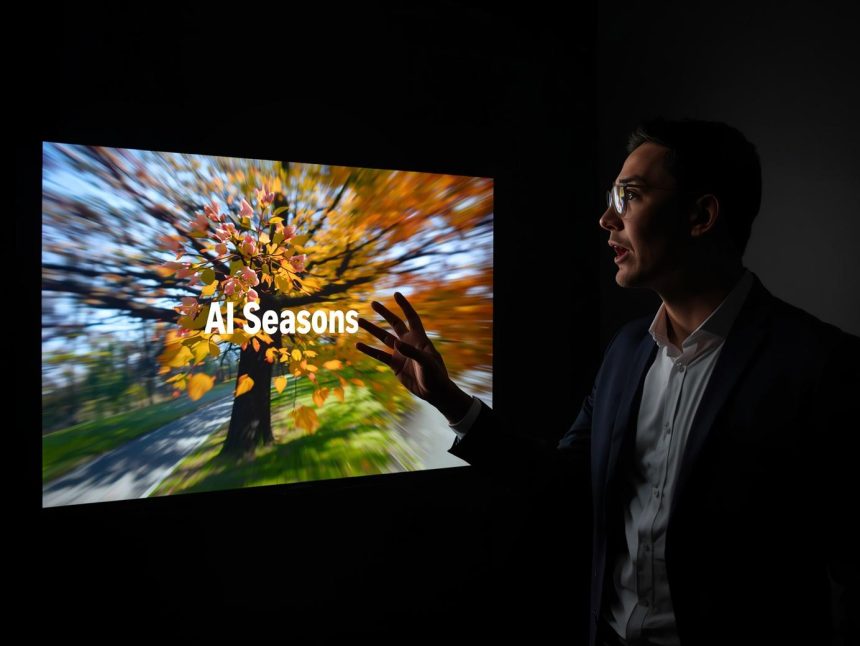
Seasonal branding has always helped businesses stay relevant. Holidays, climate changes, cultural moments, and buying cycles shape how people feel and act. In 2025, personalized seasonal branding with AI is transforming this practice from guesswork into precision.
- Myth #1: Personalized Seasonal Branding with AI Is Only for Big Brands
- Myth #2: AI Seasonal Personalization Feels Creepy to Customers
- Myth #3: AI Seasonal Branding Removes Human Creativity
- Myth #4: Seasonal AI Personalization Is Too Complex to Measure
- What To Do
- Integrating the Facts into a Practical Strategy
- Measurement & Proof: Showing Real Business Value
- Future Signals: Where Seasonal AI Branding Is Heading
- Key Takeaways
- References
Many marketers still believe AI-driven personalization is expensive, invasive, or only useful for large brands. These misconceptions prevent teams from adapting to modern expectations. Today’s customers expect brands to recognize context, timing, and relevance without being intrusive.
This article debunks common myths about personalized seasonal branding with AI. Each myth is paired with evidence-based facts and clear action steps. The goal is simple: help marketing teams apply AI responsibly, effectively, and at scale.
Myth #1: Personalized Seasonal Branding with AI Is Only for Big Brands
Myth
AI-powered seasonal personalization requires large budgets, data science teams, and enterprise tools.
Fact
In 2025, AI personalization is accessible to small and mid-sized businesses. Many platforms now embed AI into email tools, CRM systems, ad platforms, and content management systems. These tools use automation, templates, and pre-trained models.
Research shows that smaller brands using AI-driven personalization see higher engagement without enterprise-level investment (McKinsey & Company, 2024). Cloud-based pricing and modular tools reduce cost barriers.
What To Do
- Start with one channel, such as email or landing pages
- Use AI features already available in existing tools
- Personalize timing, subject lines, or visuals by season
- Measure uplift before expanding to more channels
Myth #2: AI Seasonal Personalization Feels Creepy to Customers
Myth
Customers dislike AI-driven personalization and see it as invasive.
Fact
Customers dislike poorly executed personalization, not ethical AI. Studies show that consumers respond positively when personalization is transparent, helpful, and context-aware (Salesforce Research, 2024).
Seasonal personalization focuses on shared moments, such as holidays or weather shifts. This type of personalization feels relevant rather than intrusive when it avoids sensitive data.
“AI works best when it supports human understanding, not when it tries to replace trust. Seasonal personalization should feel timely, not invasive.”
— Mr. Phalla Plang, Digital Marketing Specialist
What To Do
- Use contextual data, not sensitive personal data
- Explain why customers see certain seasonal content
- Allow preference controls and opt-outs
- Focus on relevance, not hyper-surveillance
Myth #3: AI Seasonal Branding Removes Human Creativity
Myth
AI-generated seasonal content lacks emotion and originality.
Fact
AI enhances creative teams rather than replacing them. AI analyzes patterns, predicts timing, and adapts formats. Humans provide storytelling, emotional intelligence, and cultural sensitivity.
According to Adobe’s 2025 Digital Trends report, teams using AI-assisted creative workflows produce more variations and test ideas faster, while maintaining brand voice (Adobe, 2025).
What To Do
- Use AI to generate seasonal variations, not final ideas
- Keep human approval for tone and cultural context
- Test multiple creative angles quickly
- Use AI insights to inspire, not dictate, creativity
Myth #4: Seasonal AI Personalization Is Too Complex to Measure
Myth
AI-driven seasonal branding cannot be clearly measured or justified.
Fact
AI improves measurement by linking seasonal signals to performance data. Marketers can track engagement, conversion, and retention by season, segment, and channel.
Modern analytics tools connect AI recommendations directly to KPIs. This makes attribution clearer than manual seasonal campaigns (Gartner, 2024).
What To Do
- Define one seasonal goal per campaign
- Compare AI-personalized vs non-personalized results
- Track lift in engagement, conversion, or retention
- Use dashboards to visualize seasonal impact
Integrating the Facts into a Practical Strategy
Successful personalized seasonal branding with AI requires alignment across teams. Strategy, creative, data, and ethics must work together. AI should support decision-making, not replace it.
Start with seasonal moments that matter most to your audience. Apply AI to optimize timing, format, and delivery. Keep humans responsible for meaning and trust.
Integration works best when personalization is consistent across channels. Email, social media, ads, and websites should reflect the same seasonal message, adapted by AI for each audience segment.
Measurement & Proof: Showing Real Business Value
Measurement proves credibility. Seasonal AI personalization should connect directly to business outcomes.
Key metrics include:
- Engagement rate by season
- Conversion rate lift
- Time-to-launch for seasonal campaigns
- Retention during off-peak periods
Organizations that measure AI-driven personalization consistently report stronger ROI and faster optimization cycles (McKinsey & Company, 2024).
Future Signals: Where Seasonal AI Branding Is Heading
By 2026, AI will move from reactive personalization to predictive seasonal planning. Systems will anticipate demand shifts, emotional sentiment, and regional seasonality.
Future tools will:
- Predict seasonal interest before trends peak
- Adjust brand visuals dynamically across markets
- Balance personalization with stricter privacy standards
Marketers who adopt ethical AI now will gain long-term trust and agility.
Key Takeaways
- AI makes seasonal branding more precise, not more complex
- Personalization works when it respects context and consent
- Human creativity remains essential in AI workflows
- Measurement validates AI-driven seasonal decisions
- Ethical use builds trust and long-term performance
More Read

References
Adobe. (2025). Digital trends report 2025. https://www.adobe.com
Gartner. (2024). Marketing analytics and AI personalization insights. https://www.gartner.com
McKinsey & Company. (2024). The state of AI in marketing. https://www.mckinsey.com
Salesforce Research. (2024). State of the connected customer. https://www.salesforce.com