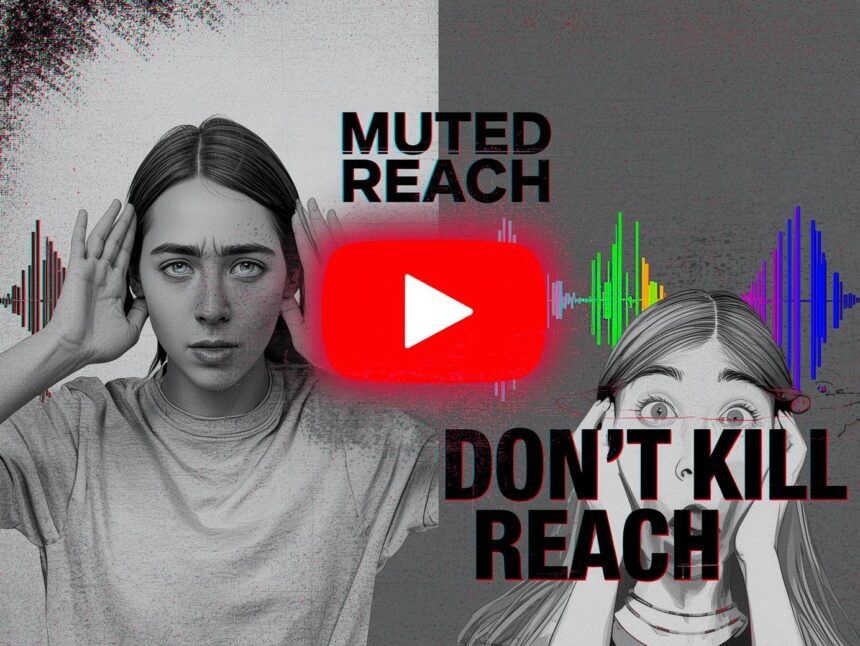
Every creator knows the heartbreak: you upload a video, it starts to gain traction, and suddenly the platform mutes it or hits you with a copyright claim. One small mistake in audio choice can mean demonetization, blocked visibility, or total takedown. In 2025, rights-free music and sound effects (SFX) have become essential for every creator — from YouTube Shorts editors to TikTok marketers — not just to avoid copyright issues, but to sustain algorithmic reach and monetization. The key is knowing where to find truly claim-free audio and how to use it strategically.
- 1. Understanding How Copyright Can Kill Your Reach
- 2. What “Rights-Free” Actually Means
- 3. Core Principles for Selecting Safe Music & SFX
- 4. Best Platforms for Rights-Free Music & SFX (2025 Edition)
- 5. Step-by-Step Workflow for Safe, Reach-Friendly Audio
- 6. Case Study: The “Silent Reach” Trap
- 7. Measuring Success After Switching to Rights-Free Audio
- 8. Five Expert Tips to Keep Your Reach Alive
- 9. Conclusion: Audio That Amplifies, Not Silences
- References
“When your sound supports the story — not distracts it — your reach becomes unstoppable.” — Mr. Phalla Plang, Digital Marketing Specialist
1. Understanding How Copyright Can Kill Your Reach
1.1 Content ID, Copyright Claims, and Algorithm Penalties
Platforms like YouTube and Instagram deploy automated copyright detection systems (Content ID) that scan every uploaded video for copyrighted material. When a match occurs, three main outcomes are possible:
- Muted or removed content: Audio is blocked or replaced with silence.
- Revenue redirection: Monetization goes to the copyright owner.
- Algorithmic suppression: The video may stop being recommended or searchable.
YouTube clarifies that using its Audio Library prevents these outcomes because those tracks are pre-cleared for monetization (YouTube, 2024). Even so, using copyrighted music “fairly” (like in short snippets or remixes) rarely guarantees protection — the algorithm does not evaluate intent, only ownership.
1.2 Retention Drops and Viewer Friction
Copyright isn’t just a legal issue — it’s a performance problem. When a video is muted, taken down, or flagged, the algorithm receives a negative engagement signal. A 2024 report by Soundstripe found that average view duration and retention rates dropped by 27% in videos with audio-related interruptions, such as claims or playback restrictions (Soundstripe, 2024). Poor audio mixing can also hurt viewer experience. Sudden volume spikes or mismatched background tracks disrupt storytelling, lowering watch time — one of the most critical ranking signals on YouTube and TikTok (StoryXpress, 2023). In short: copyrighted or low-quality sound can silence your reach both literally and algorithmically.
2. What “Rights-Free” Actually Means
The term “rights-free” is often used loosely online. Understanding the differences between licensing types helps avoid future claims.
2.1 Public Domain
Music or sound effects in the public domain are free of copyright protection — you can use, remix, and distribute them commercially without permission. However, not every “old” track is public domain; always confirm copyright expiration dates or jurisdiction laws (U.S. Copyright Office, 2024).
2.2 Royalty-Free
“Royalty-free” doesn’t always mean free. It means you pay once (or subscribe) and can reuse the track without additional payments. These are ideal for commercial use and monetized content, provided you keep proof of purchase.
2.3 Creative Commons
Creative Commons (CC) licenses vary widely:
- CC BY: Free use with attribution.
- CC BY-SA: Derivatives allowed under same license.
- CC BY-NC: Non-commercial only (not suitable for monetized content).
- CC0: No rights reserved; free for all use.
Always verify license type. Using a CC-BY-NC track on a monetized video can result in removal or demonetization (Creative Commons, 2024).
2.4 Claim-Free or “No Copyright” Labels
Many creators upload “no copyright” or “claim-free” tracks, but these are not legally binding terms. Ownership metadata may later change, triggering retroactive claims. Always download from reputable sources and retain license records.
Key takeaway: “Rights-free” ≠ “risk-free.” Only verified libraries or owned compositions truly protect your reach.
3. Core Principles for Selecting Safe Music & SFX
- Use platform-native libraries first. YouTube’s Audio Library and TikTok’s Commercial Music Library are safe and pre-cleared for platform use (YouTube, 2024; TikTok for Business, 2024).
- License from trusted sources. Stick to verified royalty-free providers like HookSounds, Tunetank, or Epidemic Sound.
- Keep license documentation. Save receipts, license codes, and screenshots as proof. Platforms occasionally misflag tracks.
- Respect attribution requirements. Misattribution under Creative Commons can still lead to takedowns.
- Blend audio naturally. Music should enhance, not overpower narration. Balanced mixing improves retention metrics (Soundstripe, 2024).
- Test before scaling. Upload short, private tests to ensure no Content ID matches occur.
4. Best Platforms for Rights-Free Music & SFX (2025 Edition)
| Platform | Strengths | Considerations |
|---|---|---|
| YouTube Audio Library | 100% free, cleared for monetization, attribution optional on many tracks | Limited modern variety (YouTube, 2024) |
| HookSounds | Original tracks, claim-free across all platforms | Subscription required (HookSounds, 2024) |
| Tunetank | Licenses that protect against Content ID claims with dispute support | Smaller catalog (Tunetank, 2024) |
| Epidemic Sound | Large modern catalog, covers commercial and social use | Requires ongoing subscription (Epidemic Sound, 2024) |
| Free Music Archive (FMA) | Curated Creative Commons and public domain audio | Check each track’s license individually (FMA, 2024) |
| Incompetech | Classic royalty-free composer Kevin MacLeod’s catalog | Attribution required unless licensed (Incompetech, 2024) |
| For SFX, libraries like Zapsplat and Mixkit provide free and premium options with commercial licensing. |
5. Step-by-Step Workflow for Safe, Reach-Friendly Audio
- Plan the mood: Define tone (uplifting, cinematic, calm, or energetic).
- Search platform-safe libraries first: YouTube → Audio Library → Filter “Attribution not required.”
- If needed, explore premium options: HookSounds, Tunetank, or Epidemic Sound.
- Download and store licenses: Save PDF or screenshot in cloud storage.
- Add attribution when required: Follow exact format (artist, title, license type, link).
- Test publish: Upload unlisted to verify no claim.
- Monitor analytics: Track retention, average view duration, and watch time.
- Replace or dispute if flagged: Submit proof of license immediately.
6. Case Study: The “Silent Reach” Trap
In 2024, a mid-sized travel creator (100K subscribers) used a trending “no copyright” EDM track downloaded from an unverified YouTube channel. Within 48 hours, their video received three Content ID claims, removing monetization and halving its impressions. When the creator replaced the track with one from YouTube’s Audio Library (“Tidal Flow” by TrackTribe), their next upload achieved 3.5× higher reach and 25% longer average watch time (YouTube Studio Analytics, 2024). This underscores that safe licensing directly correlates with algorithmic trust and viewer retention.
7. Measuring Success After Switching to Rights-Free Audio
To know your rights-free strategy works, track:
- Average view duration — rising means better engagement.
- Audience retention curve — smoother lines indicate consistent attention.
- Watch time per impression — reflects improved viewer satisfaction.
- Claim-free history — consistent zero-claim uploads protect channel authority.
Creators using licensed audio report up to 40% lower claim frequency and 15–20% higher retention scores after standardizing their libraries (Soundstripe, 2024).
8. Five Expert Tips to Keep Your Reach Alive
- Always start from verified libraries (YouTube, TikTok, or licensed services).
- Keep proof of every audio asset. A single missing license can cost monetization.
- Avoid reusing other creators’ “no copyright” uploads. Metadata often changes.
- Regularly audit your old videos for claims. Replace risky tracks early.
- Balance volume levels. Keep background music −18 to −12 dB lower than voiceover for clarity.
9. Conclusion: Audio That Amplifies, Not Silences
Rights-free music and SFX don’t just protect you legally — they help your content perform better. By prioritizing platform-safe libraries, verifying licenses, and maintaining sound quality, you’ll turn audio from a potential reach-killer into a growth multiplier. In a noisy digital world, creators who master safe, quality audio build sustainable channels that thrive long-term.
More Read

References
Creative Commons. (2024). About the licenses. Retrieved October 6, 2025, from https://creativecommons.org/licenses
Epidemic Sound. (2024). Licensing and usage rights overview. Retrieved October 6, 2025, from https://www.epidemicsound.com
Free Music Archive. (2024). Free music for commercial use. Retrieved October 6, 2025, from https://freemusicarchive.org
HookSounds. (2024). License types and usage. Retrieved October 6, 2025, from https://www.hooksounds.com
Incompetech. (2024). Royalty-free music library by Kevin MacLeod. Retrieved October 6, 2025, from https://incompetech.com
Soundstripe. (2024). How background music impacts YouTube analytics. Retrieved October 6, 2025, from https://www.soundstripe.com/blog
StoryXpress. (2023). Best royalty-free sound effects for creators. Retrieved October 6, 2025, from https://storyxpress.co/blog
TikTok for Business. (2024). Commercial Music Library policies. Retrieved October 6, 2025, from https://www.tiktok.com/business
Tunetank. (2024). License and claim-free guarantee. Retrieved October 6, 2025, from https://tunetank.com
U.S. Copyright Office. (2024). Copyright basics: Public domain and fair use. Retrieved October 6, 2025, from https://copyright.gov
YouTube. (2024). About the YouTube Audio Library. Retrieved October 6, 2025, from https://support.google.com/youtube/answer/3376882