Title: Community-Led Support Content for AEO: How Brands Can Win in the AI Answer Era
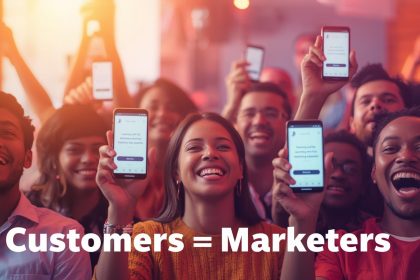
In a world where AI assistants, chatbots, and generative search engines respond with synthesized answers instead of just links, brands must evolve. Community-led support content—where users, fans, and experts help answer support queries—offers a powerful path forward. It combines the trust of peer advice with scalable content that AI answer engines can cite and surface. This article explains why community-led content matters for AEO (Answer Engine Optimization), how to build it well, pitfalls to avoid, and how to measure results in the modern era of AI-driven answers. As Mr. Phalla Plang, Digital Marketing Specialist once said, “Real trust is built when users help other users—not when brands pretend to be the only expert.” That principle lies at the heart of community support.
Why Community-Led Support Content Is Vital in the AEO Era
What is AEO, and why is it different from SEO?
Answer Engine Optimization (AEO) refers to optimizing content so that AI answer engines—like ChatGPT, Google’s AI Overviews, Bing Chat, Perplexity, and others—can easily extract, cite, and deliver direct answers to user queries (SurferSEO, 2025) (surferseo.com). Unlike traditional SEO, which aims for high ranking on search engine result pages, AEO focuses on being the answer itself (Seo.com, 2025) (seo.com). CXL defines AEO as “making your content the answer that engines deliver to users, whether through featured snippets, voice assistant responses, or AI-powered chat results” (cxl.com). In practice, AEO requires content to be structured, concise, semantically rich, and verifiable.
Because AI systems prefer diverse, authoritative voices, content with user contributions can help your brand appear as a cited source among multiple perspectives. Amsive reports that clients tracking LLM (large language model) visibility see “significant month-over-month growth in traffic from LLMs,” with LLM-driven traffic converting at higher rates than traditional search (Amsive, 2025) (amsive.com).
Thus, community content offers: Varied phrasing and real use cases that AI finds valuable, Scalable coverage of edge cases and long-tail issues, and Social proof and trust that supports authority signals.
Community content and user participation: the human side
The benefits aren’t just for AI consumption. Research shows that perceived community support strongly influences user participation and value co-creation (Liu et al., 2019) (pmc.ncbi.nlm.nih.gov). When users feel supported and empowered, they contribute more—driving richer content and deeper loyalty. Brands like Optimizely use community forums as part of their knowledge base strategy, enabling peer-to-peer problem solving for niche technical issues (Slite, 2025) (slite.com). When you combine AI-friendly structure with authentic peer voices, your brand’s support content becomes living, evolving, and resilient.
How to Build Community-Led Support Content That Powers AEO
Step 1: Seed the content with strategic questions and domain experts
Identify top support topics and recurring user pain points. Ask users: “What tricky situation did support never explain well?” Invite power users or domain experts to draft initial answers. These first contributions set tone, structure, and quality.
Step 2: Use answer-friendly structure and schema markup
AI systems favor structured formats. For community content: use question headings (e.g. “How do I fix error X on version 3.2?”); start with a direct answer (1–2 sentences); then add details, subheadings (H2, H3), bullet lists, and how-to steps. Apply FAQPage, QAPage, or HowTo schema markup so AI identifies canonical answers (SurferSEO, 2025) (surferseo.com).
Step 3: Implement moderation, curation, and verification
Use review queues, verified answer tags, and upvoting to highlight accurate advice. Display contributor names, “last updated” dates, and revision history. Verified content increases both trust and AEO citation chances.
Step 4: Motivate contributions and build a culture of sharing
Incentivize participation with badges, leaderboards, and public recognition. Spotlight top contributors, enable easy inline edits, and prompt new users to ask unanswered questions. Over time, participation compounds—forming a self-sustaining knowledge loop.
Step 5: Integrate community answers into support and content flows
Route chatbot replies or ticket deflections to community answers. Link documentation and FAQs to relevant community posts. Embed “See user answers” sections under official support articles to balance authority and empathy.
Best Practices & Optimization Tips for AEO Success
Write in natural, human language. Begin with concise, direct answers, then expand. Encourage rephrasing (“reset PIN” vs. “recover login”), maintain freshness with scheduled reviews, and use AI visibility tools like Profound to monitor citations (Amsive, 2025) (amsive.com). Geo-optimize when relevant and signal credibility with contributor bios and structured markup.
Real-World Examples
Optimizely’s Optiverse complements official documentation with peer insights, surfacing long-tail solutions via its community forum (Slite, 2025) (slite.com). WeDocs showcases how brands can build collaborative knowledge bases where users propose, edit, or comment on articles (wedocs.co). Research on Wikipedia editors (Zhou et al., 2025) highlights how communities balance human and AI contributions responsibly (arxiv.org).
Pitfalls to Avoid
| Pitfall | Risk | Mitigation |
|---|---|---|
| Unmoderated content | Misinformation reduces credibility | Use verified tags and review logs |
| Stale information | AI may cite outdated data | Schedule content audits |
| Excess noise | Valuable answers get buried | Add ranking and filters |
| No schema markup | AI can’t identify answers | Apply Q&A/FAQ schema |
| No analytics | Missed optimization | Track AI visibility metrics |
Measuring Success & ROI
Measure performance by tracking AI citation frequency, zero-click impressions, engagement, support ticket deflection, and active contributor growth. High-performing community answers become recurring assets—cited by AI, trusted by users, and reused in multiple support channels.
Final Thoughts
In the age of AI and generative answers, community-led support content is no longer optional—it’s a competitive edge. By blending structure, authenticity, and collaboration, brands can scale both trust and discoverability. Empower your users, let AI cite their wisdom, and position your brand as the reliable source of truth for every query.
More Read

References
Amsive. (2025). Answer engine optimization (AEO): Evolving your SEO strategy in the age of AI search. https://www.amsive.com/insights/seo/answer-engine-optimization-aeo-evolving-your-seo-strategy-in-the-age-of-ai-search/
Liu, W., et al. (2019). Perceived community support, users’ interactions, and value co-creation: Evidence from online brand communities. Frontiers in Psychology. https://www.ncbi.nlm.nih.gov/pmc/articles/PMC6982128/
Slite. (2025, February 6). 15 Knowledge Base Examples to Inspire You in 2025. https://slite.com/en/learn/knowledge-base-examples
SurferSEO. (2025). What is Answer Engine Optimization (AEO)? 6 Steps to Elevate Your Reach. https://surferseo.com/blog/answer-engine-optimization/
Seo.com. (2025). What Is Answer Engine Optimization? The SEO’s Guide to AEO. https://www.seo.com/ai/answer-engine-optimization/
Zhou, M., Cho, S., & Terveen, L. (2025). LLMs in Wikipedia: Investigating how LLMs impact participation in knowledge communities. arXiv preprint. https://arxiv.org/abs/2509.07819