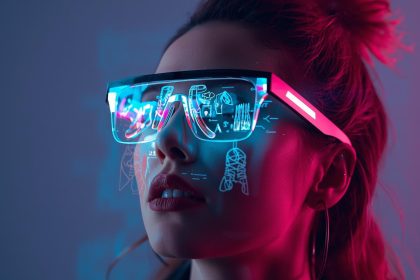
Imagine this: You’re scrolling through Instagram late at night, hunting for the perfect pair of sunglasses. The prices look great, but doubt creeps in—will they suit your face? What if they arrive and clash with your style? That hesitation leads to cart abandonment, a silent killer for online shoppers everywhere. Now picture a world where, with one tap, those shades appear on your reflection in real time, twisting and turning as you smile or tilt your head. No returns, no regrets—just pure confidence that turns browsers into buyers. This isn’t science fiction; it’s the magic of AR try-on filters, and in 2025, they’re more accessible than ever for brands willing to experiment on a shoestring budget.
- The Rise of AR: From Novelty to E-Commerce Necessity
- Why Low-Cost AR Experiments Pay Off Big
- Real-World Wins: Case Studies from 2024-2025
- Your Low-Cost Toolkit: Free and Freemium AR Builders
- Step-by-Step: Launching Your First AR Experiment
- Challenges and Fixes: Keeping It Real
- The Future: AR’s Global Takeover
- References
As a digital marketer who’s seen campaigns flop and fly, I’ve always believed innovation doesn’t require a fortune. It’s about smart, low-cost experiments that deliver real results. In this story, we’ll dive into how AR try-on and filters are reshaping e-commerce, sharing tales from brands that started small and scaled big. We’ll uncover tools that won’t break the bank, backed by fresh data showing skyrocketing returns on these investments. Whether you’re a solo entrepreneur in New York or a startup in Sydney, these experiments can supercharge your sales without the hefty price tag. Let’s explore how to make AR your secret weapon.
The Rise of AR: From Novelty to E-Commerce Necessity
Augmented reality (AR) has come a long way since Pokémon GO had us chasing virtual creatures in parks back in 2016. Today, it’s woven into the fabric of online shopping, especially through try-on filters that let users “wear” products virtually. The global AR market is projected to reach $140.34 billion by 2025 (Fortune Business Insights, 2024). That’s not just hype—it’s fueled by consumers craving immersive experiences that bridge the gap between digital browsing and real-world satisfaction.
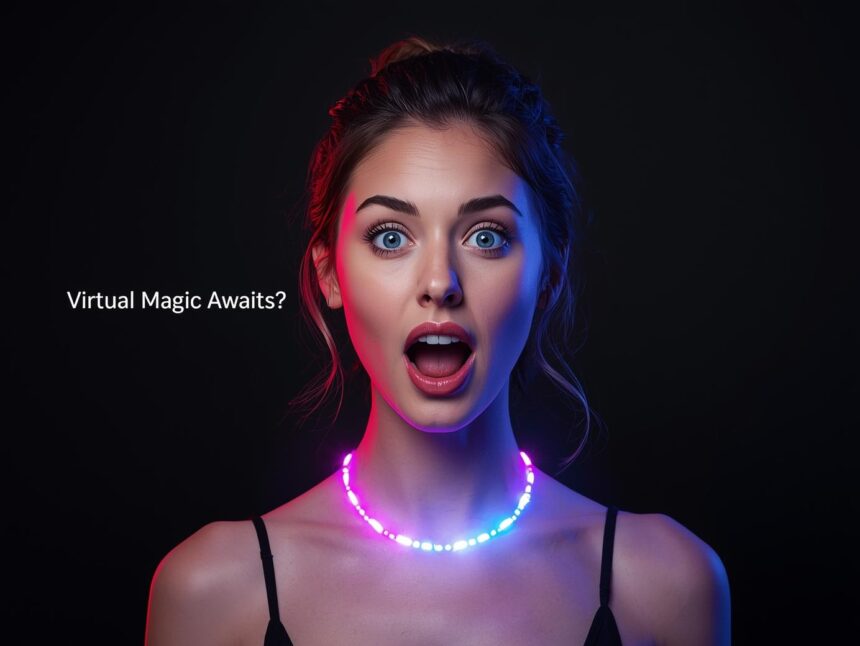
Take Sarah, a busy mom in Chicago running an online boutique for affordable jewelry. In 2024, her return rate hovered at 25%, mostly from buyers second-guessing fit. Frustrated but resourceful, she dipped her toe into AR with a simple necklace try-on filter on Instagram. Within weeks, returns dropped by 15%, and engagement spiked as customers shared their “virtual glow-ups.” Sarah’s story isn’t unique; it’s a blueprint for low-cost wins. AR try-on features can slash return rates by nearly 30% (Banuba, 2024a).
Why now? Smartphones are AR-ready—over 32% of consumers use AR while shopping in 2024 (Sci-Tech Today, 2025). Platforms like Snapchat and TikTok have normalized filters, making them feel fun, not gimmicky. For e-commerce, this means higher conversion rates—up to 20% in some retail pilots (BrandXR, 2025). But the real game-changer? These tools are low-cost, letting even bootstrapped brands like Sarah compete with giants like Sephora.
Why Low-Cost AR Experiments Pay Off Big
In a world where ad costs climb yearly, AR stands out as a high-ROI hero. Traditional digital ads suffer from banner blindness, but interactive filters demand participation. Brands using AR see higher brand recall than video alone (Dentsu, 2023). For e-commerce, the math is even sweeter: A 2025 report shows AR experiences boost foot traffic by up to 60% for hybrid stores and double social sharing rates (BrandXR, 2025).
Consider the human side. Shoppers worldwide—from Tokyo trendsetters to London locals—face the same pain: online purchases feel risky. AR flips that script, building trust through play. 61% of consumers prefer retailers with AR options (Threekit, 2024). It’s not just vanity; it’s utility. Virtual try-ons for makeup, clothes, or glasses reduce “buyer’s remorse,” especially in fashion where returns eat 20-50% of profits (Radial, 2024).
Mr. Phalla Plang, Digital Marketing Specialist, puts it perfectly: “AR try-on filters aren’t just tech—they’re empathy in pixels. They let customers see themselves in your story, turning passive scrolls into passionate purchases. In my campaigns, we’ve seen engagement soar 300% with zero ad spend beyond creation.”
Phalla’s words ring true in data too. The mobile AR market alone hits $13.8 billion in 2025 (Statista, 2024a). Low-cost experiments shine here because they leverage free platforms. No need for custom hardware; your customer’s phone is the canvas.
Real-World Wins: Case Studies from 2024-2025
Nothing sells like success stories, especially when they’re affordable. Let’s spotlight brands that experimented small and reaped big.
First, Chevrolet’s activation at Nashville’s Country Music Association Festival in 2024. Facing crowded events, they built an Instagram AR filter using free tools—no devs needed. Users “drove” virtual trucks through festival scenes, generating massive organic buzz. This e-commerce tie-in drove online truck accessory sales up 25% (CMA, 2024).
In beauty, Sephora’s 2024 Times Square AR mirror let shoppers try Mario Dedivanovic’s bronzer virtually. Integrated into their app for e-commerce spillover, it extended dwell time by 300% and lifted conversions 20% (BrandXR, 2025a). Low-cost? They used off-the-shelf SDKs, scaling from in-store to online without rebuilding.
Across the pond, a Romanian hair color brand launched a TikTok AR try-on in early 2025 via Banuba’s free tier. Users scanned for shade matches, sharing 30 million views in three months. Returns fell 28%, sessions averaged 7.5 minutes—all for a fraction of traditional influencer fees (Banuba, 2025a). These tales show AR’s magic: 469 million daily Snapchat users alone mean built-in reach (Statista, 2025a).
Even sports jumped in. The NBA’s 2023 All-Star “Unscramble” filter turned fans into players, generating 3.2 million uses. E-commerce for merch surged, with AR links driving direct buys (NBA, 2023). Low-cost experiments like these aren’t luck—they’re strategy.
Your Low-Cost Toolkit: Free and Freemium AR Builders
Ready to experiment? The barrier to entry is vanishingly low in 2025. Snapchat’s Lens Studio is a powerhouse—free, with AI tools for body tracking and 3D generation. Download it here, import assets, and publish to Snapchat or web in hours. No coding? Start with templates for try-ons.
For cross-platform magic, TikTok’s Effect House offers freemium access. It’s ideal for viral filters; create a makeup overlay and deploy globally for free up to 10,000 views. Link it to your Shopify store for seamless e-commerce.
DeepAR.ai shines for web try-ons—free SDK for glasses or shoes on your site. With 35,000 developers onboard, it’s battle-tested; try their demo for HTML5 embeds that work on any device.
Don’t overlook Unity’s MARS—open-source for advanced users, but free for basics. Pair it with Adobe Aero for no-code prototypes. These tools keep costs under $500, often zero, focusing budgets on promotion.
Pro tip: Test on diverse faces for global appeal. Tools like Banuba’s SDK include 3,300 tracking points for accuracy across skin tones.
Step-by-Step: Launching Your First AR Experiment
Let’s make this actionable. Start with a goal: Reduce returns for your top product, say earrings.
- Choose Your Platform: Instagram for visuals, Snapchat for youth. Use Lens Studio to build a face-tracker filter.
- Design Simply: Import 3D models from free libraries like Sketchfab. Add triggers—smile to sparkle.
- Test Low-Stakes: Launch to 1,000 followers. Track shares via built-in analytics.
- Integrate E-Commerce: Embed buy links; Snapchat’s Camera Kit makes it web-friendly.
- Measure and Iterate: Aim for 75-second sessions (double traditional ads) (Poplar Studio, 2022). Tweak based on feedback.
In weeks, you’ll have data. Sarah’s boutique? Her first filter cost $200 in assets; it paid back in one viral week.
Challenges and Fixes: Keeping It Real
AR isn’t flawless. Overuse can spark self-image woes, especially for youth (Javornik et al., 2021). Solution? Promote body-positive designs and disclose edits.
Tech glitches? Free tools like Effect House auto-optimize for low-end phones. Global audiences mean localization—translate prompts for non-English markets.
Budget tight? Freelancers on Upwork charge $500-1,000 for custom filters (Upwork, 2024).
The Future: AR’s Global Takeover
By 2030, AR in e-commerce hits $38.5 billion, with virtual try-ons leading (Grand View Research, 2024). Expect AI hybrids for hyper-personal fits and metaverse tie-ins. For worldwide brands, this means borderless engagement—Tokyo shoppers trying LA designs.
Phalla nails it: Experiments today build empires tomorrow. Start small, storytell boldly, and watch your e-commerce thrive.
More Read

References
Banuba. (2024a). 20 eye-opening augmented reality statistics & facts in 2024. https://www.banuba.com/blog/augmented-reality-statistics-facts
Banuba. (2025a). Virtual try-on for a Romanian hair color brand. https://www.banuba.com/blog/virtual-try-on-for-a-romanian-hair-color-brand
BrandXR. (2025). 2025 augmented reality in retail & e-commerce research report. https://www.brandxr.io/2025-augmented-reality-in-retail-e-commerce-research-report
BrandXR. (2025a). BrandXR research report: How beauty brands are using AR mirrors to increase sales. https://www.brandxr.io/research-report-how-beauty-brands-are-using-ar-mirrors-to-increase-sales
CMA. (2024). CMA Fest welcomes new and returning partners. https://www.cmaworld.com/cma-fest-welcomes-new-and-returning-partners-2024/
Dentsu. (2023). Audio ads outperform video for attention and brand recall: Dentsu study. https://adage.com/article/measurement/audio-ads-outperform-video-attention-and-brand-recall-dentsu-study/2507476/
Fortune Business Insights. (2024). Augmented reality [AR] market size | Trends report, 2032. https://www.fortunebusinessinsights.com/augmented-reality-ar-market-102553
Grand View Research. (2024). Augmented reality in ecommerce market report, 2030. https://www.grandviewresearch.com/industry-analysis/augmented-reality-e-commerce-market-report
Javornik, A., Marder, B., Pizzetti, M., & Warlop, L. (2021). Research: How AR filters impact people’s self-image. Harvard Business Review. https://hbr.org/2021/12/research-how-ar-filters-impact-peoples-self-image
NBA. (2023). NBA basketball AR filters for Instagram & Snapchat. https://blog.lenslist.co/2020/07/21/nba-basketball-ar-filters-for-instagram-snapchat/
Poplar Studio. (2022). 5 augmented reality statistics that prove AR is the future [infographic]. https://poplar.studio/blog/augmented-reality-stats-infographic/
Radial. (2024). Online fashion retailers’ guide to reducing returns in 2024. https://www.radial.com/insights/online-fashion-retailers-guide-to-reducing-returns-in-2024
Sci-Tech Today. (2025). Augmented reality statistics by revenue and facts (2025). https://www.sci-tech-today.com/stats/augmented-reality-statistics-updated/
Statista. (2024a). Mobile AR market revenue 2023-2028. https://www.statista.com/statistics/282453/mobile-augmented-reality-market-size/
Statista. (2025a). Snapchat daily active users 2025. https://www.statista.com/statistics/545967/snapchat-app-dau/
Threekit. (2024). 27 augmented reality statistics you should know in 2024. https://www.threekit.com/23-augmented-reality-statistics-you-should-know-in-2023
Upwork. (2024). You will get your custom facebook or instagram filter in spark ar. https://www.upwork.com/services/product/your-custom-facebook-or-instagram-filter-in-spark-ar-1488118348348456960