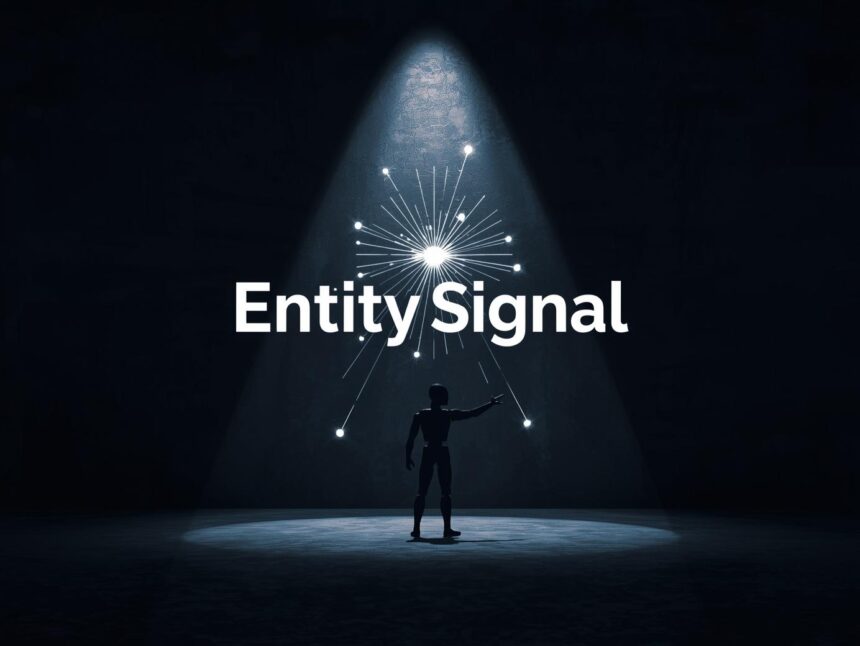
In today’s AI-powered search landscape, brand mentions and entity mentions are more than digital PR tactics—they’re the signals that power whether AI and answer engines “see” you. This article shows why they matter, how AI uses them, and what you can do to get your brand cited in answers—not just ranked in lists.
“In the age of AI, every time a credible source mentions your brand, you strengthen your voice in the machine’s memory.” — Mr. Phalla Plang, Digital Marketing Specialist
Why Brand Mentions & Entity Mentions Matter
The Shift from Backlinks to Mentions in AI Search
In older SEO models, backlinks were the currency: more backlinks → more authority → higher rank. But in AI / answer engines, textual brand mentions (even without links) carry weight. In a large-scale correlation study of 75,000 brands, Ahrefs found that branded web mentions (linked or unlinked) had the strongest correlation (ρ ≈ 0.664) with brand visibility in Google AI Overviews, whereas backlinks had a much weaker correlation (ρ ≈ 0.218) (Ahrefs, 2025).
That means AI systems are more likely to “notice” brands that appear broadly across the web—not just those with lots of backlinks.
How AI / Answer Engines Leverage Mentions & Entities
- Entity extraction and knowledge graphs
AI and LLMs parse web text to identify named entities (brands, products, figures). These mentions feed internal knowledge graphs that help AI decide which entities are relevant to a user query. - Citation and answer sourcing
When AI generates an answer, it often cites external sources. A study by Search Engine Journal found that AI systems prefer to cite high-quality, third-party content (i.e. external sources) (Southern, 2025). - Semantic context & co-mentions
The strength of the association between your brand name and relevant topic keywords influences AI’s decision to mention you. The more often your brand appears in content about your field (e.g., “digital branding,” “reputation management”), the stronger your semantic signal. - Cross-domain reinforcement
Mentions across news, blogs, forums, and social media amplify your brand’s footprint. AI models see a brand that is widely referenced across domains as more authoritative. - Rank ties still matter
While mentions drive awareness, ranking position also plays a role. In experiments across 10,000 prompts, Seer Interactive found that domains ranking on Google’s first page had a moderate correlation (≈0.65) with being mentioned in LLM answers (Blake & Haigler, 2025).
In sum, getting AI attention is not just about optimizing your site—it’s about how the broader web talks about you.
What Types of Mentions Count (and What Don’t)
- Linked vs. unlinked mentions
Linked mentions are helpful, but unlinked mentions also matter, because AI models digest raw text. - High-authority domains
Mentions on reputable sources (e.g., major media, industry publications) carry more weight than obscure or spammy sites. - Contextual relevance
Mentions embedded in relevant, contextual content (versus name lists or footers) are more valuable. - User-generated mentions (UGC, forums)
Mentions on Reddit, Quora, or niche forums matter—especially if those platforms are known to influence AI answers. - Low-quality or irrelevant mentions
Mentions on low-trust, irrelevant, or spammy sites may be ignored or penalized by AI models.
How to Audit & Monitor Your Brand Mentions for AI Visibility
Step 1: Benchmark Current AI Presence
- Use tools like Ahrefs Brand Radar to see how often your brand is mentioned in AI Overviews, compare to competitors, and view historical trends (Ahrefs, n.d.).
- Use Ahrefs Web Analytics to monitor AI-driven traffic spikes and how quickly AI picks up new content (Ahrefs, 2025).
- Review your branded search traffic in Google Analytics or Search Console to detect changes over time.
Step 2: Track Mentions Across the Web
- Employ mention or alert tools like Ahrefs Alerts, Mention, SEMrush, BrandMentions to capture both linked and unlinked mentions (Ahrefs, n.d.).
- Monitor mentions not only in news and blogs, but also in forums, industry newsletters, podcasts, and social media.
Step 3: Analyze Sentiment, Topics, & Associations
- Label mentions as positive, neutral, or negative.
- Note which keywords or topic clusters appear near your brand name.
- Identify which domains and authors are citing your brand.
Step 4: Track Trends & AI Share of Voice
- Track monthly mention volume, ratio of linked/unlinked, and comparative share vs. competitors.
- Monitor AI share of voice: how often your brand appears in AI answers compared to others (Ahrefs, n.d.).
- Detect spikes or drops in AI mention metrics after campaigns or content releases.
Strategies to Get Cited in AI & Answer Engines
1. Publish original, authoritative research and data
Reports, studies, benchmarks, or surveys often get cited. When people reference your data, that’s a mention seed.
2. Contribute guest content and expert commentary
Write thoughtful commentary or interviews in industry publications, ensuring your brand is contextualized within the article.
3. Engage in UGC / forum communities strategically
Participate in relevant forums (e.g., Reddit, LinkedIn groups, Quora) and naturally reference your brand where appropriate.
4. Outreach to convert unlinked mentions
When someone mentions your brand without linking, reach out courteously with context and a resource to add the link.
5. Use structured data (schema) & clear entity definitions
Schema markup (e.g. “Organization,” “Brand,” “Product”) helps AI systems parse your brand information more reliably (Conductor, 2025).
6. Optimize prompts & test AI queries yourself
Regularly test likely user prompts on ChatGPT, Perplexity, Gemini, etc. See if your brand appears. Use those observations to guide content strategy (Writesonic, 2025).
7. Prioritize consistency and domain diversity
Consistency in domain name, brand spelling, and presence helps. Also try to gain mentions across diverse types of sites (blogs, news, reviews, podcasts).
Pitfalls & Best Practices
- Avoid mention spam or mass mention generation—AI models can detect unnatural patterns.
- Don’t over-optimize anchor text—keep it natural.
- Don’t rely solely on paid placements—AI systems favor earned authority.
- Localize mention outreach for U.S. and regional audiences (e.g. industry media in U.S. cities).
- Monitor negative mentions and respond professionally, as sentiment affects perception.
Real-World Snapshot & Trends
- AI Overviews have exploded: Ahrefs analyzed 25 million U.S. AI Overviews and found that the use of AI-generated summary boxes has more than doubled since the March 2025 Google core update (Ahrefs, 2025).
- AI Overviews cover ~12.8% of search volume: In a dataset covering global queries, Ahrefs found that about 23 billion monthly search queries show AI Overviews—roughly 12.8 % of all indexed search volume (Ahrefs, 2025).
- Citation behavior leans top-ranked pages: In a sample of 1.9 million AI citations, 76 % came from pages ranked in Google’s top 10 (Ahrefs, 2025).
- Domain diversity in citations: The most-cited domains in Google AI Mode include Wikipedia, YouTube, Reddit, and Google’s own blog, demonstrating that AI leans toward a mix of high-traffic, trusted, and user-generated sources (Ahrefs, 2025).
These trends reinforce that getting into AI’s “radar” depends heavily on broad visibility and domain authority.
Measuring Success & ROI
Track these metrics to gauge your progress:
- Monthly brand mention volume (linked + unlinked)
- AI share of voice (percentage of AI answers citing your brand)
- Prompt-level citations (which user questions include your brand)
- Sentiment & context of mentions
- Change in branded search traffic
- Referral traffic from mention sources
- Lead or conversion attribution from mention-related traffic
Correlate these metrics with your business goals (e.g. lead cost, awareness lift) to measure ROI.
Conclusion
In the era of AI and answer engines, brand mentions and entity signals stand at the core of visibility. Instead of chasing traditional rankings alone, the brands that will stand out are those woven into the fabric of web discourse.
By auditing where your brand currently appears, thoughtfully earning mentions across authoritative domains, structuring your content for machine readability, and measuring your momentum, you can evolve from hidden to highlighted in AI responses.
This is your opportunity: speak clearly, show up widely, and let AI cite your authority.
More Read

References
Ahrefs. (2025, April). An analysis of AI Overview brand visibility factors. Ahrefs Blog. https://ahrefs.com/blog/ai-overview-brand-correlation/
Ahrefs. (2025, June). AI Overviews growth and coverage. Ahrefs Blog. https://ahrefs.com/blog/ai-overview-growth/
Ahrefs. (2025). How to monitor and win brand mentions in AI answers. Ahrefs Blog. https://ahrefs.com/blog/brand-mentions/
Blake, C., & Haigler, N. (2025, January). Study: What drives brand mentions in AI answers? Seer Interactive. https://www.seerinteractive.com/insights/what-drives-brand-mentions-in-ai-answers
Conductor. (2025, August). How to increase brand mentions and citations in AI search. Conductor. https://www.conductor.com/academy/increasing-ai-mentions-citations/
Southern, M. G. (2025, February 26). AI search optimization: Data finds brand mentions improve visibility. Search Engine Journal. https://www.searchenginejournal.com/ai-search-engines-often-cite-third-party-content-study-finds/540692
Writesonic. (2025, September 7). 8 strategies to get your brand mentioned in AI [2025]. Writesonic Blog. https://writesonic.com/blog/how-to-get-brand-mentions-in-ai