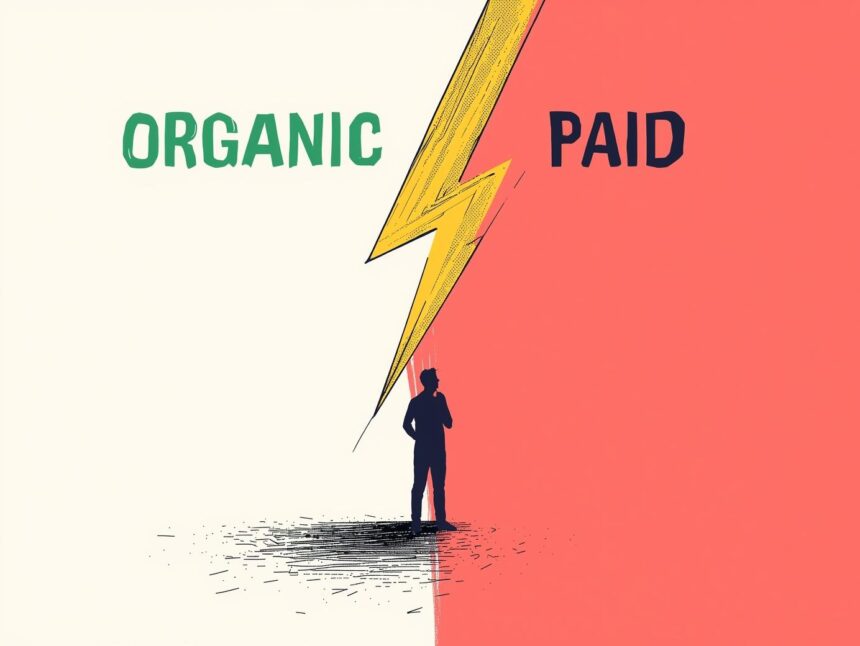
In 2025, every marketing team faces the same dilemma: how much budget should go to organic social versus paid social? With platforms tightening algorithms, ad prices rising, and audiences demanding authenticity, getting this balance right determines whether a brand grows or fades into digital noise.
The truth is, organic and paid social media are no longer rivals—they’re partners in performance. When integrated properly, they can create a compounding effect: paid boosts reach and speed, while organic builds trust and longevity.
As Mr. Phalla Plang, Digital Marketing Specialist, notes:
“Don’t pit organic against paid; make them teammates striving for the same goal.”
This article explores how to find that balance, supported by 2025 industry data and strategic frameworks for brands aiming to scale their reach efficiently and sustainably.
Why the Debate Still Matters in 2025
Despite major shifts in social media algorithms, the organic vs. paid discussion continues because both remain essential.
According to Sprout Social (2024), organic reach on Facebook averages only 2% to 5%, meaning most followers never see brand posts unless they’re boosted. Meanwhile, paid social ad spending is projected to surpass $220 billion globally in 2025, led by Meta and TikTok platforms (Statista, 2025).
Yet, researchers have shown that these two channels are not mutually exclusive. A recent study found that paid and organic marketing efforts reinforce each other, with ad exposure leading to organic engagement and vice versa (Ju et al., 2025).
That synergy means the right mix isn’t about choosing one side—it’s about combining both strategically.
Core Differences: Organic vs. Paid Social
Before deciding your split, understand the unique strengths of each:
| Feature | Organic Social | Paid Social |
|---|---|---|
| Cost Outlay | Low financial cost but high time investment | Requires consistent ad budget |
| Reach Control | Algorithm-driven and unpredictable | Precise targeting by audience, location, or interest |
| Speed of Impact | Gradual, compounding growth | Instant exposure and measurable conversions |
| Purpose | Builds brand credibility and community | Drives direct conversions and traffic |
| Analytics | Engagement and sentiment tracking | Conversion, attribution, and ROAS data |
| Longevity | Posts live indefinitely | Stops once budget ends |
Organic content nurtures relationships, while paid content accelerates exposure. When planned together, they close the loop between awareness, engagement, and action.
The 2025 Budget-Splitting Framework
1. Define Your Objectives
Clarify your goals first:
- Top-funnel (awareness): prioritize organic storytelling and boosted posts.
- Mid-funnel (consideration): balance both for engagement and lead nurturing.
- Bottom-funnel (conversion): rely on paid retargeting and lookalike campaigns.
2. Evaluate Your Current Organic Strength
Audit your engagement rate, follower growth, and community responsiveness. If your organic base is strong, allocate more toward paid ads to scale. If organic performance lags, invest more in content creation before heavy ad spend.
3. Start with a Baseline Ratio
A 60/40 paid-to-organic split is a practical starting point for most mid-sized brands. New brands might lean 70/30, while established ones could invert that ratio as their organic reach compounds.
4. Apply the “Lift & Amplify” Model
Use organic posts to test creative performance—then boost the winners with paid spend. This approach ensures your budget promotes what already resonates, improving efficiency.
5. Funnel-Based Allocation
Distribute your paid budget by funnel stage:
- Awareness: 20%
- Consideration: 30%
- Conversion: 50%
Meanwhile, let organic content cover awareness and retention.
6. Review Monthly and Adjust
Measure results monthly. Track KPIs such as Cost Per Click (CPC), engagement rate, Return on Ad Spend (ROAS), and organic share of voice. Reallocate dynamically instead of sticking to rigid percentages.
Budget Scenarios for 2025
| Scenario | Annual Budget | Suggested Split | Focus |
|---|---|---|---|
| Growth Mode | $120,000 | 70% Paid / 30% Organic | Scale awareness fast and drive conversions |
| Balanced | $60,000 | 50% / 50% | Equal focus on brand building and paid efficiency |
| Organic-First | $30,000 | 40% Paid / 60% Organic | Build long-term loyalty and authenticity |
Always reserve 10–20% of paid budget for creative testing and high-performing post boosts.
Platform & Geographic Adjustments
Different networks and markets demand unique approaches:
- TikTok: Organic reach remains high, making 50/50 ideal.
- Instagram and Facebook: Pay-to-play environments often need 70/30 toward paid.
- LinkedIn: Organic thought leadership still performs well for B2B.
- Geo differences: U.S. campaigns typically cost 25–40% more per impression than in Southeast Asia (Hootsuite, 2025).
Privacy, Data, and Algorithm Shifts
The phase-out of third-party cookies and stricter privacy laws have made paid targeting less precise. According to Deloitte (2025), first-party data collection and community engagement are key to offsetting these losses. That means organic trust-building now fuels paid efficiency.
Moreover, Meta announced that its Community Notes-style fact-checking system won’t apply to paid ads, underscoring how organic and paid follow separate moderation rules (Reuters, 2025). Marketers should therefore maintain transparency and consistency across both streams.
Case Example: Hybrid Success
Imagine a wellness brand launching in the U.S.:
- Organic phase: behind-the-scenes videos, user testimonials, and educational posts build trust.
- Paid phase: top-performing organic videos are boosted to lookalike audiences.
- Ongoing synergy: community replies and reposts expand reach organically, while retargeting ads close sales.
Within months, the brand sees both lower cost per acquisition (CPA) and higher brand recall, proving how a hybrid approach multiplies results.
Best Practices for 2025
- Create dual-purpose content. Plan visuals and messages that fit both feeds and ad formats.
- A/B test paid ads to discover winning creative for future organic themes.
- Use social analytics tools like Sprout Social or Hootsuite Analytics to track both channels together.
- Invest in short-form video. TikTok, Instagram Reels, and YouTube Shorts dominate attention spans.
- Encourage interaction. Organic replies and comment threads raise trust metrics that influence paid performance.
- Track assisted conversions. Use multi-touch attribution to see how organic touchpoints contribute to paid conversions.
Mistakes to Avoid
- Neglecting organic presence. Paid visibility collapses without community backing.
- Over-spending early. Test creatives first; scale only verified winners.
- Treating ratios as static. Adjust quarterly as platforms evolve.
- Recycling stale ads. Refresh visuals and copy monthly to avoid fatigue.
- Siloing teams. Align creative, data, and content managers under one integrated workflow.
Conclusion
In 2025, the most effective social media budgets are fluid, data-driven, and hybrid. Paid campaigns bring reach and precision; organic efforts deliver credibility and retention.
The magic happens when you merge them: your paid content amplifies what works organically, while your organic storytelling deepens the impact of every dollar spent.
As Mr. Phalla Plang wisely advises, “Don’t pit organic against paid; make them teammates striving for the same goal.”
By applying this mindset—testing continuously, adjusting ratios, and aligning both streams toward shared KPIs—you’ll unlock sustainable growth no matter how algorithms or ad costs evolve.
More Read

References
Deloitte. (2025). Global Marketing Privacy Report 2025. Deloitte Insights. https://www.deloitte.com/insights
Hootsuite. (2025). Digital 2025 Global Overview Report. https://www.hootsuite.com/resources/digital-trends-2025
Ju, H., Zhao, M., & Aral, S. (2025). Complementarity Between Paid and Organic Installs in Mobile App Advertising. arXiv. https://arxiv.org/abs/2504.16151
Reuters. (2025, January 17). Meta’s Community Notes Model Will Not Apply to Paid Ads. https://www.reuters.com/technology/metas-community-notes-model-will-not-apply-paid-ads-wsj-reports-2025-01-17
Sprout Social. (2024, June 18). Organic vs. Paid Social Media: A Hybrid Strategy That Works. https://sproutsocial.com/insights/organic-vs-paid-social-media
Statista. (2025). Global Social Media Advertising Spending Forecast 2025. https://www.statista.com